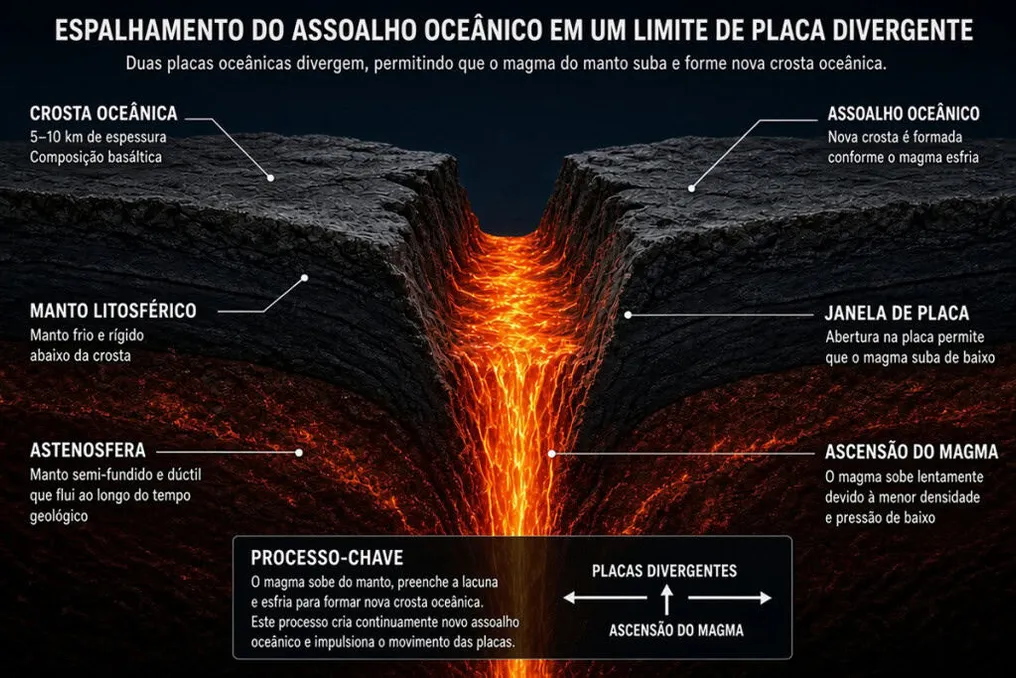
According to seismic monitoring data from 2021, the tectonic plate on the floor of the Pacific Ocean in the Cascadia region shows signs of fracturing. The plate structure is intersected by cracks, with a 75-kilometer section recording earthquakes, while other areas remain silent.
This process could stretch over millions of years. The study explains that over time, the separation may alter the internal dynamics of the plate, allowing hot material to rise, which could potentially affect volcanic activity.
The analysis was conducted using data from the CASIE21 experiment (Cascadia Seismic Imaging Experiment). To study the Pacific Ocean floor, scientists directed sound waves into the ocean and analyzed the echo captured by equipment installed on a cable approximately 15 kilometers long.
The resulting images revealed numerous cracks running through the plate. One of these cracks is associated with a displacement of about 5 kilometers. The data also indicates the possibility of similar phenomena recurring.
Earthquakes are unevenly distributed across the structure: one 75-kilometer strip registers tremors, while neighboring zones are quiet. For researchers, this difference suggests that different parts of the plate may be separating at different times.
The tectonic plate is capable of slowly disintegrating. Cracks act as points of movement, allowing different parts of the structure to shift. As long as the blocks remain connected and accumulate pressure, earthquakes can occur. As the separation progresses, the nature of these tremors changes, which is the subject of scientific study.
Fragmentation may take millions of years. During this period, the structure holding one plate beneath another gradually weakens. When parts of the plate move apart, a gap may form between them, which researchers call a plate window.
More details:
This window could allow hot material from the depths to rise. According to the study, this could influence volcanism. Furthermore, scientists found similarities between this proposed process and patterns observed in ancient volcanic rocks.
The discovery does not mean that the Cascadia region will stop experiencing earthquakes. Since fragmentation occurs over millions of years, scientists continue to study how these changes might affect the future structure and seismic activity.