Pitru Paksha 2026: Shraddha Ritual for Dvitiya Tithi to be held on September 28; Information on Best Time and Methods of Tarpan and Pindandan
Read more
Aaj Tak
www.aajtak.in

Pitru Paksha 2026: Shraddha Ritual for Dvitiya Tithi to be held on September 28; Information on Best Time and Methods of Tarpan and Pindandan

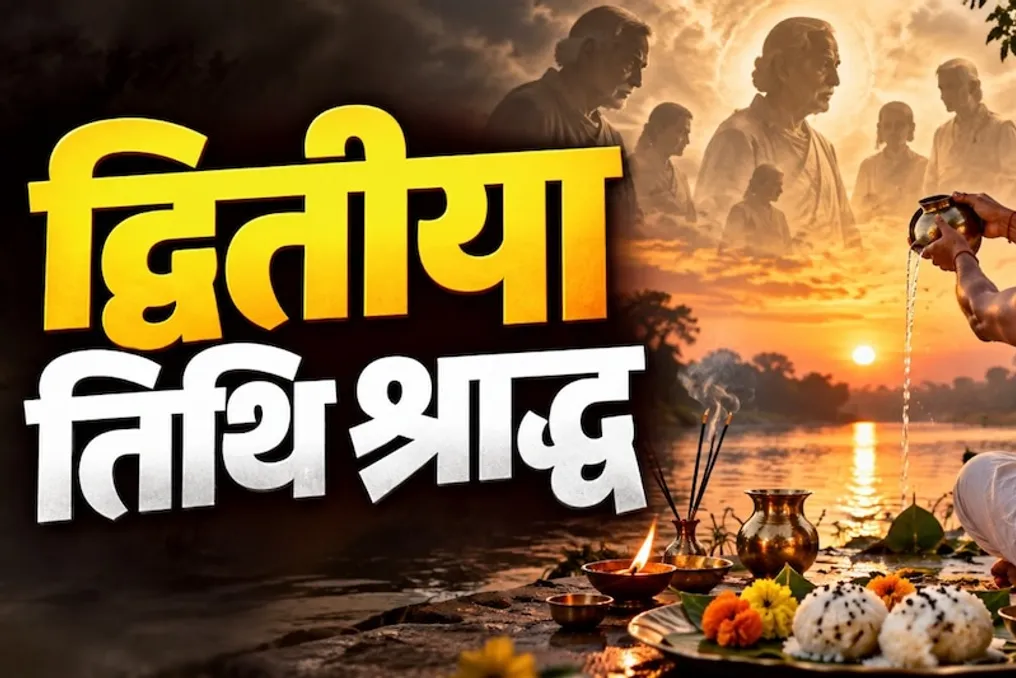
As part of Pitru Paksha 2026, the Shraddha ritual for Dvitiya Tithi will be conducted on September 28. On this day, rites are performed in memory of ancestors who passed away during the Dvitiya Tithi, both in the Krishna Paksha and Shukla Paksha lunar months according to the Hindu calendar. Religious ceremonies such as Shraddha, Tarpan, and Pindandan are performed on this day to bring peace to the souls of the ancestors.

According to beliefs, when ancestors are offered pind prepared from rice, milk, honey, ghee, and black cumin, they find solace and continue to bestow their blessings.

The date of Ashwin Krishna Dvitiya Tithi falls on September 27, from 08:58 PM to 07:13 PM on September 28. Consequently, according to Udaya Tithi, the Shraddha ritual for Dvitiya Tithi will be held on September 28, Monday.

Sacred scriptures consider Kutup Vela to be the most auspicious time for performing Tarpan and ancestral Shraddha. This period usually occurs around noon. On September 28, Kutup Kala is scheduled from 11:48 AM to 12:36 PM. However, it should be noted that the time may vary slightly in different cities, so consulting a Panchang is recommended.

Traditionally, during Shraddha Dvitiya Tithi, round pindas made of flour, rice, or barley are offered to the ancestors. After performing Pindandan, ancestral Tarpan is conducted by mixing black pumpkins in water. When performing Tarpan, one must hold a Kusha, which is a type of grass; its ring is worn on the ring finger of the right hand. After completing Shraddha, the poor Brahmins must be fed, and donations must be made. The ritual must conclude with a prayer for the peace of the ancestors' souls.

During Shraddha, a portion of the food is set aside separately for cows, dogs, crows, and ants, which is called Panchbali. It is believed that our ancestors partake of food through these animals and remain in bliss. This leads to the removal of Pitr Dosha and brings them peace.
Similar stories

Pitru Paksha Dates 2026: Start and First Shraddha According to Forecasts
Read more
www.aajtak.in

Pitru Paksha Dates 2026: Start and First Shraddha According to Forecasts

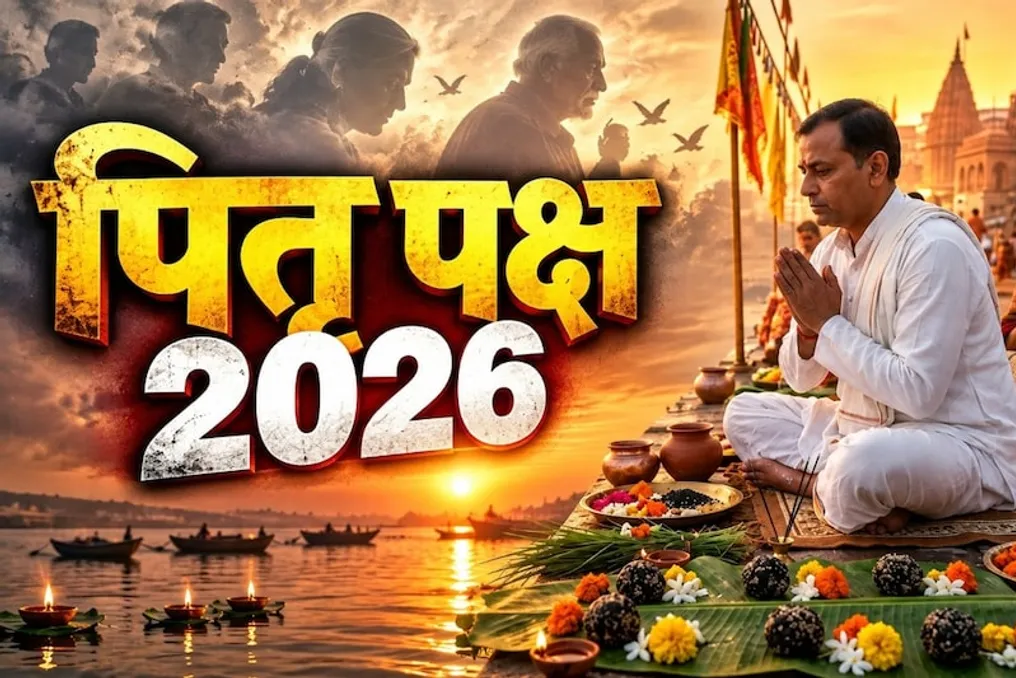
Pitru Paksha, also known as Shraddha Paksha, is approaching. According to beliefs, performing the proper Shraddha ritual during this period brings peace to the souls of ancestors. Currently, there is some confusion among people regarding the start dates of Pitru Paksha, as some sources indicate September 26th, while others state September 27th.

According to astrologer Pravin Mishra, Pitru Paksha in 2026 will run from September 26th to October 10th. On September 26th, Shraddha will be performed on the full moon day of the Bhadrapada month, which applies to those whose ancestors passed away on that day. Following this, September 27th is considered the official start of Pitru Paksha, as it will be the first date of the Ashvina lunar month in the waning phase of the Moon.

The conclusion of Pitru Paksha will take place on October 10th, on the day of Sarvapitri Amavasya. On this day, the Shraddha ritual is permitted for all ancestors whose date of death is unknown. Traditionally, it is believed that if the exact date of death or Shraddha of an ancestor is forgotten, they should be honored on the day of Sarvapitri Amavasya.

During Pitru Paksha, it is customary to respectfully remember ancestors. During this period, Shraddha, Tarpan, Pindadaan rituals are conducted, and food donations are made. If for any reason it is impossible to perform the ritual according to tradition, it is recommended to donate food or products to those in need according to one's means. Items that can be donated include rice, lentils, flour, salt, fruits, vegetables, ghee, maple syrup, and clothing.

During Pitru Paksha, it is advised to refrain from holding auspicious events such as weddings, engagements, housewarmings, or starting a new business. There is also a tradition of refraining from purchasing new real estate and vehicles. Many people also prefer not to buy new clothes during this period. It should be noted that all these recommendations are related to religious beliefs and traditions.

According to the calendar, Shraddha on the full moon day falls on September 26, 2026 (Saturday). Shraddha on the first date of the lunar month will take place on September 27, 2026 (Sunday). Subsequently, dates for Shraddha on the second, third, fourth, and fifth dates are from September 28 to September 30, 2026. The sixth day of Shraddha is scheduled for October 1, 2026 (Thursday), and the seventh for October 2, 2026 (Friday).

The dates for the eighth, ninth, tenth, eleventh, and twelfth days of Shraddha are October 3, 4, 5, 6, and 7, respectively. It is also noted that Shraddha for the Magha date will take place on October 7, 2026 (Wednesday). The dates for the thirteenth and fourteenth days of Shraddha are October 8 and 9, 2026. The Sarvapitri Amavasya period concludes on October 10, 2026 (Saturday).

Parivartini Ekadashi 2026: Date of Celebration, Worship Time, and Fast Completion Time
Read more
www.aajtak.in

Parivartini Ekadashi 2026: Date of Celebration, Worship Time, and Fast Completion Time

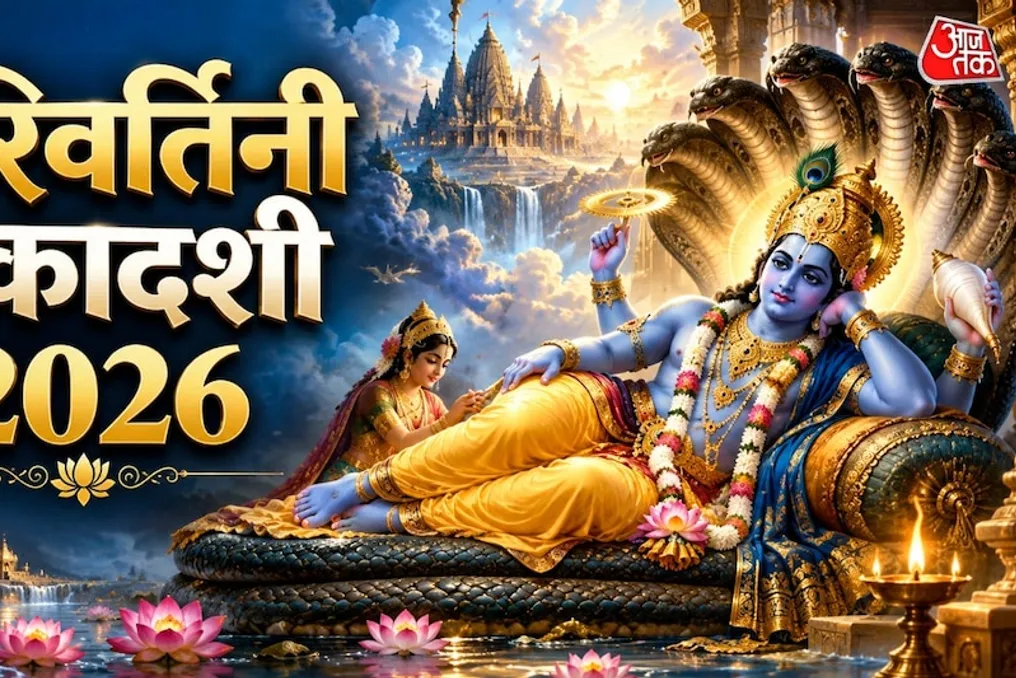
Parivartini Ekadashi is observed in the month of Bhadrapada, during Shukla Paksha, as Ekadashi. This festival is also known as Padma Ekadashi and Jayanti Ekadashi. According to religious beliefs, observing this fast helps rid oneself of sins committed intentionally or unintentionally. On this day, worship is performed to Vamana, an incarnation of Lord Vishnu. Special significance is given to worshipping Lord Ganesha and Shrihari during Ganesh Mahotsava.

The date of Ekadashi in Shukla Paksha of the month of Bhadrapada will begin on the evening of September 21st at 20:01 and last until 21:43 on September 22nd. According to the rising date, the Parivartini Ekadashi fast will be observed on Tuesday, September 22nd. It is believed that honoring Vamana, an incarnation of Lord Vishnu, on this day brings special merits. This fast is also considered beneficial for those who desire progeny and financial well-being.

On this day, Brahma Muhurta will start at 4:35 AM and last until 5:22 AM, during which one can bathe and decide whether to observe the fast. The auspicious time for worshipping Lord Shrihari is set from 9:11 AM to 1:45 PM. The completion of the fast is scheduled for the next day, September 23, 2026. Fasting individuals can break the fast anytime between 6:10 AM and 8:35 AM after performing all rituals.

It is necessary to take a bath early in the morning and offer water to the Sun god. Then, dressed in yellow clothes, one should worship the gods Ganesha and Vishnu. First, Modak and Durva are offered to Ganesha. After that, yellow flowers, Panchamrit, and Tulsi leaves are offered to Lord Shrihari. During worship, mantras should be recited first to Ganesha, and then to Vishnu. On this day, it is also recommended to donate to needy people according to one's means—water, grains, clothing, footwear, or umbrellas. During the fast, consuming solid food is prohibited; traditionally, the fast is observed on fruits or water.

Special practices exist to achieve different goals. If a person desires progeny, they can offer Modak to Ganesha in a quantity equal to their age on Parivartini Ekadashi, and also recite Shantan Ganapati. Additionally, one can repeat the mantra 'Om Umaputray Namah'. To attract financial success, it is recommended to offer a mouse made of clay or metal to Ganesha, and also offer yellow flowers and yellow prasad. After this, one must repeat the mantra 'Om Shrim Saumyai Saubhagyay Gam Ganapataye Namah' 108 times, and then place the mouse in the money storage area.

To achieve business success, one should create a small statue of Ganesha from turmeric. Then, Modak, Durva, and Belapatra are offered to Ganesha. Upon completion of the ritual, this turmeric statue is placed in the place of business. It is believed that this promotes success in trade.

Date and Significance of Parvathini Ekadashi in 2026
Read more
www.aajtak.in

Date and Significance of Parvathini Ekadashi in 2026

In Hinduism, the dates of Ekadashi hold special religious significance, but the Ekadashi belonging to the bright month of Bhadrapada is known for its unique and divine meaning. It is called Parvathini Ekadashi, as well as Padma Ekadashi, Jayanti Ekadashi, and Vaman Ekadashi; all these names refer to the same sacred day.

According to religious beliefs, during the Chaturmas period, when Lord Vishnu is in yogic sleep, on this day He changes His body posture, which led to the name 'Parvathini Ekadashi'.

Date of Parvathini Ekadashi in 2026

The date of Parvathini Ekadashi in 2026 will begin on September 21st at 20:00 and end on August 22nd at 21:43. However, according to the ascending date, the fast will be observed on September 22nd. Paranan (completion of the fast) will take place on the morning of September 23rd from 06:10 to 08:35.

Complete Ritual for Worshipping Parvathini Ekadashi in 2026

On the day of Ekadashi, one should wake up before sunrise, take a bath, and wear clean clothes (preferably yellow). Then, holding water, akshata, and flowers, one must take a vow of fasting before Lord Vishnu. The home temple should be cleaned, and a yellow cloth should be spread on a wooden platform. Images or idols of Lord Vishnu (in the form of Vamana or Laddu Gopal) and Lord Ganesha are placed on it. A lamp made of coconut oil and incense is lit before Shrihari and Ganesha. Tilak made of roli, gopi-chandan, and akshata is applied to the Lord.

Yellow flowers, tulsi leaves, and janam are offered to Lord Vishnu. Durva (grass) and modak are offered to Ganesha. Seasonal fruits (especially bananas), panchamrita, pandjiri, and sweets should also be offered to the deity. In the offering to Vishnu, tulsi leaves must be present, as the deity does not accept the gift without them. After this, one should listen to or read the story of the Parvathini Ekadashi fast and the Vamana Avatar. Next, the Siddha mantra of Lord Vishnu, 'Om Namo Bhagavate Vasudevaya', and the Vishnu Sahasranama are recited. At the end of the ritual, Aarti should be performed for Shrihari Vishnu and Ganesha using a lamp made of kumkum or oil. Concluding the worship, a prayer for forgiveness for any unintentional mistakes must be offered.

In the evening after reading the story, light food should be consumed. The next day, after making donations of food, clothing, or grain to the needy or priests at an auspicious time, the fast can be concluded.

Significance of Parvathini Ekadashi

It is believed that observing the fast on this day and performing proper worship of Lord Vishnu leads to the destruction of all sins committed by a person intentionally or accidentally. The aspirant achieves a path to material prosperity in this life and liberation in the afterlife. This fast is considered particularly auspicious for those who desire offspring or have been facing financial difficulties for a long time. It is also very favorable for the development of knowledge, intellect, and spiritual growth.

Parvathini Ekadashi falls during the Ganpati period (Ganesha festival). Therefore, the joint worship of Lord Vishnu and the remover of obstacles, Lord Ganesha, brings special blessings to both deities. On this day, the Vamana Avatar of Lord Vishnu is revered. According to mythological history, it was in this form that Shrihari measured the three worlds in three steps while testing the generous king Bali and freeing him.

Popular