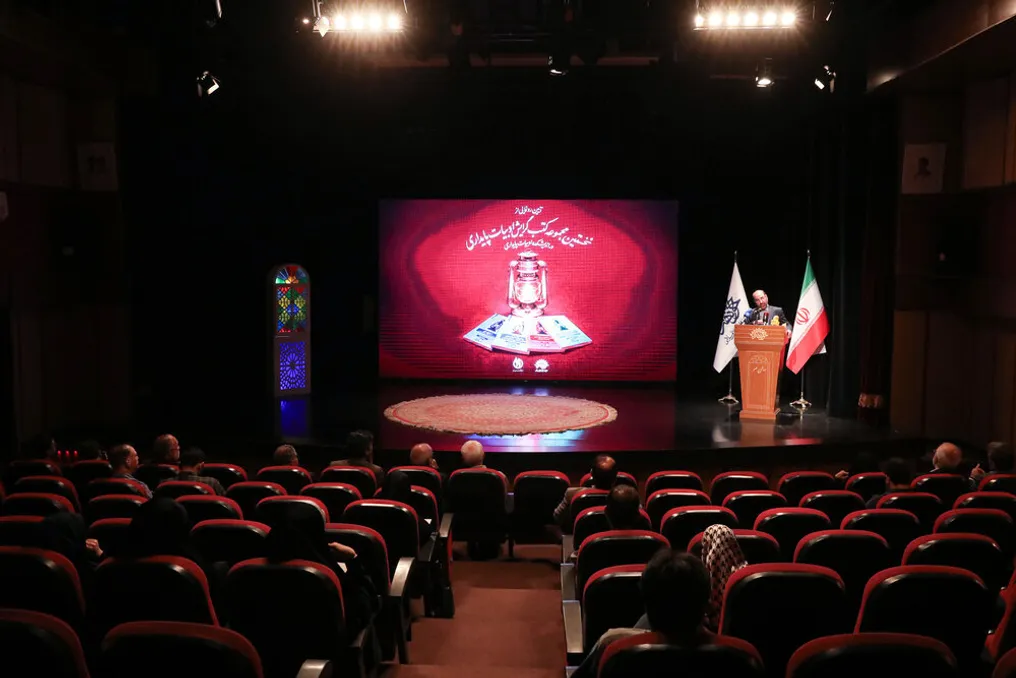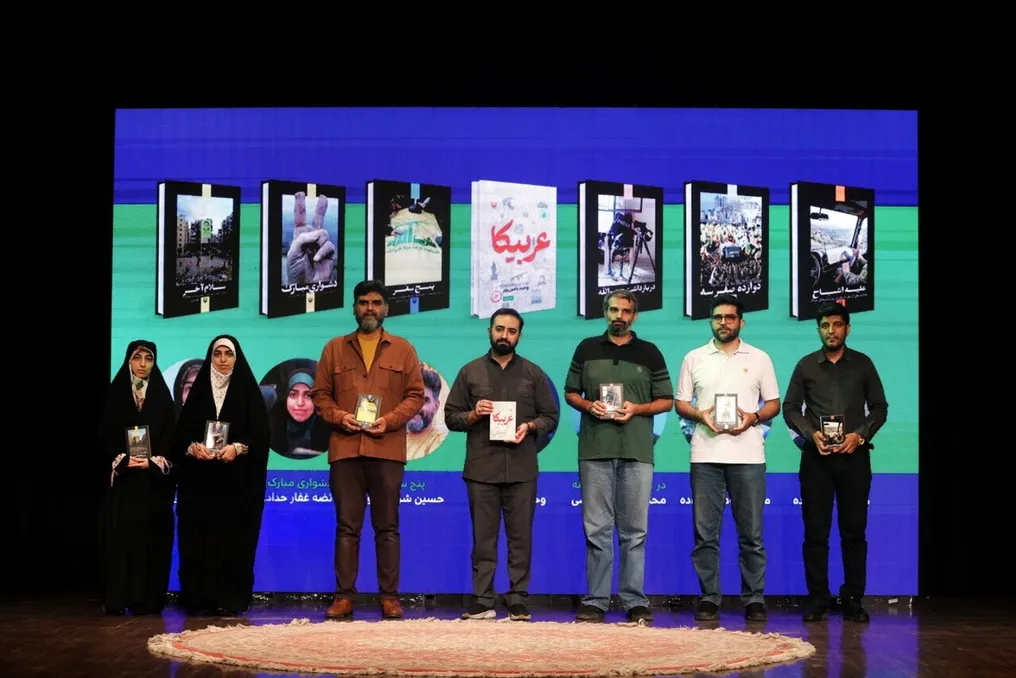
The fourth meeting of the literary event 'Ta Ketab,' dedicated to Lebanon and the culture of resistance, took place in Tehran. The event was held at the Tehran Literary Bureau on Saturday and gathered authors who shared stories about the creation and publication of their books.
This event coincided with the anniversary of the martyrdom of Hezbollah Secretary-General Sayyed Hassan Nasrallah. Seven publications were presented as part of the program, addressing themes of Lebanon, resistance, social and political changes, as well as personal experiences related to the region.
The event was held in the hall of the Literary Bureau of the Islamic Ideology Propagation Organization. Authors presented their works and discussed the circumstances and experiences that shaped their creativity.
The fourth edition of the event featured books such as 'Twelve Zero Three' by Mohammad Sadeq Alizadeh, 'In Hezbollah Detention' by Mohammad Hossein Azimi, 'Arabica' by Vahid Yaminpour, 'Five Journeys' by Hossein Sharafkhankulu, 'Blessed Difficulty' by Faizeh Ghaffar Haddadi, 'The Last Hello' by Elah Haerati, and 'Against the Ghosts' by Mohsen Hassanzadeh.
These works brought together various literary and narrative perspectives on the theme of resistance, paying particular attention to Lebanon and the experience surrounding the resistance movement.
'Ta Ketab' is conceived as an author-oriented program that seeks to go beyond the standard presentation of a published work. During the event, writers talk about the process of forming their books—from the initial idea and research to writing and final publication.
This format allows the audience to learn not only about the books themselves but also about the authors' life experiences, the themes they explored, and the circumstances that influenced their approach to each work.
The event's focus on Lebanon occurs at a time when the country remains a significant subject in Iranian literature and cultural production concerning resistance. Over the past decades, Iranian writers and cultural institutions have created works analyzing various aspects of Lebanon, Hezbollah, and broader regional processes shaping the concept of resistance.
The anniversary of the martyrdom of Sayyed Hassan Nasrallah served as the occasion for the fourth edition of 'Ta Ketab,' linking the literary program to a broader cultural commemoration of the Hezbollah leader and events related to his life and death.
The program was organized by the Literary Bureau of the Islamic Revolution—one of Iran's major cultural organizations active in literature, art, and cultural production related to the Islamic Revolution and resistance.
Sayyed Hassan Nasrallah became the Secretary-General of Hezbollah in 1992 after the assassination of his predecessor, Sayyed Abbas al-Musawi. He led the movement for more than three decades, including the period of Israel's withdrawal from South Lebanon in 2000 and the 2006 war between Hezbollah and Israel. Under his leadership, Hezbollah transformed into a major political and military force in Lebanon, taking on a broader role in regional affairs.
Nasrallah was also widely known for his television appearances, where he addressed supporters and commented on major events in Lebanon and the wider region. Born and raised in Beirut, he came from a family with roots in Bazurieh in southern Lebanon. Although his public life was closely monitored across the region, his private and family life largely remained out of the public eye.
He tragically died at the age of 64 during a series of intense Israeli airstrikes in southern Beirut on September 27, 2024. The attack that killed Nasrallah was carried out by Israeli fighters targeting Hezbollah's main headquarters, resulting in the martyrdom of several high-ranking Hezbollah commanders and Iranian Revolutionary Guard Lieutenant General Abbas Nilfouroshan, who was present.
Under Nasrallah's leadership, whose name means 'victory through God,' Hezbollah transformed from a grassroots armed movement into the largest political party in recent Lebanese history. Known for his captivating speeches, Nasrallah attracted attention throughout West Asia and beyond, establishing himself as a significant figure in the Axis of Resistance, which includes Hezbollah, Palestinian groups Hamas and Islamic Jihad, the Houthis in Yemen, and various Iraqi militia groups.