Rassi Erasmus admitted that Springboks' defeat to Wallabies was their own fault
Read more
IOL
iol.co.za

Rassi Erasmus admitted that Springboks' defeat to Wallabies was their own fault

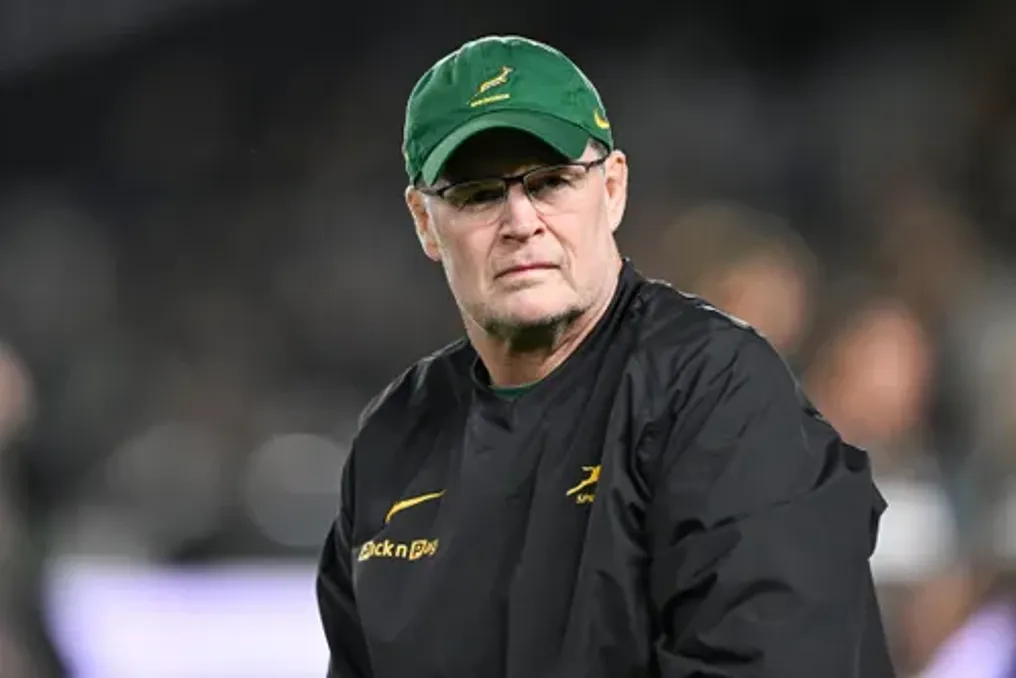
Springboks head coach Rassi Erasmus stated that the team itself is responsible for the loss to Australia, which took place in Perth on Sunday. He refused to blame the Wallabies for the defeat due to match interruptions.

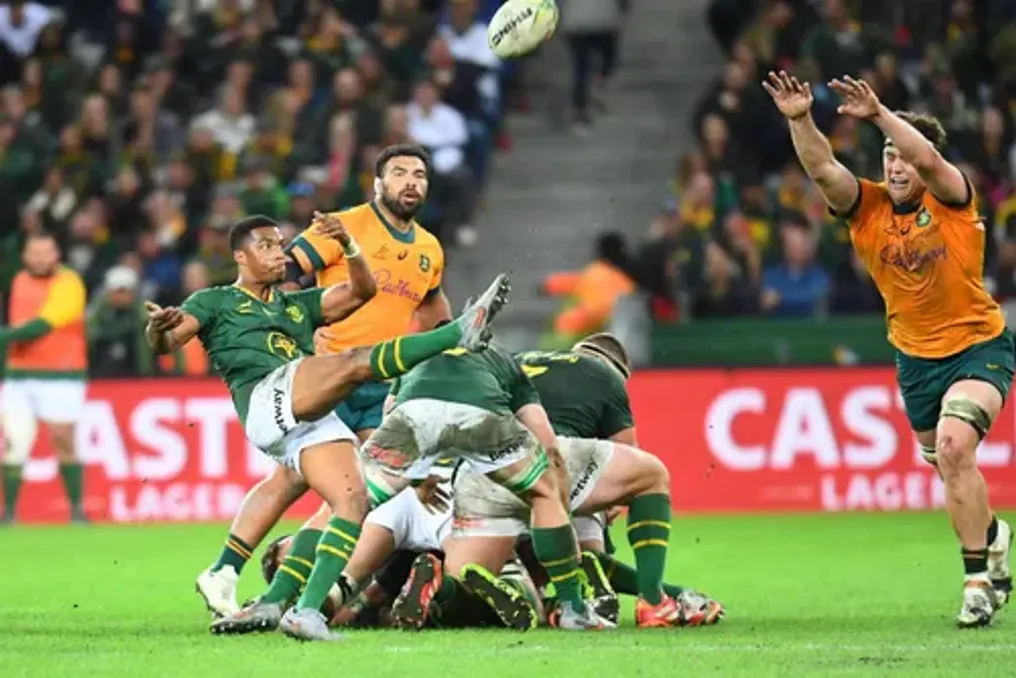
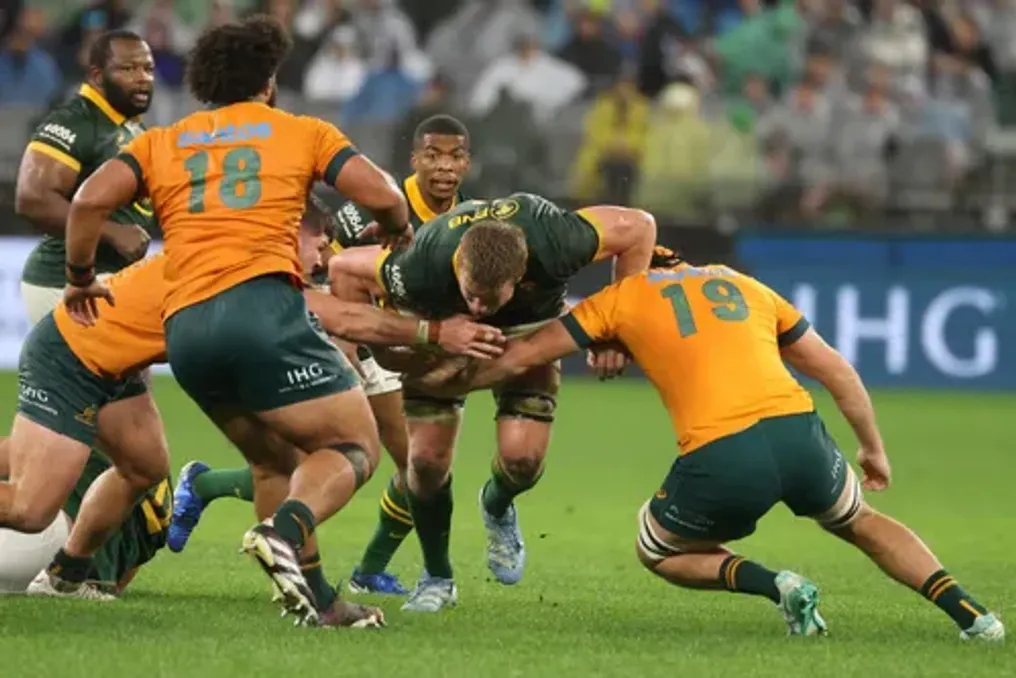
Despite playing against 11 men after a series of yellow cards for infractions ranging from head contact to offside, the world champions allowed too much in the final ten minutes and lost 42-38 in Perth, marking their second defeat of the season.

Erasmus made 13 changes to the starting lineup, and he always found it difficult to achieve cohesion. However, according to the coach, they are themselves to blame for the loss because of how they missed opportunities in the first half and allowed the Wallabies to dictate the game.

The coach of the Springboks acknowledged the team's mistakes, even despite external factors such as a breakdown in communication between match officials, which disrupted the game. In his post-match press conference, Erasmus noted: 'I have been in games where communication was cut off, but perhaps not to this extent.'

He added: 'But I believe for a neutral viewer, this should have been a very exciting game; I think for Australia it should be amazing. We lost in the Springboks form against the Wallabies. But with all these interruptions, there is no one to blame but ourselves for this result.'

Erasmus also mentioned technical issues, noting: 'I know the technology let us down a bit; the clocks sometimes kept running and didn't stop, but that didn't affect how we played. We control how we play, and today we didn't play well enough to beat Australia.'

Captain Andre Esterhuizen also expressed disappointment but was proud of the team's fight at the end of the match. The Springboks managed to come back from a 42-17 deficit and get close to scoring a touchdown right at the end. The last ten minutes were tense, and the world champions showed their character, but they created too many problems themselves in the remaining little time.

The match ended after an obstruction of play between Esterhuizen and reserve fullback Juan Horn led to a penalty against the Springboks as they attempted a final attack for a winning touchdown. Esterhuizen commented on the final minutes: 'It was quite tense. At some point, we were focused on scoring one touchdown, then another, moving step by step. But, as we said, we should never have been in that situation. We put ourselves in that position. I think the fans and people watching really enjoyed it, but we must be better and not get into such situations.'
Similar stories

Rassi stressed that the match against Australia will be an important step for the Springboks ahead of the 2027 World Cup
Read more
iol.co.za

Rassi stressed that the match against Australia will be an important step for the Springboks ahead of the 2027 World Cup

Rassi Erasmus stated that the Wallabies will present the Springboks with a completely different challenge after the intense series of matches against the New Zealand team. The Springboks conducted their first training session at the base in Terrigal, New South Wales, the day before the match against the Wallabies in Perth next Sunday. Rassi Erasmus emphasized the significance of the confrontation with Australia on home ground, given that only 13 months remain until the World Cup.

Erasmus noted that although the Springboks arrived in Australia from Baltimore after a tough four-match series against New Zealand, and had previously played Argentina, he believes the Wallabies will be significantly different from the New Zealand team, but the match in Perth is still very important.

He reminded that people have long been interested in the importance of this game. Erasmus highlighted the rich traditions of Australian rugby, mentioning that they were strong when playing great players like George Gregan and Stephen Larkham, and also noted that Australia has won the World Cup twice and was in the final in 2003.

An additional stimulus for Australia will be the status of host country for the next World Cup, while the Springboks will return to Perth during the tournament to play Romania in the third group match. Erasmus stated that it is extremely important for them to have the opportunity to play against the host nation of the World Cup in a major test match when opponents are fresh, and they arrive after a very difficult series against New Zealand.

Despite this, Erasmus does not intend to view the game as just a World Cup rehearsal. He expects the Wallabies team to be motivated to impress their fans. He added that both Argentina and New Zealand tested the Springboks, and they do not doubt that they will face a highly motivated Wallabies team, which has not lost under the new coach Les Kiss. Erasmus concluded that it will be a completely different type of game compared to the series against New Zealand, and they will need another full 80-minute game to achieve the desired result.

Captain Siya Kolisi reported that the team will maintain its core principles while adapting to the specific demands presented by the Wallabies. Kolisi emphasized the importance of preparation in Australia, noting that the team has gone through several tough battles against Australia where they sometimes lost. He also mentioned that the training went well, and it was nice to see many South Africans who came to support them in Terrigal. He clarified that the team's core values will remain the same, but since Australia is fundamentally different from New Zealand, they will have to adjust some aspects.

This ability to adapt will be one of the key tests for the Springboks as they begin the next phase of World Cup preparation. During Friday's training, a lighter topic arose when Erasmus was asked about the unusual buzz cuts of members of the Springboks management. According to available information, the haircuts are the result of a bet, but Erasmus declined to comment on the details, laughing.

Test match between Springboks and Wallabies in Perth seen as preparation for the 2027 Rugby World Cup playoffs
Read more
iol.co.za

Test match between Springboks and Wallabies in Perth seen as preparation for the 2027 Rugby World Cup playoffs

The upcoming test match between the Springboks and the Wallabies in Perth provides the Springboks team with an opportunity to conduct practical training ahead of the 2027 Rugby World Cup playoffs.

Despite the immediate goal of winning away against the Wallabies, the coaching staff under Rassie Erasmus is already analyzing all logistical and game details in anticipation of defending the title next year in Australia.

The Springboks are scheduled to return to this venue in October 2027, where they will face Romania in the third group match of the World Cup, making this test match a strategic operational rehearsal.

The group match itself is expected to be predetermined, as the Boks are likely to easily defeat the Romanian team. However, it is the first playoff match in Perth that will command the full attention of the Springboks.

Since the Springboks are likely to finish first in Group B, they will face the best team that finished third in Groups D, E, or F in the Round of 16. Siya Kolisi's team is expected to meet one of the teams from Japan, Samoa, or Tonga in this match before a possible quarter-final clash against their long-time rivals, the All Blacks.

Playing in Perth next Saturday allows the Boks to adapt in advance to the specific environmental conditions and logistical features of the city. Furthermore, Western Australia has a large South African community, and the upcoming match will give the Boks insight into the loud support in 'Perthfontein' that they might expect in 2027.

When South Africa meets Romania next year, as well as whoever awaits them in the Round of 16, the opponents may differ, but the environment will remain the same. By conducting rehearsals at the stadium, hotels, and training facilities now, Erasmus ensures that his team eliminates unknown variables, striving to reach peak form by the start of the main World Cup stage.

In the World Cup campaign, where success is determined by minor advantages, this early reconnaissance in Perth could prove to be a subtle yet decisive edge.

The rivalry between the Springboks and All Blacks remains the greatest in rugby due to mutual respect
Read more
iol.co.za

The rivalry between the Springboks and All Blacks remains the greatest in rugby due to mutual respect

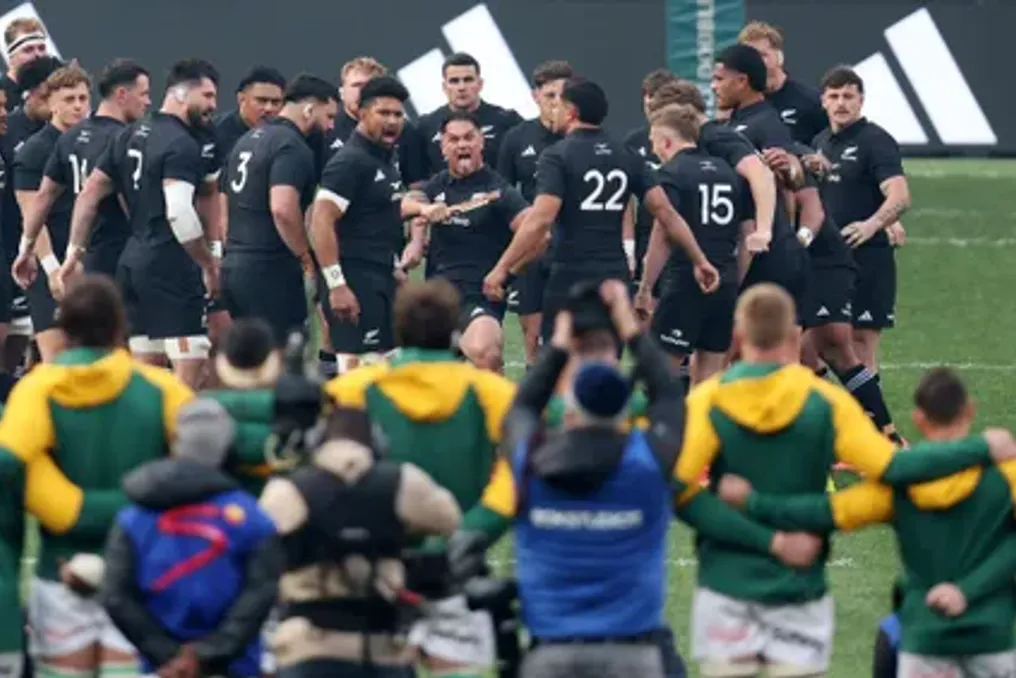
Despite the rivalry between the Springboks and the All Blacks being arguably the greatest in world rugby, respect between the players and teams is maintained even after the match concludes.

Unlike many other sporting confrontations where players might avoid interacting after the game, the opposite occurs in this rivalry. Although players fight fiercely during the 80 minutes of play, and coaches sometimes exchange sharp remarks at press conferences, the atmosphere quickly normalizes after the match ends, and both teams demonstrate mutual respect.

Erasmus and ReNNy shared a beer

This rivalry between South Africa and New Zealand illustrates the essence of the sport. The Springboks coach Rassie Erasmus and his colleague from the All Blacks, Dave Rennie, although they may have tactical disagreements, set these differences aside after the final whistle and media duties.

These two coaches have repeatedly met over a pint before and after various series matches, serving as a reminder that their confrontation is based on respect, not hatred. Erasmus mentioned that they drank beer after the match and planned to meet in Cape Town.

Dave Rennie confirmed that they shared a beer immediately after the game, despite verbal sparring over the score.

This friendly relationship extends to the players. Springboks captain Siya Kolisi and All Blacks captain Ardie Savea have developed a deep friendship that goes beyond rugby. They have attended church together, and Savea's children show particular affection for the Springboks captain, calling him 'Uncle Siya.'

Kolisi emphasized that when he plays against a friend, he shows respect by giving everything he can on the field, which he believes is very important. This says a lot about what lies beneath what could be considered the most intense rivalry in international rugby.

For 80 minutes, Kolisi and Savea lead their teams into battle, ready to risk their bodies for victory. Although Kolisi delivered a strong hit to Savea in Cape Town, Savea admitted feeling it, but after the battle, respect remains.

Springboks and All Blacks share a flight

The rivalry does not need to become personal. On the contrary, the mutual respect between the players makes this spectacle special. This was demonstrated in an unusual way before the fourth and final match in Baltimore, when the Springboks and All Blacks traveled together on a charter flight from Johannesburg to Washington.

Most of the journey passed in silence, according to eighth player Jasper Wiese, but the mere fact of the joint long journey was symbolic. The silence was understandable, as one team had won while the other had lost. Despite harsh words, powerful hits, tactical battles, and continuous competition, it is still rugby, and that is why the Springboks and All Blacks rivalry will go down in history as perhaps the greatest contest on the planet outside the Rugby World Cup. Because the Boks and the All Blacks might want to destroy each other for 80 minutes, running the oval ball across the field, but when it is over, they can still share a beer, eat together, attend church, and call each other friends.

Popular