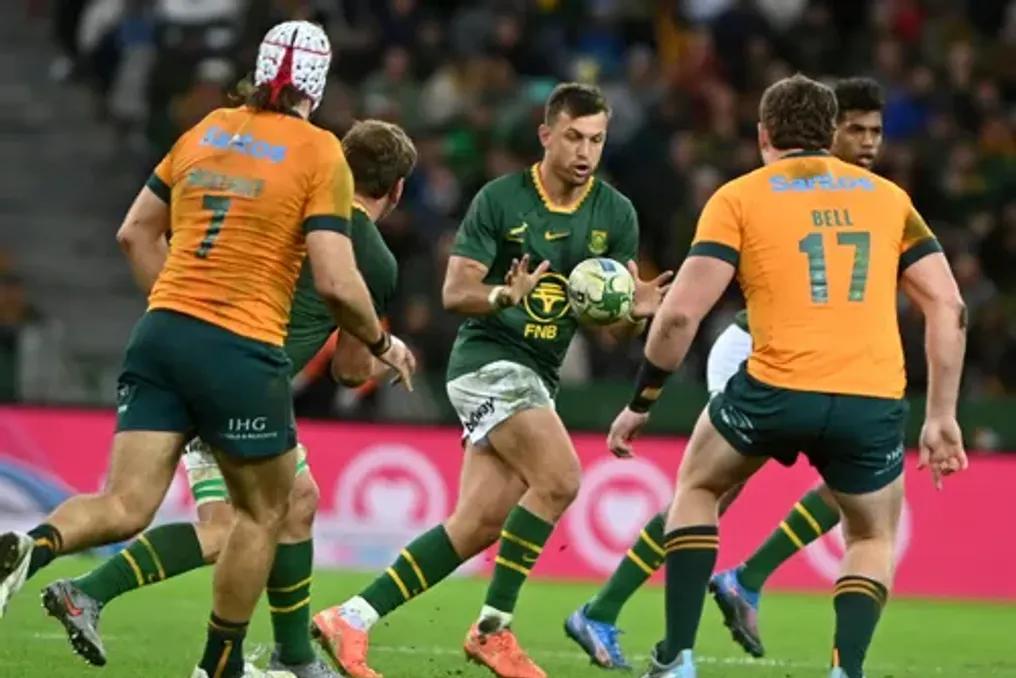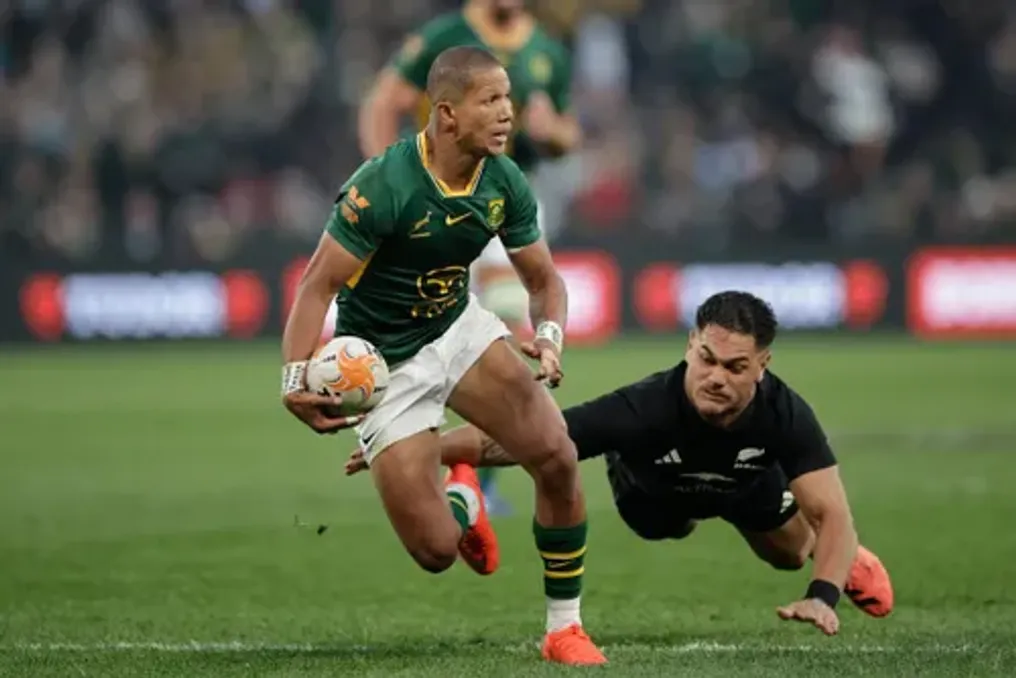
The Wallabies team once again demonstrated outstanding play in Perth, defeating the Springboks with a score of 42:38. This match reminded everyone of the impressive performance of the Wallabies in the second half at Ellis Park stadium in 2025, which allowed them to win the Nelson Mandela Cup.
Initially, the home team Wallabies led 42:17 with about ten minutes left in the match, which seemed sufficient to secure the victory. However, similar to how they managed to come back from a 22:0 deficit in Johannesburg, the Springboks managed a strong comeback after prolonged pressure led to the hosts receiving four yellow cards.
As a result, Australia found itself with only 11 players remaining, and the familiar struggle from the Boks almost allowed them to achieve a comeback victory. Nevertheless, an error related to an obstruction by captain Andre Esterhuizen and the substitution of Juan Horn during the last attack from their own half completed the game, and this mistake may have reflected the overall picture of the match for the world champions for most of the time.
Despite receiving yellow cards, Australia fully justified its efforts in Perth at Optus Stadium. The team dominated territorial aspects and ball possession from the start, capitalized on opportunities, and ultimately achieved a deserved victory.
Although the yellow cards and communication issues between the referee and the TMO added drama to the game, without errors, discipline, and a cohesive first half performance, the outcome could have been different.
Head coach Rassie Erasmus made numerous changes to the squad that won the match in Baltimore against the All Blacks two weeks ago. A new midfield combination featuring Herschel Jantjes and Hendrie Pollard was formed, and a young defensive line consisting of Zachary Porten, Johan Grobbelaar, and Jan-Hendrik Vessels got the chance to play.
Furthermore, three defenders, Afelele Fassi, Ethan Hooker, and Edwin van der Merwe, played in an international match for the first time. The unfamiliarity among these combinations apparently affected the Boks' ability to maintain a steady rhythm. There was no forward progress in the scrums—it only appeared late in the second half, forcing momentum generation in other areas.