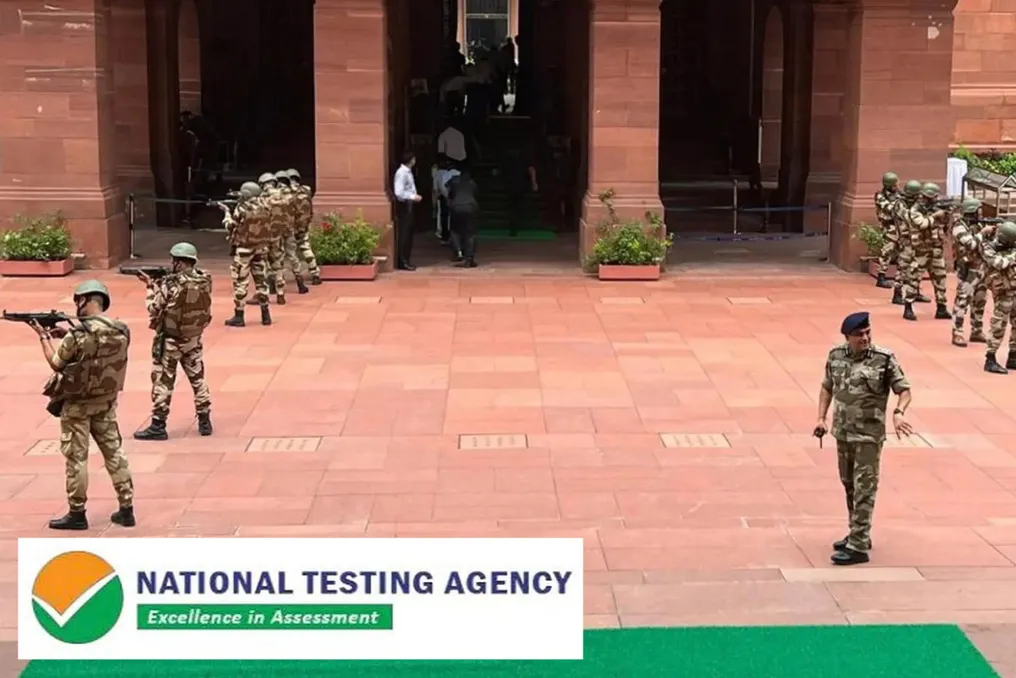
CISF to strengthen security of NTA's confidential zones after NEET exam material leak
Read more
The times of India
timesofindia.indiatimes.com

CISF to strengthen security of NTA's confidential zones after NEET exam material leak

The National Testing Agency (NTA) has significantly enhanced security measures around its examination activities, deploying 39 personnel from the Central Industrial Security Force (CISF) to its New Delhi office. These personnel will monitor restricted areas, regulate access, and conduct searches of staff and visitors. These steps come amid repeated concerns regarding leaks of examination materials and administrative shortcomings.

CISF personnel have been stationed at the entrances and exits of confidential zones within the Government of India Press Centre on Mint Road. They will implement access control and screening measures, including baggage X-ray scanning and Door Frame Metal Detectors (DFMDs).

Furthermore, NTA has clearly demarcated confidential zones in its new premises. Movement and operations within these areas are under close surveillance as part of efforts to prevent unauthorized access to examination materials. A senior official stated that 'the confidential zones have been marked in the building where movement and operations will be strictly controlled to ensure an impeccable system. The Ministry of Home Affairs has approved the CISF security coverage for these premises.'

Relocation of NTA's sensitive operations to a new office

These security measures follow NTA's relocation from its former office in Okhla to a new facility on Mint Road, where confidential and sensitive operations are concentrated. The official specified that a dedicated space of over 55,000 square feet has been allocated in the Government of India Press Centre on Mint Road. The National Testing Agency has been assigned the fifth floor, as well as parts of the fourth and sixth floors of this building. Confidential and sensitive operations were moved to the newly designated building over the past month.

Other parts of the Government of India Press Centre building are already protected by CISF forces, but now NTA will receive a dedicated security system specifically for its confidential examination-related zones. The agency's new security system also includes more rigorous monitoring of technological systems critical for conducting exams. NTA is working on implementing strict access controls, encryption standards, immutable logging, and data storage resistant to unauthorized alteration.

Strengthening cybersecurity measures

NTA is also auditing the security of all systems used throughout the examination cycle. These systems include candidate registration, fee payment, admit cards, computer testing, OMR processing, result systems, and other infrastructure supporting the exams. The official noted that planned actions include conducting readiness checks of all auxiliary systems before each examination cycle. These checks are carried out in coordination with NTA's technology department and its security testing function, covering the technical security of exam day workflows, including biometric authentication, facial matching, video surveillance systems, and live monitoring infrastructure.

The agency is also preparing a specialized cyber incident response system related to examinations. Plans include enhancing monitoring of the security operations center and ensuring rapid response capabilities on exam days. For information security oversight, NTA has appointed a dedicated Chief Information Security Officer (CISO). The official reported that the selection process for the CEO and CISO is in an advanced stage, and independent third-party cybersecurity audits conducted by agencies accredited by CERT-In and C-DAC are ongoing.

Exam material leak exposed gaps in confidential zone

The latest security measures were adopted following the 2024 NEET-UG material leak, which triggered nationwide student protests and drew attention to NTA's examination processes. The CBI investigation found that three subject experts were the primary sources of the leak. According to this finding, the experts within the NTA confidential zone were neither checked nor screened upon entry or exit.

It is presumed that the experts managed to obtain brief information from test questions on small sheets provided to them for rough work and translation. The CBI also noted that the NTA office in Delhi lacked a dedicated control room with live video surveillance. This resulted in the activities of the three accused experts going unnoticed. NTA was established in 2017 by the Ministry of Education to conduct fair, transparent, and standardized examinations.

Previous reforms and new control

The 2024 NEET material leak also led to the formation of a high-level committee led by former ISRO chairman K. Radhakrishnan. This committee recommended strengthening security control measures across the entire examination process. Its recommendations covered question banks, candidate registration, fee payment, admit cards, computer testing platforms, OMR processing, normalization mechanisms, and result systems.

A separate task force, led by Infosys co-founder Nandan Nilekani, was also announced to develop recommendations for ensuring the integrity of the examination system. This group was formed after the scandal but has not yet submitted its report. Following the 2026 material leak, the Supreme Court sharply criticized NTA, stating that it 'had not learned its lessons.' Thus, the current modernization of security measures goes beyond just physical protection of confidential materials; the agency now integrates CISF protection, stricter access control, video surveillance, and live monitoring with cybersecurity audits and technical guarantees across all its examination systems.
Similar stories

NTA strengthens exam security: CISF takes over guarding, new protocols implemented
Read more
www.aajtak.in

NTA strengthens exam security: CISF takes over guarding, new protocols implemented

The National Testing Agency (NTA) has made significant changes to its examination system to enhance security. These reforms followed disputes related to the leakage of examination materials and incidents concerning the NEET UG exam. Currently, NTA is implementing changes across its entire structure, including staffing.

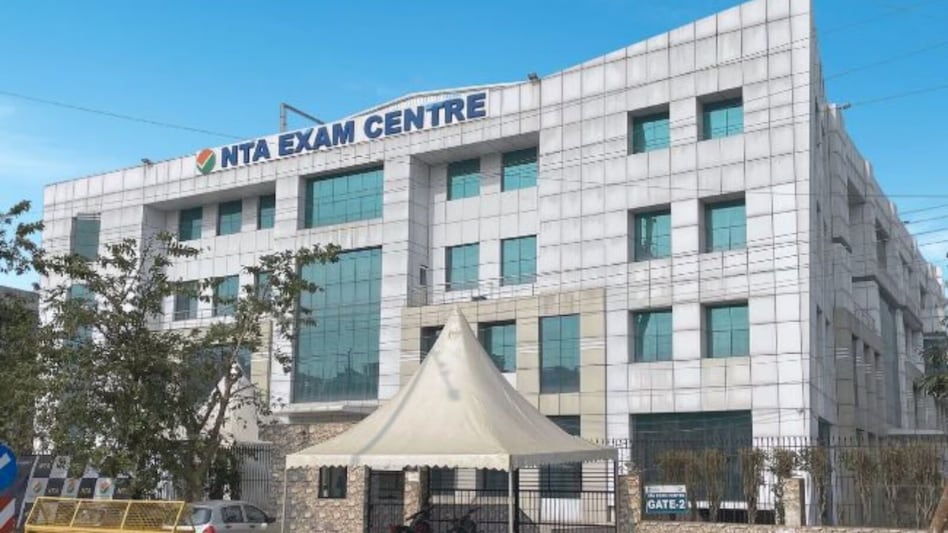
One of the key changes is the relocation of the new NTA office to Mint Road, Delhi. The Central Industrial Security Force (CISF) has been deployed here to secure sensitive and confidential areas. The goal of this new system is to prevent unauthorized access to confidential examination operations and strengthen access control.

According to a report, 39 CISF personnel are stationed at the new complex. Their duties include monitoring entry and exit, as well as conducting screening and security checks.

NTA's previous operating methods were different. Staff and officials were distributed across units for various exams, but this system has also been changed. The new structure forms functional verticals based on work and specialization. This aims to develop subject matter expertise in various operational areas of the agency.

NTA's confidential examination operations have been moved to the Government of India Press Building on Mint Road in Delhi. The new complex provides an area of 55,524 square feet, encompassing parts of the fourth, fifth, and sixth floors. The current address of NTA on its official website also points to this building on Mint Road.

Following a directive from the Ministry of Home Affairs, 39 CISF personnel were placed in the new complex. They are responsible for screening and controlling access for individuals entering confidential zones. CISF staff conduct access control, screening, and monitor entry and exit. Security checks include baggage scanning via X-ray and Door Frame Metal Detector (DFMD). CISF personnel are positioned at various entry and exit points to regulate movement in sensitive areas.

The changes affect not only the organizational structure but also job appointments. In May 2026, two Deputy Directors were appointed within NTA under the Central Cadre Scheme. In August, 14 officials joined the agency, ranging from Deputy Secretary level to Assistant Section Officer. Among these officials are members from various government services such as IAS, IPS, IRS, and Indian Statistical Service.

Furthermore, recruitment is underway for subject matter specialists for positions such as Security Officer, HR, R&D assessment, test center, candidate experience, information security, test security, and supervision.

The CBI is investigating the NEET-UG 2026 leak case. The agency named 13 accused in the indictment filed on July 28, which includes three subject experts from NTA. According to the CBI, these three experts allegedly gained access to questions related to the confidential department of NTA while handling examination materials. During the investigation, it is alleged that one expert recorded the questions and options on small pieces of paper, while other experts allegedly memorized some questions and subsequently wrote them down. It is important to note that these are allegations and findings of the CBI investigation, not a final verdict.

Following the NEET-UG 2026 dispute, a high-level committee was formed, chaired by Nandan Nilekani, co-founder of Infosys, to improve the examination system. In September 2026, the Judiciary was informed that the committee conducted extensive consultations with stakeholders, and its report is expected by the end of September. During hearings on petitions related to NEET-UG 2026, the Supreme Court requested a progress report on the new NTA system and reforms. The court also indicated it might inspect the new NTA office to verify if the stated systems are being implemented on the ground.

To enhance exam security, NTA has introduced new protocols at all levels of the process. This includes monitoring every stage, from question preparation to translation, printing, packaging, and secure delivery to examination centers. Established security procedures will also be followed when opening the question trunk on the day of the exam, as well as during answer processing and result preparation.

Technologies such as Aadhaar-based biometric authentication and facial recognition will be used for candidate identification and monitoring of examination centers. Additionally, risk assessment, mobile jammers, CCTV surveillance, and AI-based technical tools have been integrated into the security system at multiple levels.

Supreme Court Judges Plan to Visit NTA Office to Inspect Upgraded Systems Following NEET Exam Material Leak Scandal
Read more
timesofindia.indiatimes.com

Supreme Court Judges Plan to Visit NTA Office to Inspect Upgraded Systems Following NEET Exam Material Leak Scandal

The Supreme Court emphasized the need for institutional strengthening of the examination conducting system to prevent repeated leaks of NEET materials. The judges indicated that they will personally visit the National Testing Agency (NTA) office to inspect the updated facilities.

Judge Narasimha stated that the judges plan to visit the NTA office on Mint Road in Delhi to assess the system's functionality, as well as examine its human resources and other organizational aspects.

Justice PS Narasimha informed General Advisor Tushar Mehta, representing the Centre's interests, that he and Justice Aradh requested to visit the recently modernized National Testing Agency facility to study its systems.

The Bench pointed out to Mehta that it is critically important to institutionally strengthen the NTA system to prevent constant material leaks. It was noted that temporary or ad-hoc measures are insufficient, and the key to success lies in creating a permanent structure, staff, and verticals, minimizing temporary appointments.

At the beginning of the session, the Centre informed the court that a high-level group led by Nandan Nilekani, established to propose structural reforms in NEET, has conducted extensive consultations and is likely to present its first interim report by the end of the current month.

General Advisor Tushar Mehta clarified that the suggestions received from stakeholders were presented to this group, which also consulted with members of the previous committee chaired by former ISRO Chairman K Radhakrishnan.

The court directed the Joint Secretary of the Department of Personnel and Training (DoPT), who is assisting the Nilekani panel, to submit an affidavit with a detailed description of the steps taken. The Bench stressed that the key task is the institutionalization of the entire process of conducting the National Eligibility cum Entrance Test (NEET).

The Ministry of Education reported that a new and improved system has been developed. The court noted that the Radhakrishnan committee also recommended structural changes, but the focus was on their actual implementation.

Mehta assured the court that the Nilekani panel is considering all recommendations made by the Radhakrishnan committee, as well as proposals from applicants and other participants in the process. He stated that this is the highest priority of the government, and all necessary assistance will be provided.

The court ordered that the affidavit submitted by NTA be posted on the official website for citizens to submit suggestions. Furthermore, the Centre was directed to appoint a designated lawyer through whom people could send their comments.

Previously, on August 19, the Supreme Court, recognizing the need for institutionalizing reforms in NTA, had asked the Centre to provide information on the steps taken to implement the recommendations of the Radhakrishnan and Nilekani panels.

The seven-member Radhakrishnan Committee was formed by the Ministry of Education after the leak of NEET-UG 2024 materials to develop recommendations for reforming the examination process, strengthening data security protocols, and reviewing the structure and functioning of NTA.

Following student protests in July this year, the Union government constituted a powerful task force headed by Infosys co-founder Nandan Nilekani to develop proposals for structural reforms in competitive exams. NTA cancelled the NEET-UG 2026 exam, which was scheduled for May 3, following allegations of material leakage. This matter is under investigation by the Central Bureau of Investigation. A retest was conducted on June 21, and results were announced on July 16. Prior to this, after allegations of NEET-UG question paper leaks in 2024, the Supreme Court refrained from cancelling the exam but issued several directives to prevent leaks and set criteria for canceling public examinations.

Popular