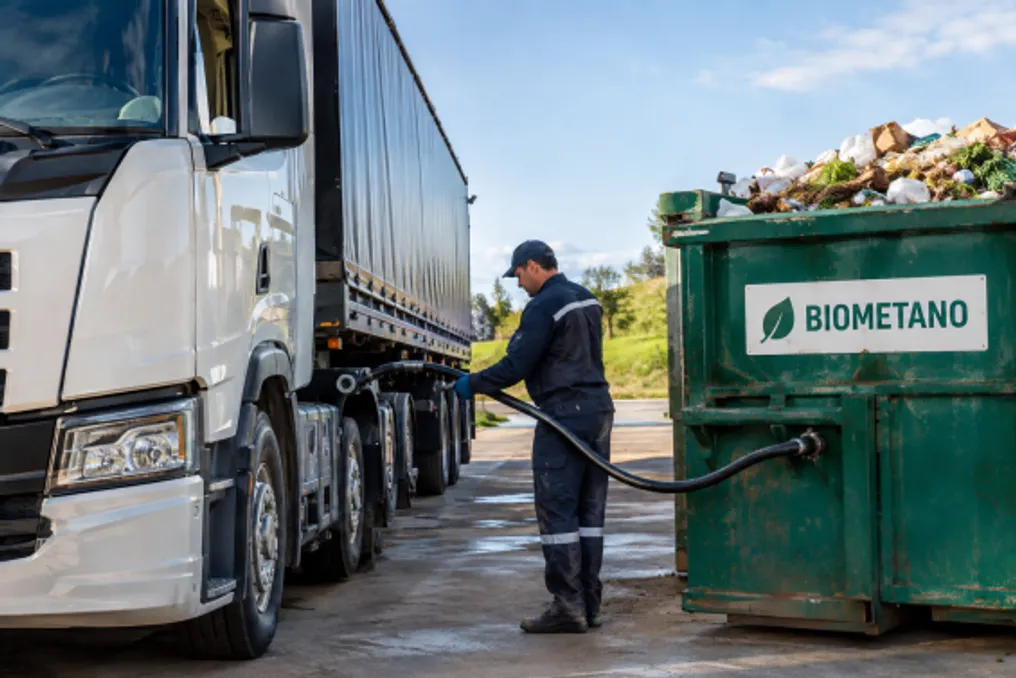
Biomethane generated from organic waste emerges as an alternative to diesel dependence in Brazil
Read more
AutoPapo
autopapo.com.br

Biomethane generated from organic waste emerges as an alternative to diesel dependence in Brazil

Brazil has a strong dependence on diesel fuel, a petroleum-derived fuel essential for production, transportation, and public education in the country. However, high costs and difficulty in meeting the entire national demand represent significant challenges.

A potential solution is found in the organic waste discarded in landfills, which can be converted into biomethane. In 2025, Brazilian diesel consumption reached approximately 50.5 billion liters, equivalent to over 138 million liters daily. Domestic production is not sufficient to cover this need.

According to ANP data, in 2025, net diesel imports totaled 16.3 billion liters, representing 27.3% of domestic demand. This external dependence generates economic effects because imported fuel is subject to fluctuations in international oil prices, exchange rates, freight costs, and global market conditions. The Central Bank recorded that, in 2025, diesel accounted for 61% of the value of imported petroleum derivatives.

Additionally, the country is vulnerable to distribution instabilities caused by international conflicts, such as the wars between Russia and Ukraine, and between the United States and Iran. Reductions in supply result in price spikes, creating a cascading effect: the increase in refinery price is passed on to the final consumer, raising costs across the entire logistics chain.

Beyond the financial impact, there is a serious environmental consequence. Diesel is highly polluting, releasing large amounts of carbon dioxide (CO2) and other harmful gases, contributing to the greenhouse effect and global warming. Many market demands pressure industries to adopt cleaner energy solutions.

In this context, biomethane emerges not only as an ecological option but also as a strategic alternative. Brazil has great potential for the production and use of this gas, which is generated by purifying biogas resulting from the decomposition of organic matter.

The raw material for biomethane can be obtained from sanitary landfills, urban waste, animal manure, agricultural activities, and industrial byproducts. By treating waste as an energy input, instead of just a disposal problem, it is possible to obtain part of the energy needed for local production and transport.

A study by the Energy Research Company (EPE), within the Ten-Year Energy Expansion Plan 2035, projects that the total utilization of residual biomass mapped in the country could generate more than 170 billion normal cubic meters (Nm³) of biomethane. Although this is a technical potential, a feasible volume of 35 billion Nm³ is projected for 2035, which could meet about 50% of the national diesel demand at the end of the decade, mitigating the need for imports.

Bruno Baeta, a researcher at the Federal University of Ouro Preto, specializing in waste and biomethane for over 15 years, considers the gas a viable solution for the environmental and economic problems of diesel. He emphasizes that if all waste is utilized, there will be a 'comfortable energy security,' given the strong Brazilian agricultural industry.

Interest in biogas has driven investments in infrastructure and technology, with existing regulated markets and legal security. Companies such as Gasmig and Comgás are already operating in the biogas production and distribution chain.

Davi Lopes, Head of GWM Hydrogen and PhD in energy planning, explains that biomethane is advantageous due to its molecular composition. Unlike fuels with long carbon chains (such as 16 to 20 carbon diesel), methane (CH4), the main component of natural gas, has only one carbon and four hydrogens, resulting in a proportional decrease in carbon and an increase in hydrogen, which aligns with the Brazilian reality.

The production process involves generating gas through bacterial action on organic waste, which is deposited in composting silos for biogas capture. After filtration, it becomes biomethane. Baeta adds that the process is continuous, with a gas production time of 30 days per batch, and the final residue can be used as fertilizer.

To optimize production, especially in the agricultural sector, Baeta recommends better sorting of the material, separating organic waste from industrial residue, which would reduce costs and increase efficiency.

Biomethane has energy efficiency similar to CNG. The Future Fuel Law (Law No. 14.993/2024) established the PNDG, setting emission reduction goals and obligating the inclusion of renewable fuel in the market, with an initial target of 0.5% biomethane mixed with CNG this year.

The program foresees the gradual expansion of gas use, either in pipeline networks or at refueling points via 'virtual pipeline' (pressurized truck transport). Cities like São Paulo and Goiânia already have vehicles powered by biomethane, and manufacturers like MWM have offered adaptable engines for biomethane use since 2019.

Thiago Brito, Sales and Biofuel Solutions Manager at MWM, highlights that Brazil has a competitive advantage due to biofuels, with biomethane production potential reaching 70% of total diesel consumption and the capacity to reduce CO2 emissions by over 90%.

Refordiesel, in Contagem (MG), has also adopted biomethane. Edmar Bergamini, the company's partner, performs conversions from diesel to biomethane, removing injectors and installing components for gas, allowing the engine to run under the Otto cycle without loss of power or torque. The average cost of this conversion is R$ 100 thousand, serving as a way to decarbonize without changing the vehicle.

Large logistics and industry companies, such as ReiterLog and Mercado Livre, are replacing fleets with biomethane trucks, in collaboration with Ambev and Natura. Toyota demonstrated a prototype of the biomethane-powered Hilux at Agrishow 2025, as part of its emission reduction strategy, although the project is still under development.
Similar stories

Increase in palm oil biofuel production in Indonesia leads to destruction of tropical forests
Read more
iol.co.za

Increase in palm oil biofuel production in Indonesia leads to destruction of tropical forests

Indonesia has achieved a rare success in Asia following the energy crisis in the Strait of Hormuz by reducing its dependence on imported diesel fuel through the use of biofuels. However, there is a downside to this policy: it may contribute to exporting even more choking smoke to neighboring countries.

The cause is palm oil. Approximately one-fifth of the world's production volume this year will be burned in Indonesian engines. A government decree mandates the use of a 50% biofuel blend in diesel fuel, which is primarily used in trucks and small backup generators.

This step helped one of the world's largest oil importers survive the consequences of the war with Iran. President Prabowo Subianto stated last month that his initial reaction to the conflict was to accelerate the transition from 40% to the current level of 50%, which allowed them to stop importing diesel and saves the country $9.5 billion annually.

Nevertheless, this policy increases the cost of raw materials closely linked to smog currently enveloping tens of millions of people in Singapore, Malaysia, the Philippines, and Indonesia itself. Experts note that electrifying the country's fleet would provide the same energy security at significantly lower costs to the environment and human health.

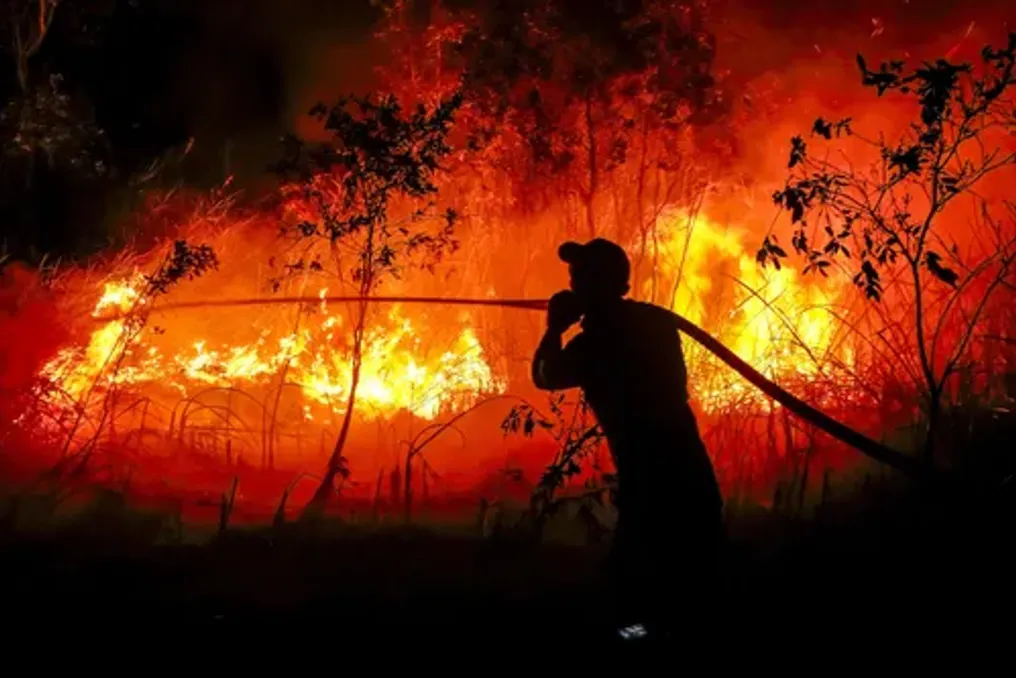
Deforestation for the creation of palm oil plantations is not new in Indonesia, and the resulting pollution has been a decades-long problem. But since over 200,000 hectares were burned by August, and the worst weeks are still ahead, this fire season could be the most severe for Indonesia since 2015.

That episode led to economic losses of $16 billion and more than 100,000 premature deaths, prompting Jakarta to tighten its approach to forest protection. In Europe, this strengthened the anti-palm oil campaign, which ultimately led the European Union to cease classifying palm biodiesel as a renewable resource, reducing consumption. Indonesia stabilized the resulting surplus by gradually increasing the blending mandate to the current level.

This situation can be viewed as positive or negative, as palm oil has a dual nature. On a well-managed plantation, lifecycle emissions can be about half that of diesel fuel. However, if tropical forests are cleared or peatlands are drained for cultivation, the picture becomes darker: emissions can be twice as high as fossil fuels.

The environmental benefit or harm of promoting biofuels in Indonesia largely depends on where the additional biofuel comes from. The government focuses only on the positive side, claiming that all increased demand can be met by increasing the productivity of existing plantations and planting on degraded lands.

However, the data suggests otherwise. All growth in the country's palm oil production since 2015 has come from expanding cultivated areas. The area under palm oil has increased by 65%, while yield has actually decreased by 7%.

The term 'degraded lands' is also ambiguous. A 2024 study showed that over half of Indonesia's palm oil plantations were located on territories that were old-growth forests in 1990. Most of these lands were not immediately converted to palm oil. Today's tropical forest could become tomorrow's fire zone, then degraded scrubland, and eventually a 'sustainable' plantation. Although international standards try to prevent such practices, Indonesia's domestic regulations are much looser. As a result, over time, deforestation can effectively be washed away. And few know who initiates the fires. Local officials claim that almost all of them are human-caused, and 80% of the burned land is converted into plantations.

Conditions this year are particularly susceptible to ignition. Hot and dry weather caused by the current super El Niño means fires will burn longer and farther. Crude oil prices reached $100 per barrel, and American diesel is at a record high, making hectares capable of growing a substitute unprecedentedly valuable. With an omnipresent dry undergrowth, the only initial investment required is a match.

Prabowo's rhetoric, combining promises of protection with a pledge to open millions of hectares of forests for food and ethanol production, also complicates the anti-deforestation message. His plan to increase the blending ratio to 60% next year will add another accelerator: it will require about 23 million metric tons of palm oil annually, which is one-third more than current levels.

There is a better way to eliminate dependence on imported diesel: completely phasing out freight engines. One can look at the example of China, the world's largest fuel importer. It has already acquired about one million electric trucks, equivalent to roughly one-sixth of Indonesia's commercial fleet. The energy to power them comes mainly from domestic sources.

The islands of Java, Sumatra, and Borneo are rich in energy generation potential, but these opportunities are being wasted. If just 10% of palm oil plantations were equipped with solar panels, it would be enough to power all of Southeast Asia, as well as Japan. Meanwhile, only about a quarter of the country's hydropower potential is being utilized. Electric vehicles already account for nearly a quarter of car sales, but trucks and motorcycles, suffering from inconsistent or absent political support, lag far behind.

Indonesia has found one path out of dependence on imported diesel. China demonstrates a better path that can preserve both the balance of payments and the landscape. Electrification can even reduce harmful pollution from land burning and exhaust fumes—a plague that reduces the health and life expectancy of millions across Southeast Asia. There is a great deal if only Prabowo can seize it.

Popular