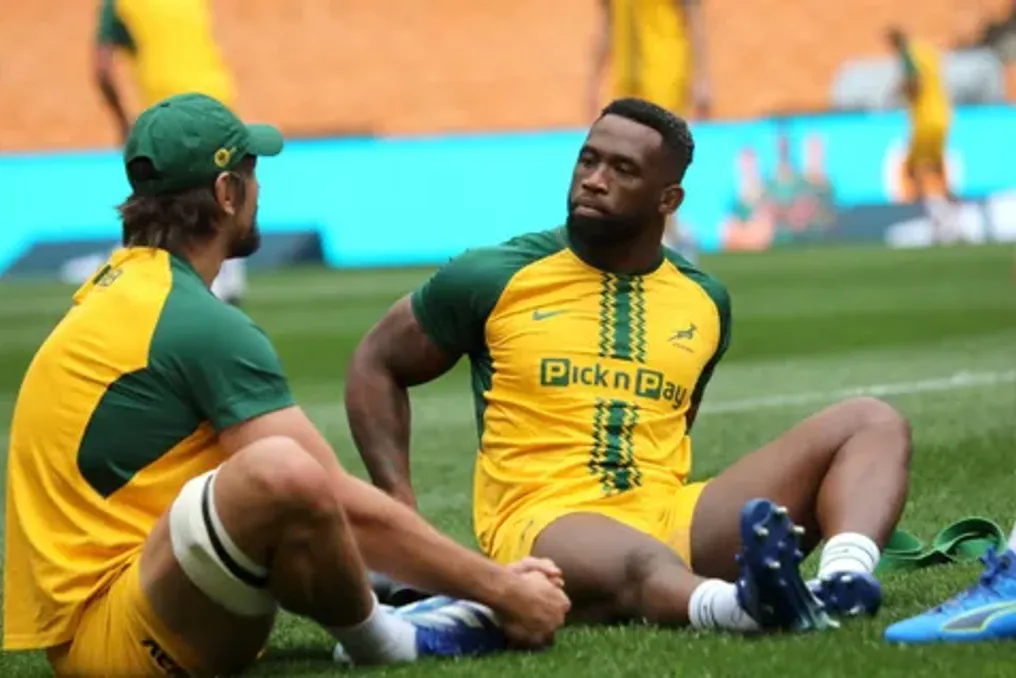
Australia defeats Springboks in Perth with a score of 42:38
Read more
IOL
iol.co.za

Australia defeats Springboks in Perth with a score of 42:38

The resilient Australian team demonstrated tenacity and attacking talent, managing to withstand the late onslaught from the Springboks and securing a victory with a large margin of points at the Optus Stadium in Perth on Sunday.

The Springboks scored first through an early maul executed by hooker Johan Grobbelaar, but the hosts quickly took control of the initiative. Centre Len Ikitau crossed the line twice within three minutes, and then flyhalf Ben Donaldson scored in the final seconds of the half to compensate for Edwill van der Merwe's attempt, allowing Australia to go into halftime with a 24:17 lead.

After the break, Coach Les Kiss's team significantly increased the pressure on the game. Captain Harry Wilson scored in the 59th minute, and four minutes later winger Max Jorgensen finished a brilliant combination, increasing the gap.

Towards the end of the match, the situation became chaotic due to disciplinary infringements, as numerous yellow cards reduced the Australian team's numbers to 11 players. The South Africans capitalized on the numerical advantage: replacement scrum-half Morne van den Berg scored in the 73rd minute, and then Ox Nche scored his first attempt, but this was not enough to change the overall result.

South African Scorers

The goals in the match were scored as follows:

Australia: Attempts: Len Ikitau (23', 26'), Ben Donaldson (38'), Harry Wilson (59'), Max Jorgensen (63').

South Africa: Attempts: Johan Grobbelaar (9'), Edwill van der Merwe (29'), Morne van den Berg (73'), Nche (80').

Similar stories

Unusual Springboks Tour of Australia in 1971 Under Protest Pressure
Read more
iol.co.za

Unusual Springboks Tour of Australia in 1971 Under Protest Pressure

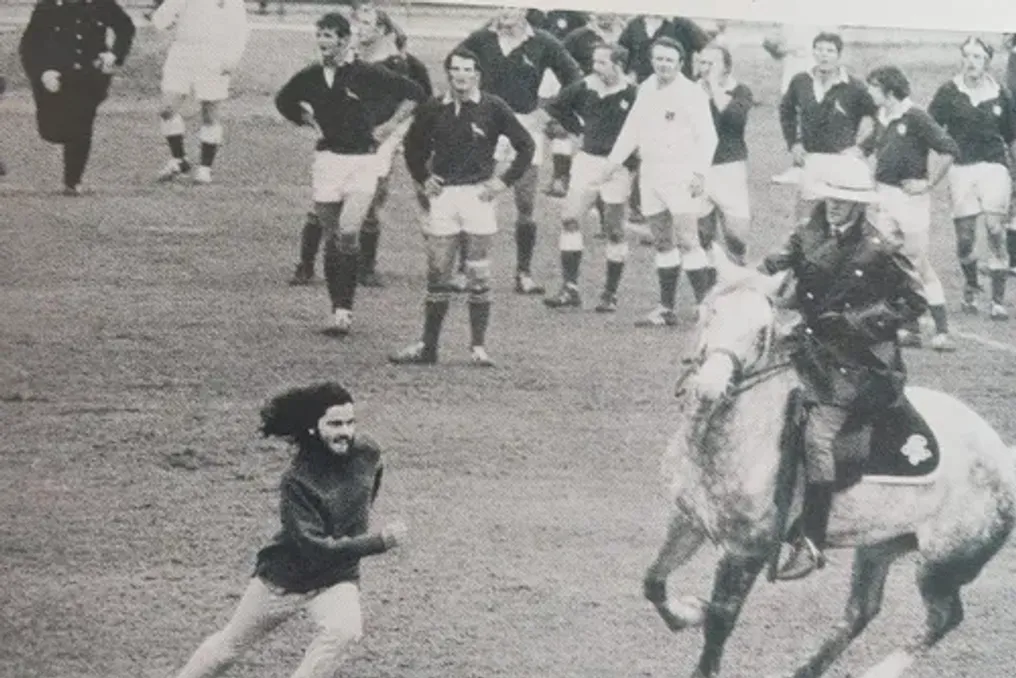
During the Springboks' tour of Australia in 1971, players faced extremely difficult conditions, including the need to avoid police pursuit and demonstrations. Imagine a match where national anthems and pre-game entertainment are absent, and the field is surrounded by barbed wire and police officers, some mounted on horses.

This grim atmosphere accompanied a series of matches in which the Springboks defeated the Wallabies 3-0. Hannes Marais' team from the '71 class became fugitives from the moment of their secret arrival in Australia after midnight. To deceive the waiting demonstrators at Perth Airport, the players hid their jackets under cloaks and removed their Springboks ties.

Thus began the 16-match tour, which earned Marais' team the title of 'Invincibles.' They won all 16 encounters, including three matches in the series against the Wallabies, becoming the only Springboks team in history to return from a full tour—series matches and friendly games—without a single loss. Although many outstanding Springboks teams have won Grand Slams in Europe, they always lost at least one game to provincial rivals.

The famous South African radio and television commentator Kim Shippy described this period as 'the sweetest hell the team knew for six weeks of sun, sweat, and tears,' alluding to the anti-apartheid demonstrations that pursued the South Africans at every turn.

To avoid crowds of demonstrators at airports, the Springboks traveled across the country on four small planes. After Perth, their next stop was Adelaide, where cunning police misled the opponents by placing officers in the main terminal while the Springboks landed on a secondary runway, from where private cars collected them.

Nevertheless, about 500 demonstrators gathered at the team's hotel in Mayfair, drumming, whistling, throwing fireworks, and chanting: 'Paint them black and send them back.' Furthermore, there were food supply issues. Australian unions banned the delivery of provisions to the Springboks' hotels, and the Mayfair hotel had never hosted a rugby team and lacked sufficient stock. As a result, the Springboks were forced to eat rations, and they were shocked to discover that breakfast consisted of only two eggs and one sausage.

After defeating Western Australia 44-18 and crushing South Australia 43-0, they headed to Melbourne. The chief organizer of the demonstrators, Bishop Edward Krauser, stated: 'They are forced to use the back door, just like they treat their Black homes. They know they are not welcome in Australian airports as ordinary tourists.'

Police warned of the high level of organization of the anti-Springboks faction in Melbourne. As an extreme measure, the Springboks were housed in the homes of rugby enthusiasts, as their luxurious hotel had become a target. The players accepted this calmly, as they were guaranteed enough food, prepared at home.

Since the South Africans were keen to see Melbourne and shop, the city mayor devised a plan. He invited the Springboks to a reception, and instead of wearing their jackets and ties, they came in casual clothes borrowed from the hosts. According to Shippy, they looked like the most diverse group ever to attend a civilian event, resembling the unruly demonstrators themselves.

Another striking moment was watching the television broadcast of the women's Wimbledon singles final. Since television only arrived in South Africa in 1976, this was the first live sport these young people had seen on screen. There was huge excitement, as it was the final between 19-year-old newcomer Evonne Goolagong and reigning champion Margaret Court. The young woman won.

The Springboks' victory over Victoria that week was overshadowed by 2000 demonstrators who threw stones wrapped in nails, lead-cased firecrackers, and tennis balls with attached nails onto the match. The evening banquet after the match was cancelled, which delighted the players as it allowed them to watch the men's Wimbledon final. Chaos reigned in Australia when local hero John Newcombe defeated American Stan Smith in a tense five-set match.

In Sydney, the Springboks could not stay in private homes and remained at the Squire Hotel, where they were surrounded by protesters. The players watched the police and picketers argue over what constituted a breach of public order, which largely took on a comical character. As they grew accustomed to the attention, including regular live reports from mobile cameras, one player remarked: 'At least the female presenters look decent.'

The team participated in a limerick contest for the newspaper. The winning entry read: 'A sea serpent saw a big tanker / Bit a hole in its side and sank it / Devoured the crew in a minute or two / Then polished its teeth with an anchor.'

Every Springboks team has its minstrel, and fullback Ian McCallum set music to this poem, playing it on the guitar. Being young men, the Springboks also visited the notorious red-light district of Sydney, Kings Cross. Their eyes were saucer-sized, but Shippy says they had fun. They joked with girls on the streets and bought magazines banned in South Africa. Veterans who had been to London claimed that the clubs in Cross surpassed Soho. 'It's not that they go further,' argued the priest's son, 'it's just that they have prettier girls and they are more enthusiastic.'

The humor vanished before the Springboks moved to Brisbane, when Queensland declared a state of emergency. The newspaper The Mirror was stunned: 'This is the worst thing that can happen. The Springboks will feel right at home in a police state.'

The justification was that police intelligence services discovered demonstrators planning to use marble rifles, similar to how the IRA operated in Northern Ireland, as well as tear gas and smoke bombs during the three Springboks matches in Queensland.

In Brisbane, the Springboks stayed at the Tower Mill motel, on a hill overlooking the city. Demonstrators initially entertained by singing 'Tower Mill is falling down, falling down...', but the situation escalated. After hours of provocation, a breaking point was reached when a stone broke the window of the police chief's office. Police used force to disperse the demonstrators, and although there were no serious injuries, blood was shed.

Against this unusual backdrop, the Springboks continued to do what they had come to Australia for. As Rasís Erasmus later said more than five decades later, they allowed 'the best to remain the best.' They won all 16 games and confidently outperformed the Wallabies in three series matches. The third match was particularly poignant, as it marked the farewell of perhaps the greatest Springbok freak, Du Prez, who announced his retirement before the tour. He was 35 years old and played 38 matches after debuting in 1961. Du Prez was naturally sociable and a charming storyteller, but after his last match, emotion paralyzed him. When team members spoke of him, it was his turn. But words failed him. The room fell silent. No one tried to cheer him up. Shippy wrote: 'In the silence they showed him their respect, and in the silence he acknowledged their adoration. It was the most eloquent non-speech I have ever heard.'
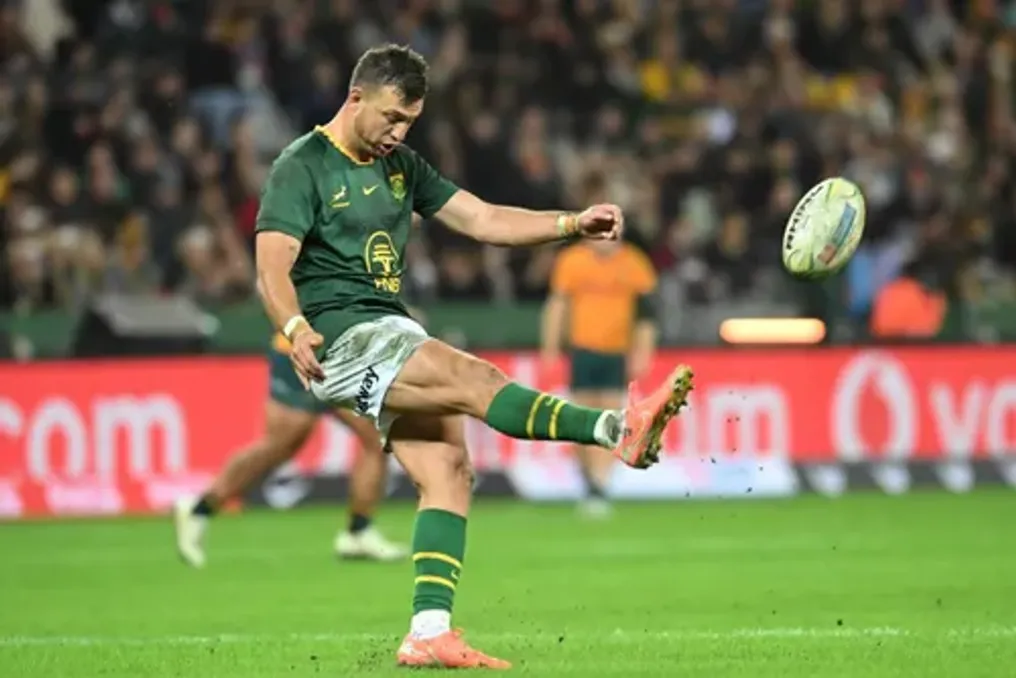
Springboks arrive in Australia to prepare for the match against the Wallabies as part of pre-World Cup preparations
Read more
iol.co.za

Springboks arrive in Australia to prepare for the match against the Wallabies as part of pre-World Cup preparations

Following the successful completion of a series of matches within the Rugby's Greatest Rivalry tournament in the USA, the Springboks team has arrived in Australia. Coach Rassie Erasmus has already focused attention on the upcoming single test match against the Wallabies in Perth next week.

The game, which will take place at Optus Stadium on Sunday, September 27th, will be the first meeting of the teams this year and an important stage in the Boks' preparation for the 2027 Rugby World Cup, which will be held in Australia.

After participating in the RGR campaign, where they visited the USA—the host country for the 2031 World Cup—the Springboks will now gain experience playing on another world stage for the future rugby event. Moreover, in Perth, they will play against Romania in their third World Cup group match on October 22, 2027.

Springboks' preparation for the match against the Wallabies in Terrigal

The team flew from Baltimore to Dallas on Monday, and then transited to Sydney to reach their base in Terrigal, located north of Sydney. Preparations for the confrontation with the Wallabies will begin there.

Erasmus stated that the Springboks aim to conclude the demanding tour on a high note before returning to South Africa several weeks before the start of the Nations Cup away leg. He noted that the Argentinian and All Blacks teams have always presented serious challenges for them, and this was taken into account in their preparation.

The coach added that both Argentina and the All Blacks tested them very thoroughly, and they do not doubt that they will face a determined Wallabies team that wants to perform well in front of its home crowd. According to him, the Wallabies will present a completely different challenge compared to what they faced in recent test matches.

Erasmus also emphasized that the Wallabies are playing well, and the team is confident that the opponents will take to the field with full commitment, which will require another full 80-minute performance from the Springboks to achieve the desired result next week.

Player management is key for the Boks amid intense tests and travel

Considering that the Boks have undergone a series of intense test matches in recent weeks and gone through a long schedule of flights, Erasmus acknowledged that player management will be crucial as the squad adapts to the new environment.

He reported that the players rested in Baltimore on Sunday before the journey to Australia, and they naturally took into account the impact of the last three matches and the flight when planning. Andy Edwards, Head of Sports Preparation, and the logistics team worked closely over the past few months to ensure everything possible off the field to keep the players fit and ready to play.

Erasmus also noted that the same applies to the coaching staff when they begin training on Friday. He expressed gratitude to all the personnel for the smooth flight and for making everything as easy as possible for the players so they can perform well. The team intends to continue doing everything possible next week to proudly represent their country and conclude the tour honorably.

Springboks' victory over All Blacks warns Wallabies ahead of Perth match
Read more
iol.co.za

Springboks' victory over All Blacks warns Wallabies ahead of Perth match

Following a successful confrontation in the 'Greatest Rugby Rivalry' series against the All Blacks, the Springboks team, under the guidance of Rassie Erasmus, will focus its attention on the Wallabies ahead of a match scheduled in Perth in a couple of weeks.

Having concluded the 'Greatest Rugby Rivalry' series, the Springboks are now turning their gaze towards the Wallabies, aiming to secure another convincing victory over the Southern Hemisphere team.

The team, which became champions after defeating the All Blacks 3-1 in four tests, demonstrated its ability to win in difficult conditions, despite trailing 1-0 at the start of the match. They managed to regain dominance over New Zealand by securing three consecutive victories.

These four intense matches were filled with high intensity, and the South Africans displayed their class against the determined New Zealand side in each one.

The first defeat at Ellis Park with a score of 33-16 was a serious cause for reflection, and the Boks were not proud of that result. In that game, they looked out of form, but they needed at least one more test, besides the battle with Argentina in South America, to fully blossom.

This is exactly what happened. With the support of thousands of fans at the FNB stadium in Cape Town, they secured a 33-26 victory, and later in Baltimore with a score of 43-28; the Springboks showed some of their best performances in the Rassie Erasmus era, despite all the external noise directed at the team, especially after the first loss at Ellis Park.

The team improved weekly, which was evident in their playing style. Nevertheless, there were areas for improvement, such as the inability to convert numerous 22-meter attempts and playing throughout the full 80 minutes. These aspects will be the focus during the trip to Australia to improve in these areas.

The selection in Soweto and Baltimore showed stability despite several injuries. Erasmus made many changes between the matches with Argentina and Ellis Park, as well as between Ellis Park and Cape Town, which affected the continuity of the Boks' play. However, the coach managed these changes and led a strong team thanks to the depth of the squad he built, something many teams cannot boast.

Although the victory over the Wallabies is the primary goal, this single test gives the world champions another opportunity to experiment with the squad. Although the same squad will travel from the USA to Perth, there are several reserve players who lack playing time.

The next game will give Erasmus more chances to experiment with combinations and allow some players, such as Pieter-Steph du Toit, Jesse Kriel, and Malcolm Marx, who received red cards against the All Blacks, to rest.

The Boks also do not plan to deviate significantly from their game plan. They might change tactics, play in an attacking style, and overcome a team like New Zealand through six points to four, as seen in Baltimore, but the physical approach and set-piece play will always be a priority.

Australia can expect a clash of mauls and running attacks at the Optus Stadium.

Rassie Erasmus stated: 'I know that we sometimes irritate people around the world with how we play, but we care most about the people of South Africa.' He added: 'We understand their opinions and enjoy the teasing, but there is only one reason for us as a team and for us as a country—it is (that we play) for South Africa.'

Popular