Mobile Retailers in India Plan Protest Against UPI MDR Charges on October 2
Read more
YourStory [india, en]
yourstory.com

Mobile Retailers in India Plan Protest Against UPI MDR Charges on October 2

Mobile retailers across India intend to hold a 'No UPI' day on October 2nd to protest the introduction of a 0.4% commission for UPI transactions for sellers, according to a senior official from the industry association AIMRA.

The government began charging 0.4% on UPI transfers exceeding 2000 rupees for traders starting October 15th, while peer-to-peer transactions and small payments remain free of any charges.

Tarvinder Singh, Vice President and President of AIMRA for the Delhi NCR region, stated in his declaration that 'The All India Mobile Retailers Association (AIMRA) has called for a 'NO UPI' day on October 2, 2026, to highlight the concerns of mobile sellers regarding the 0.4% Merchant Discount Rate (MDR) applicable to relevant seller UPI transactions.'

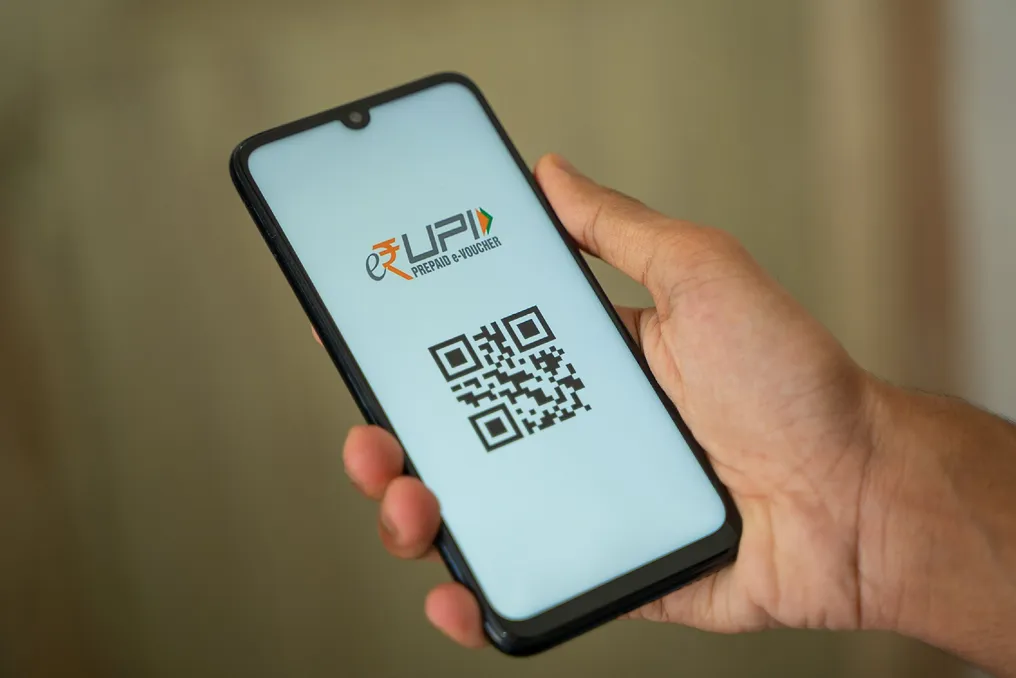
He specified that sellers will symbolically cover UPI QR codes with black cloth and refuse to accept payments via UPI on Gandhi Day.

According to a submission made to the Ministry of Finance by AIMRA, the introduction of MDR for UPI will result in an immediate net monthly loss of 2000 to 12000 rupees for a small seller processing between 5 to 30 lakh rupees monthly through UPI, which will significantly reduce their net income.

The industry organization estimates that the 0.4% MDR rate will create an unbearable burden of approximately 40 crore rupees monthly and nearly 500 crore rupees annually for small mobile sellers across India.

Singh emphasized: 'If we want Digital India, UPI must remain at zero MDR. This is not a protest against UPI or Digital India. Our concern relates to the additional financial burden placed on sellers accepting digital payments. If we want Digital India to continue growing, digital payments must remain accessible to the entire retail ecosystem. Our clear demand is that UPI seller payments continue to operate under a zero MDR structure.'

Similar stories

Finance Minister states that the proposed MDR rate for UPI is not a tax and will not burden consumers
Read more
yourstory.com

Finance Minister states that the proposed MDR rate for UPI is not a tax and will not burden consumers

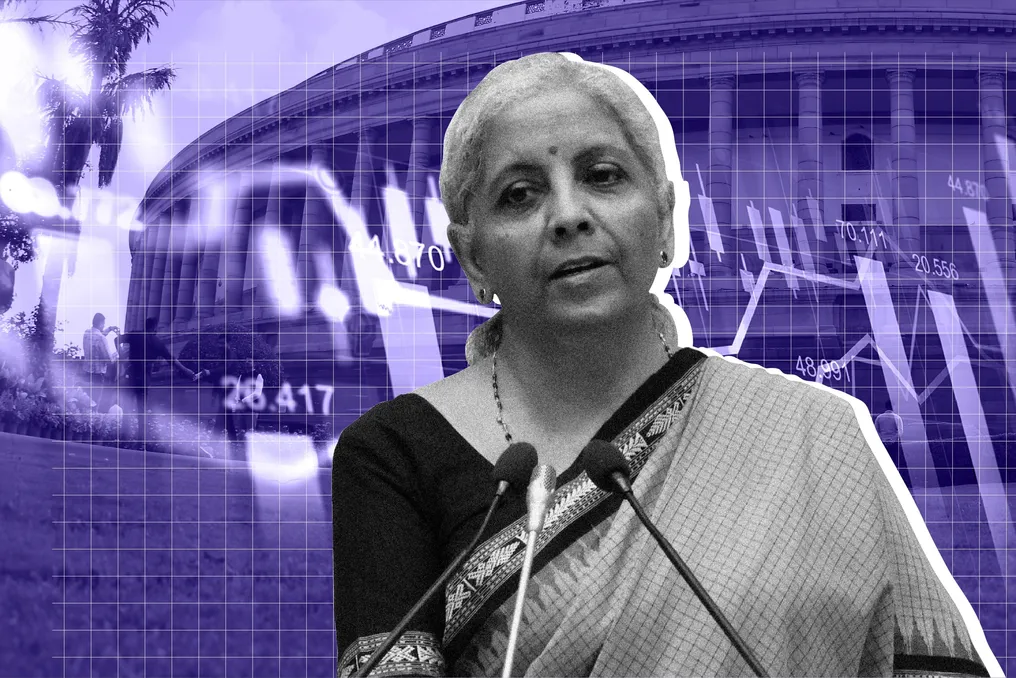
Finance Minister Nirmala Sitharaman refuted criticism from opposition parties, stating that the proposed Merchant Discount Rate (MDR) for certain high-value UPI transactions does not constitute a tax, levy, or surcharge, and the collected funds will not go into the Indian government fund.

Sitharaman clarified that MDR is a charge within the digital payments ecosystem and is collected by the entities facilitating UPI transactions, including payment banks and other ecosystem participants.

She emphasized: 'It is not a tax, it is not a levy, it is not even a surcharge. And the levy does not go into the consolidated fund of India.' According to the proposal, 40% of the total collected MDR will go to the client banks, 30% to the payment gateway, 20% to the UPI application, and the remaining 10% to the sponsoring bank of the UPI application.

The Minister assured that MDR will not be passed on to end consumers but will be covered within the seller payment ecosystem. The National Payments Corporation of India (NPCI) announced the introduction of an MDR of 0.4% on specified transactions from individuals to merchants exceeding ₹2000, starting October 15. Transactions up to ₹2000 and peer-to-peer transfers will remain free.

Sitharaman explained that this charge is distributed among various participants in the payment system to maintain technological infrastructure and stimulate innovation in digital payments. She added that this system has no relation to the government, as NPCI, merchants, banks, aggregators, and other service providers are involved in the MDR mechanism.

The Finance Minister also noted that merchants already pay MDR when using credit and debit cards, and the new mechanism should not be viewed as a consumer fee. Furthermore, she reported that RuPay transactions will remain free, and MDR will not apply to UPI payments below ₹2000.

It is estimated that about 96% of transactions from individuals to merchants will remain unaffected by the new system. The minister's statements came amid criticism of the proposed MDR, where concerns were raised regarding its potential impact on merchants and the possibility of passing costs onto consumers.

Starting October 15, merchants will pay the 0.4% MDR, not consumers, with the commission capped at ₹300 for transactions of ₹75,000 and above. Peer-to-peer payments, as well as the vast majority of daily merchant payments, will remain free.

For essential services such as railways, telecommunications, fuel, and insurance, a fixed fee of ₹5 will be charged per transaction over ₹2000. Capital market transactions (mutual funds, brokerage services) will be subject to a lower rate of 0.02%, also capped at ₹300. Small merchants receiving up to ₹1 lakh per month via UPI QR codes are fully exempt from the new charges, protecting about 96% of all merchant transactions.

NPCI, which manages the UPI platform, issued a circular on September 15 establishing MDR for certain UPI transactions to create a sustainable revenue model for the digital payments ecosystem. A special fund will be created to promote UPI usage by small merchants, into which 5% of the total MDR collection will be directed. This initiative aims to expand UPI adoption, encourage consistent use, and accelerate the inclusion of small businesses into India's digital payment system.

Changes to UPI Rules Take Effect on October 15: Who Will Pay the MDR Commission
Read more
thebetterindia.com

Changes to UPI Rules Take Effect on October 15: Who Will Pay the MDR Commission

Changes to UPI rules regarding commissions will take effect on October 15. It is important to know who bears the costs, what changes will occur for UPI payments, and who exactly will pay the new commission.

Starting from October 15, 2026, certain merchants will be required to pay MDR for some UPI payments exceeding the amount of 2000 rupees. This commission is borne by the merchant, not the end-user.

MDR (Merchant Discount Rate) is a fee charged to eligible merchants for accepting certain UPI payments. The standard MDR starting October 15 will be 0.4% for payments from eligible merchants exceeding 2000 rupees.

Peer-to-peer (P2P) payments remain completely free regardless of the amount, and no new monthly limits or quotas for free use are introduced for private individuals.

The new MDR applies to standard peer-to-merchant (P2M) payments. For amounts above 2000 rupees, an MDR of 0.4% will apply. For transactions of 75,000 rupees or more, the MDR is capped at 300 rupees.

For essential services such as fuel, railways, telecommunications, insurance, and utilities, the MDR is a fixed amount of 5 rupees for relevant payments exceeding 2000 rupees. Regarding mutual funds, securities, brokers, and dealers, the MDR rate is 0.02%, with a limit of 300 rupees.

Small merchants receiving up to 100,000 rupees per month via UPI QR code continue to benefit from zero MDR. However, if they exceed this amount for three consecutive months, they transition to the regular P2M category.

It is important to emphasize that the merchant pays the commission, not the customer. Banks have been advised to ensure that merchants do not pass the MDR onto buyers. Furthermore, UPI applications are prohibited from imposing platform fees or hidden charges within this system.

The UPI system is large and requires operational costs. The new structure is intended to support the development of payment infrastructure, cybersecurity, fraud prevention, innovation, and customer service.

NPCI changed UPI rules: new tariffs for some merchants will take effect from October 15
Read more
www.aajtak.in

NPCI changed UPI rules: new tariffs for some merchants will take effect from October 15

NPCI has introduced changes to the UPI rules. A new Merchant Discount Rate (MDR) structure will be implemented starting October 15 for transactions with selected merchants using UPI.

Under the new rules, a commission of 0.4% will be charged for payments exceeding 2000 rupees. Furthermore, the maximum fee for any transaction will be around 300 rupees.

For transactions amounting to 75000 rupees or more, the maximum MDR per transaction is also set at 300 rupees. However, customers will not pay any fees when making payments up to 2000 rupees.

Popular