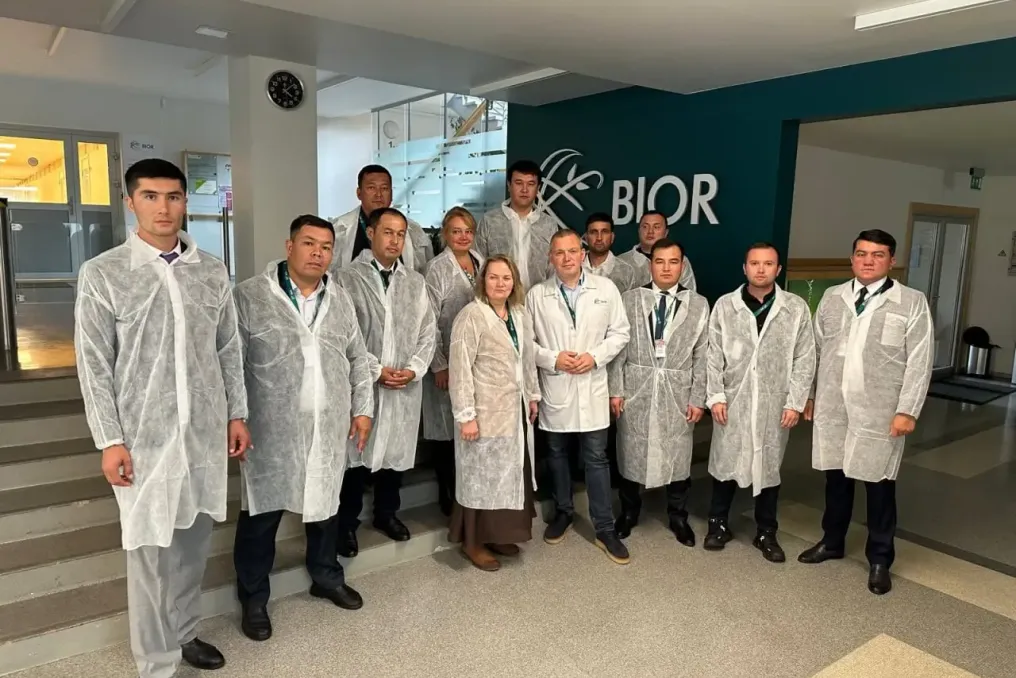
Uzbekistan and Latvia continue to exchange experience in the fields of plant protection, laboratory diagnostics, and food safety control.
Specialists from the Food Safety Committee of Uzbekistan visited the Latvian Institute of Food Safety, Animal Health and Environment (BIOR) as part of a project aimed at developing the production and export of safe food products.
Uzbek experts familiarized themselves with BIOR's laboratories, modern analytical methods, and the procedure for conducting laboratory tests. Particular attention was paid to detecting pesticide residues in agricultural and food products.
Latvian specialists demonstrated methods for identifying chemical substances in samples, evaluating test results, and ensuring the reliability of laboratory analyses.
According to BIOR, the institute's laboratories possess about 400 accredited analytical methods that comply with the international standard ISO/IEC 17025. The chemical laboratory examines food and environmental samples using techniques such as chromatography and mass spectrometry.
Monitoring pesticide residues is one of the key elements of ensuring food safety. Laboratory tests allow for the detection of chemical substances that may remain in agricultural products after the application of plant protection agents, and determine the compliance of these products with established safety standards.
As part of the experience exchange, the parties also discussed procedures for receiving and preparing samples for testing, laboratory organization, quality management, and ensuring the reliability of the obtained results.
This program is designed to improve the quality of laboratory diagnostics, strengthen the professional competencies of specialists, and develop the control mechanisms necessary for the production and export of safe agricultural products in accordance with international requirements.