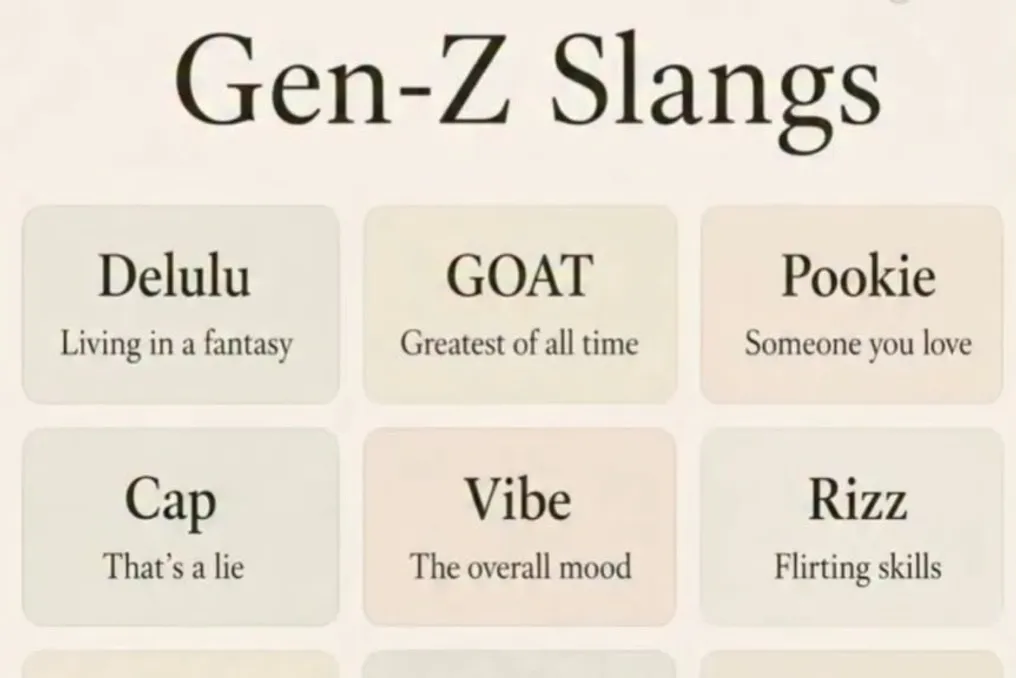
When listening to conversations of Gen Z representatives or scrolling through social media feeds, it often feels like people are communicating in a completely different language. Numerous terms appear in videos, memes, comments, and chats whose meanings can initially be unclear. Words such as 'rizz', 'slay', 'no cap', 'delulu', and 'ghosting' have become an integral part of internet culture. Knowing these 20 terms will help understand the digital environment and the language of Gen Z.
Appearance Description and Compliments
'Rizz' is used to denote a person's ability to attract attention with their charisma or personality. If someone performs a task exceptionally well or has a very attractive appearance, Gen Z might call it 'slay'.
'At' and 'left no crumbs' are also used for praise, meaning that a person completed a task flawlessly, leaving no shortcomings. Regarding fashion, the term 'drip' refers to a person's stylish and impressive sense of style.
Digital Language of Truth and Lies
'No cap' means that a person is telling the truth and not exaggerating their words. Conversely, 'cap' is used to denote a lie or false statement. If the phrase 'IYKYK' appears in a chat, it stands for 'if you know, you know,' referring to a situation or experience understood only by those who have gone through it.
Vocabulary in Dating
Gen Z dating language also has its own specifics. 'Ghosting' is used when a person suddenly stops communication without explaining the reasons. 'Breadcrumbing' describes a situation where a person constantly gives small amounts of attention but does not make efforts to develop a relationship. 'Situationship' denotes a connection between two people that exists but is not defined as a formal relationship.
Terms Used on Social Media
'Delulu' comes from the word 'delusional' and is used humorously to describe unrealistic expectations or fantasies. FOMO stands for 'fear of missing out'—the fear of missing something important. Conversely, JOMO, or 'joy of missing out,' implies the joy of something being missed. 'Doomscrolling' is the continuous viewing of posts, videos, or news on social media, especially if the content is negative or anxiety-inducing.
Positive and Negative Signs in Slang
Words such as 'red flag' and 'green flag' are actively used to describe a person's behavior or relationships. 'Red flag' indicates a sign that causes concern in a person or situation, whereas 'green flag' signals good or reliable behavior. The word 'era' is used to denote a specific stage of life; for example, a person might call themselves in a 'healing era' or 'career era.'
Other Interesting Words
'Mogging' is used when one person appears more impressive or better than another in comparison. 'Skibidi' is internet slang based on memes that does not have one fixed meaning and is often used as a joke, meme, or random expression online. A characteristic of Gen Z language is its constant change; a trendy word today may lose popularity. Furthermore, the meaning of many words can change depending on the context of their use. Therefore, understanding the language of Gen Z requires not only knowing the meaning of the words but also understanding in what situation and with what mood they are used.