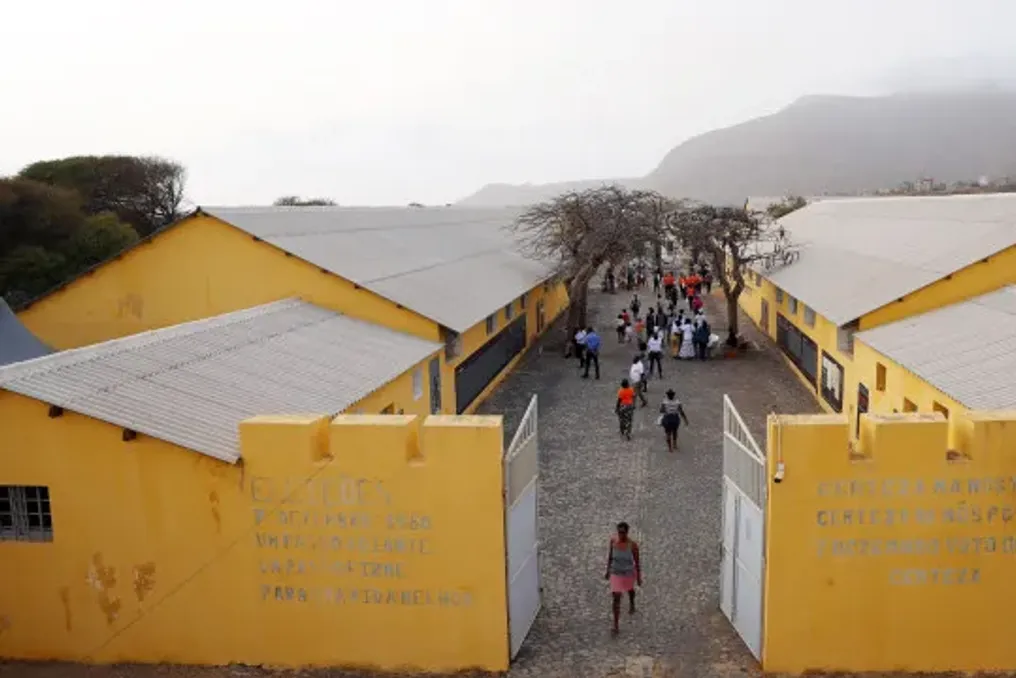
Relatives of prisoners held in Tarrafal sent a letter to Cabo Verde and UNESCO with several demands. The document contains four main requests: recognition of the use of Campo-du-Tarrafal between December 1974 and July 1975; inclusion of this period in scientific and museum discourse; accounting for the memory, testimonies, and identification of the prisoners; and ensuring that any international support, approval, or recognition fully aligns with the principles of historical truth, heritage integrity, and inclusive memory.
The process of applying for Campo-du-Tarrafal and the current museum to be designated as a World Heritage site continues through the United Nations Educational, Scientific and Cultural Organization (UNESCO). The letter was addressed to UNESCO, as well as the government and presidency of Cabo Verde.
The document, signed by 73 relatives out of 15 of the 58 prisoners from that period, emphasizes that the goal is not to rewrite history or diminish the significance of previous stages of Campo-du-Tarrafal, especially as a 'site of memory of colonial repression and anti-fascist resistance.' Instead, the authors insist that 'history be told completely.'
During the transitional period from the Portuguese colonial regime to the independence of Cabo Verde, proclaimed on July 5, 1975, dozens of Cabo Verdean citizens were detained and sent to Tarrafal without judicial charges and, in many cases, without official notification of charges.
According to the text of the document, collected testimonies describe arrests motivated by political disagreements, suspicions of opposition to the current political process, and alleged ties to movements considered hostile. This situation has left its mark to this day.
Not all political forces in Cabo Verde agreed with the transfer of power to the African Party for the Independence of Guinea and Cape Verde (PAIGC) or with the project of uniting the two countries, which ultimately did not materialize.
Vera Mendes, who signed the letter and organized this initiative, stated that she is the daughter of one of the political prisoners. 'I am the daughter of a political prisoner. I am the youngest daughter of Rufino José Silva,' she reported, noting that her father was among the last group released shortly after independence.
After leaving Tarrafal in July 1975, people expected each to go to their own island—'my father was from Fogo Island.' However, in the case of this group, they arrived in Portugal with nothing and were left at the airport. Each of them had to rebuild themselves and their families.
Vera Mendes recounted her father's deportation, after which her mother and four brothers joined him in Lisbon, where Vera herself was born in 1979. She read her father's letters and listened to stories, including accounts of those who made efforts to obtain official documents confirming that they had never collaborated with the fascist regime, in order to clear accusations that they were victims of persecution in Cabo Verde.
They were able to obtain such documents through the PIDE Liquidation Coordination Services, as Sandra Inês Cruz from Lusa described a year ago during the presentation of the book 'Tarrafal, 1975 — Field of Silence,' which explores these blind spots of the prison.
Vera noted that this would also become part of each family's history, and that each has its unique experience. The omission of the 1974–1975 period in the resolution approving the museum's foundational document, published in March, as well as the application process to UNESCO prompted Vera Mendes to initiate this letter.
She stated: 'I thought this was a moment when silence could not prevail, and perhaps raise this issue to another level.'
Among the prisoners were 'intellectuals, farmers,' people from 'various areas' of Cabo Verde, who were arrested because their 'thoughts did not align with what was being developed or desired for the future democracy of Cabo Verde.'
Vera's father belonged to the Union of Peoples of the Islands of Cabo Verde (UPICV), and his goal was to 'hold elections and hear the people.' Vera emphasized: 'This is not a political question (...). The history of the democracy and independence of Cabo Verde is incomplete. There is an omission. My goal and the goal of the families who signed the letter is to note this omission and demand its correction.'
The letter was sent in June (by which time more interested relatives had emerged) to UNESCO, the Prime Minister, and the President of Cabo Verde.
Vera Mendes has already met with technical specialists from the Institute of Cultural Heritage (IPC) of Cabo Verde this year at events dedicated to Campo-du-Tarrafal and the UNESCO application, and she was informed that they 'recognize' the third phase, which gives her optimism. Although Lusa tried to get clarification from the IPC, answers have not yet been received.
She concluded: 'So that one day grandchildren and great-grandchildren can visit Tarrafal and see photos of their grandfathers or great-grandfathers, because they are also part of the history of Cabo Verde and cannot be erased. That is the goal.'
_