
Tata Motors Passenger Vehicles plans to reach 15% market share soon, and 20% by the 2031 fiscal year
Read more
Business Standard
business-standard.com

Tata Motors Passenger Vehicles plans to reach 15% market share soon, and 20% by the 2031 fiscal year

Tata Motors Passenger Vehicles expects to exceed a 15% share in the domestic market in the near future and achieve its previously stated goal of 20% by the 2031 fiscal year. This growth will be driven by the introduction of new products, more frequent updates, and an expansion of powertrain offerings.

Shailesh Chandra, Managing Director and CEO, stated in an interview with PTI that the passenger division, which became an independent entity after the asset split on October 1 of last year, is demonstrating significant growth. The business has increased by almost 40% over the last year, and as of September, the share of electric vehicles in total sales exceeded 25%.

The MD & CEO of Tata Motors emphasized that the company's main objective is to ensure double-digit growth while leading in sustainable and eco-friendly powertrains. He noted the necessity of continuing aggressive investments not only in new product categories to fill market niches but also in accelerating changes to the product line to maintain its relevance, competitiveness, and appeal to customers.

Commenting on the results of the past year, Chandra reported that thanks to numerous updates, restylings, and new launches, the company sold about 750,000 vehicles by the end of the current month (which marks the completion of one year). Thus, the company achieved nearly 40% growth over the year, and EV penetration exceeded 25%.

He added that the company is very close to achieving a 15% market share, which should happen very soon, but reaching the next five percent will take the next five years. Chandra reminded that the company's ambition is to achieve annual sales of 1.2 million units and a 20% market share by the 2031 fiscal year, which will require high flexibility in operations.

According to management, there are several avenues for increasing market share. These include segments where the company is currently absent, changes in demand and availability across different price ranges, and faster-growing powertrain types such as electric vehicles (EV) and CNG.

Chandra explained that there are three main growth vectors. The first is entering markets where the company currently has no presence, such as in the MPV (Multi-Purpose Vehicle) segments or certain lifestyle SUVs. The second vector is related to changes in purchasing power and demand in the country, allowing for the development of new offerings for untapped market niches. The third vector is powertrains: EVs and CNG are growing faster than the industry, and in these two segments, the company is a leader with a higher market share than its overall share.
Similar stories

Mahindra XEV 9s overtakes Tata Punch and becomes a bestseller in India's electric vehicle segment
Read more
www.aajtak.in

Mahindra XEV 9s overtakes Tata Punch and becomes a bestseller in India's electric vehicle segment

The Indian market for electric passenger vehicles continues to show steady growth. In August 2026, the electric passenger car segment saw an 85% increase in sales compared to the previous year, with the total number of units sold reaching 36,593.

Significant changes occurred in sales during this growth period, especially in the Mahindra segment. Previously, Tata Motors was the leader in the Indian EV market. However, in August 2026, Mahindra managed to change this situation by making its model a bestseller.

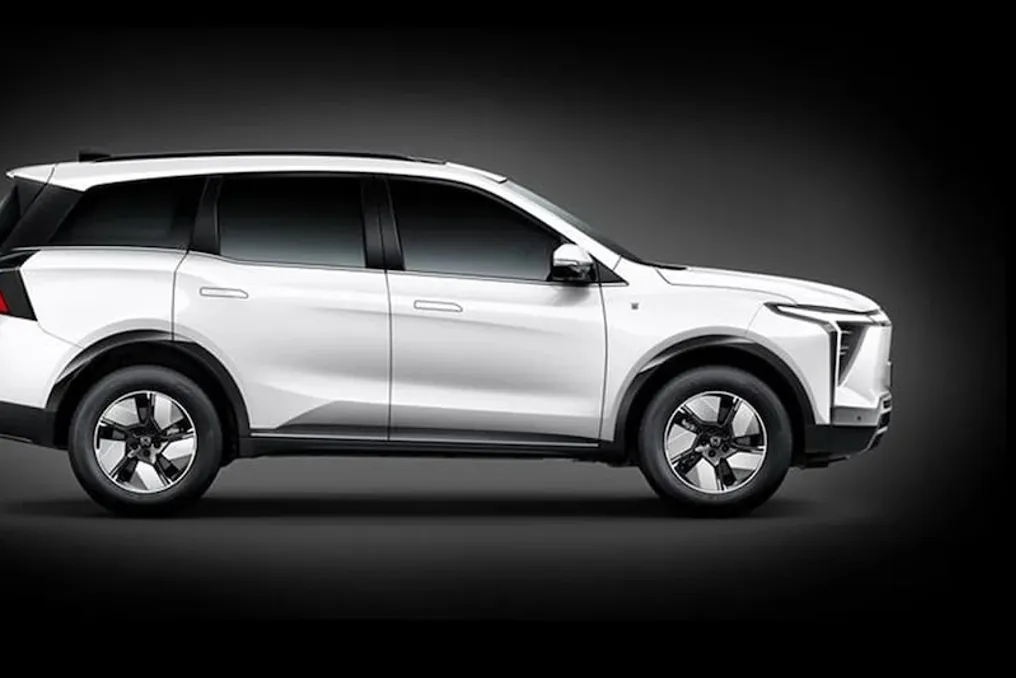
The best-selling car became the Mahindra XEV 9s, which sold 4,508 units. This model is a three-row SUV. Compared to it, the Tata Punch sold 4,430 units in August. These figures indicate growing competition in the Indian electric passenger car market.

Despite the success of the Mahindra XEV 9s, Tata Motors retains the title of the company selling the highest number of electric vehicles in the Indian market, thanks to its wide portfolio of electric models. In contrast, the Mahindra XEV 9s is a seven-seater SUV, and Tata currently has no direct competitor in this class. Although the company is working on the Safari EV, information regarding its release date is unavailable.

The Mahindra XEV 9s is available in three battery variants: 59kWh, 70kWh, and 79kWh, offering a claimed range from 521 to 679 kilometers. The starting price for this electric SUV is 20.65 lakh rupees, including additional costs.

The difference in sales between the Tata Punch and the Mahindra XEV 9s was only 78 units. The Tata Punch ranks second in sales in the segment, followed by the Tata Nexon EV, which sold 3,975 units in August 2026. MG Windstar is in fourth place with sales of 3,705 units, and Tata Harrier EV is fifth, having sold 2,103 units in August.

Three of the top five best-selling electric vehicles belong to Tata brands, highlighting the brand's dominance in the segment. Nevertheless, it is evident that consumers show a preference for seven-seater electric vehicles, which Tata does not currently offer. In August 2026, 1,930 units of the Tata Sierra EV and 1,730 units of the Tata Tiago EV were sold.

Tata Chemicals stock rose by 20% amid RBI's decision not to revoke Tata Sons' license
Read more
www.aajtak.in

Tata Chemicals stock rose by 20% amid RBI's decision not to revoke Tata Sons' license

One of the stocks of the Tata group demonstrated significant growth for investors in a single day. On Tuesday, Tata Chemicals shares reached the upper circuit, showing a 20% increase, and reached the level of 734.90 rupees.

The main reason cited for this sharp rise is the Reserve Bank of India's (RBI) decision to reject Tata Sons' application to withdraw its NBFC license. This means that Tata Sons is now obliged to list on the stock markets.

The RBI has established certain rules for NBFC companies, according to which top-tier NBFCs must be listed on the market. Since Tata Sons is a top-tier NBFC, it needs to undergo listing. However, Tata Sons is not interested in entering the stock market, so it applied to the RBI requesting the revocation of its NBFC license. Nevertheless, this application was rejected.

Growth is also observed among other Tata group stocks. Tata Investment Corporation shares grew by more than 13%. Following this, Tata Investment and Tata Chemicals became the highest-growing stocks in the Nifty 500 index. Tata Motors PV shares also showed an increase of 4.5%.

Over the last six months, this Tata group stock has increased by 11.88%. Over the year, it lost 25%, and over five years, it saw a decline of 13%. The company's market capitalization is $187.22 billion.

Popular