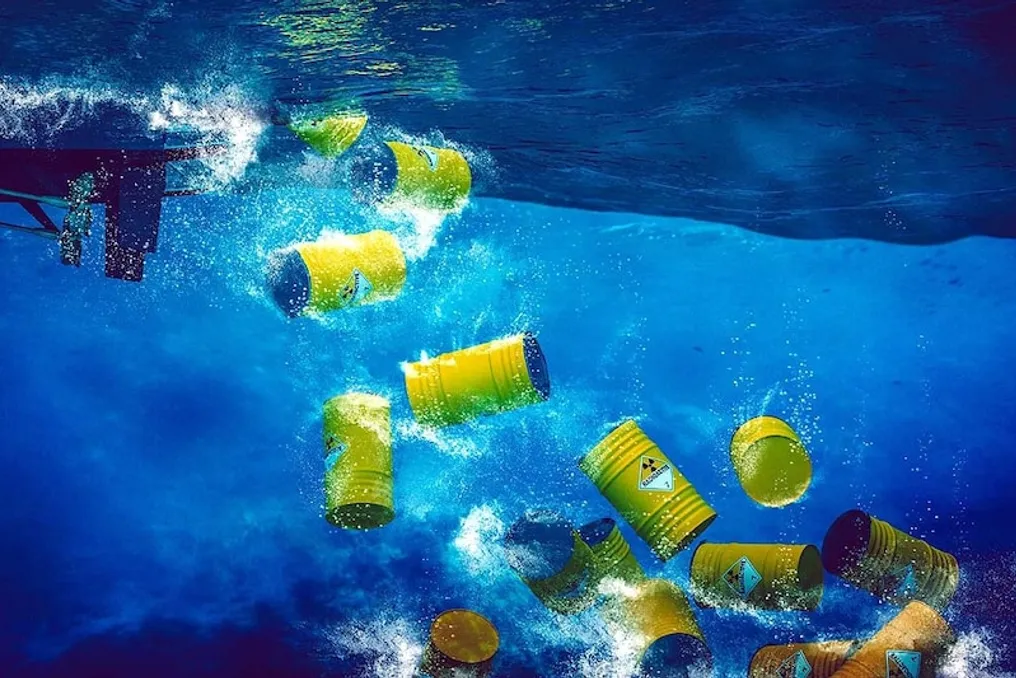
Radioactive waste located at a depth of about 4700 meters in the Atlantic Ocean has become the subject of scientific study. In 2026, a team from CNRS in France conducted an inspection of these old drums on the seabed as part of the NODSSUM research. It was found that many of the drums are heavily corroded, and the contents of some have scattered across the seafloor.
These drums were dumped by European countries over many decades. According to the NODSSUM project, between 1950 and 1990, over 200 thousand drums containing low-level radioactive waste were discharged into the northeastern part of the Atlantic Ocean. This waste was buried at depths ranging from 3000 to 5000 meters. In 2026, scientists made 20 dives using the submersible Nautile, reaching depths exceeding 4700 meters for inspection.
The scientific group traveled to the research vessel Porqua Pa using the underwater vehicle Nautilus. The team directly inspected numerous old drums and collected samples of water, seabed sediment, and marine organisms from the vicinity of the drums. Most of the drums were found to be very old and in poor condition due to rust. In some places, the contents of the drums leaked out and spread across the seabed. Scientists are currently analyzing these samples in the laboratory to determine the extent of radioactive substance dispersion in the surrounding area.
Marine life, such as sponges and anemones, was found around these old drums. Crabs and other small marine animals were also present. The research group is trying to determine whether these animals are affected by the radioactive waste. To this end, samples of water, sediment, and marine organisms were collected, the analysis of which will show whether radioactive substances reach marine life.
The radioactive waste dumped into the sea came from various sources. These included waste from nuclear power plants related to nuclear fuel handling, hospitals, research centers, and industrial facilities. According to OSPAR, at the time, discharging such low-level radioactive waste into the sea was considered an acceptable method. In total, over 150 thousand tons of materials, including radionuclides such as cesium-137, plutonium isotopes, and tritium, were dumped into the sea. The dumping of radioactive waste into the sea was subsequently banned. The ban on such discharges in the northeastern Atlantic was introduced in 1992, and a global ban on the dumping of radioactive waste into the ocean was adopted in 1993.
During the first NODSSUM study in 2025, a map of the location of thousands of drums on the seabed was created. In the 2026 study, scientists reached these locations and collected samples of water, sediment, and marine organisms. These samples will now undergo laboratory analysis. Scientists will find out whether radioactive substances have reached the seawater, sediment, and living organisms so many years after these old drums were dumped. Currently, the scientists' main focus is on the long-term impact of the deteriorating condition of these old drums on the sea and its inhabitants.