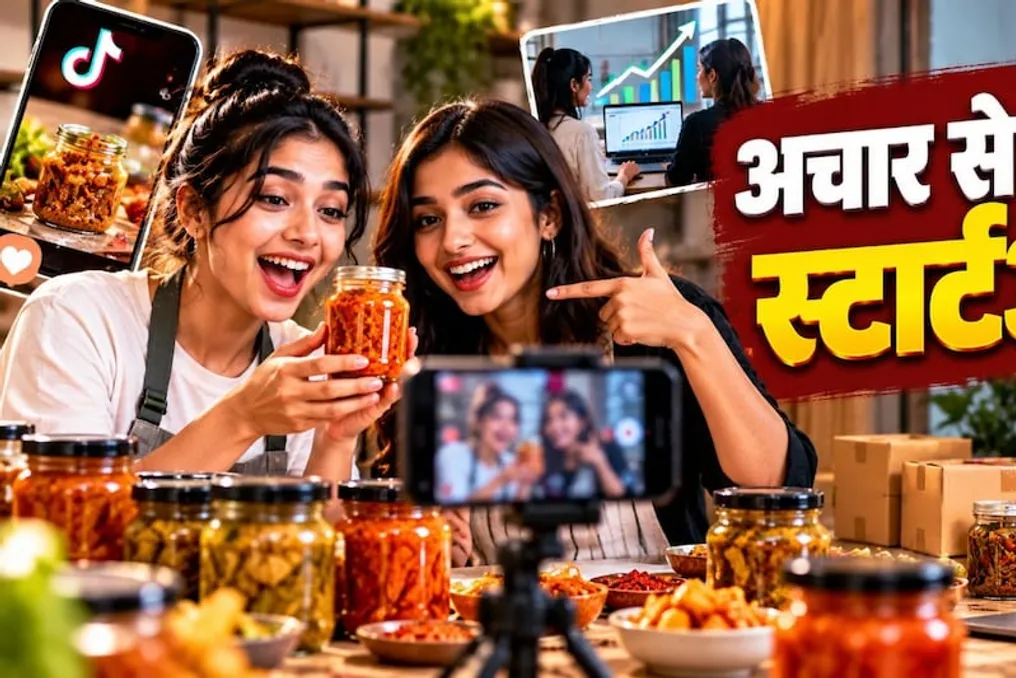
The Story of Two Gen Z Friends: From Pickle Videos to an 81 Crore Business
Read more
Aaj Tak
www.aajtak.in

The Story of Two Gen Z Friends: From Pickle Videos to an 81 Crore Business

For Generation Z, social media has evolved beyond just a way to pass time or follow trends; sometimes a viral trend can spark a new idea that subsequently turns into a business. The story of two American friends, Leah Marx and Yasamana Bakhtiyar, is a prime example of this phenomenon.

They began sharing videos of pickled cucumbers (pickles) on TikTok and later transformed this shared interest into a business concept. Leah and Yasamana graduated from college in 2022. In 2023, they regularly sent each other pickle videos on TikTok.

While communicating with Shopify, they discovered that the hashtag 'pickle' on TikTok had garnered 9.5 billion views. They felt that the interest in pickles on social media was extremely high, whereas the pickle category in grocery stores seemed quite outdated to them.

Following this, they left their jobs and founded the company Good Girl Snacks. Notably, they did not initially have a finished product to sell. They started posting content on Instagram and TikTok about two months before the product was ready.

Leah told Shopify that they presented their journey in the format of a 'television show.' They told their followers why they decided to start a pickle company with their best friend, leaving their corporate jobs. Their goal was not just to gain views but to build a community. According to them, this series quickly went viral, and they began posting it daily.

The first product from Good Girl Snacks, Hot Girl Pickles, was launched in February 2024. Both girls involved their online community in the product creation process. They solicited suggestions from followers regarding new flavors. According to Shopify data, the idea for a cumin garlic flavor came from the comments section.

Leah explained that she refers to her followers as 'influencers' because the opinion of their community helps improve the product and new flavors. Both girls also sent their products to some content creators who enjoy pickles.

Yasamana informed Shopify that, as a member of Generation Z, she understands that this audience dislikes direct advertising. Therefore, they focused on creating content that people would want to watch as regular social media content, rather than as an advertisement. Consistent content posting leading up to the product launch was a key part of their strategy.

Good Girl Snacks' Hot Girl Pickles are now available not only online but also in stores such as Whole Foods and Erewhon. According to CNBC Make It, the company secured a $3 million seed funding round in March. Following this, the company's current valuation reached $8.5 million, equivalent to approximately 81 crore rupees. The company has not disclosed its revenue or profitability data.

What started as two friends sharing pickle videos on TikTok began with a small interest. However, this interest gradually transformed into a community, content, and a product. This Generation Z story demonstrates that any trend emerging on social media is not limited to viewing or exchanging; with the right idea and community, it can become the beginning of a new business.

Similar stories

Gen Z Consumers Use Social Media for Purchases, But Are Skeptical of Its Information
Read more
www.aajtak.in

Gen Z Consumers Use Social Media for Purchases, But Are Skeptical of Its Information

For the young Generation Z, social media has evolved beyond just being a tool for watching videos or communicating with friends; it has become an integral part of the entire process of discovering and purchasing brands. However, an interesting point is noted: although Gen Z actively uses social media and artificial intelligence (AI), it does not accept the information presented there blindly.

According to the 'From Likes to Buys' study based on a McKinsey survey from 2026, social media has transformed into the most important channel in Gen Z's buying journey, especially when searching for and purchasing goods. In contrast, Baby Boomer representatives still rely more heavily on physical stores at both stages.

McKinsey analyzed responses from 929 members of Generation Z and 1,448 Baby Boomers to understand where they get product information. This survey was conducted in March-April 2026.

The report shows that while the use of social media and generative AI among Gen Z is widespread, Gen Z's trust in most channels for receiving product information is lower than that of Baby Boomers.

The most noticeable difference is here. For Gen Z, social media is the primary source for discovering new products and brands, but the picture differs in terms of trust. According to McKinsey, advice from friends and family, expert recommendations, and seller assistance are among the most reliable sources for both generations. Nevertheless, Baby Boomers trust these sources significantly more than Gen Z.

Next follow online search, brand websites, and online stores, which people trust to a moderate degree. This indicates that Gen Z does not consider all online sources equally reliable.

Among algorithm-driven sources, YouTube and online reviews receive more trust compared to social media and generative AI. The lowest trust was noted for responses on social media and generative AI. However, there is an important nuance here: Gen Z's trust in social media is slightly higher than that of Baby Boomers. On the other hand, Baby Boomers trust generative AI more than Gen Z.

Thus, although Gen Z actively searches for new products and brands on social media, it is not quick to fully trust them based solely on a video, post, or AI advice.

The McKinsey report demonstrates a curious contrast: the digital platform that Gen Z uses the most for finding and buying new products and brands is not the most trusted in terms of reliability. For Gen Z, purchasing is no longer a simple 'see and buy' scheme. Social media leads them to new items, but when getting product information, Gen Z also considers advice from friends and family, expert opinions, reviews, online search, and other sources.

It is clear from the McKinsey report that Gen Z's buying journey is rapidly becoming digital, but this does not mean that trust has automatically become digital.

Popular