Swiss Chamber of Commerce plans grain trade conference in the GCC region
Read more
Tehran Times
www.tehrantimes.com

Swiss Chamber of Commerce plans grain trade conference in the GCC region

The Swiss Chamber of Commerce MENA plans to hold a new conference in Dubai. The main focus of the event will be on issues of grain trade, import strategy, and ensuring food security across the entire region.

Grain Trade Conference in the GCC Region

The event will bring together importers, government buyers, traders, millers, freight carriers, financiers, and policymakers. The Chamber of Commerce is actively looking for energetic volunteers to support the program and content, attract sponsors and promotion, as well as assist with logistics and media relations.

In this regard, the Chamber is appealing to those who have ideas or wish to take an active part in the organization.

Similar stories

Rider discusses high-earning formula while working without his own motorcycle
Read more
www.aajtak.in

Rider discusses high-earning formula while working without his own motorcycle

Modern life allows people to receive necessary goods online in minutes, and couriers are responsible for this speed. These workers often perform hard labor, delivering orders even late at night. The story of one such rider shows how one can earn money even without owning their own vehicle.

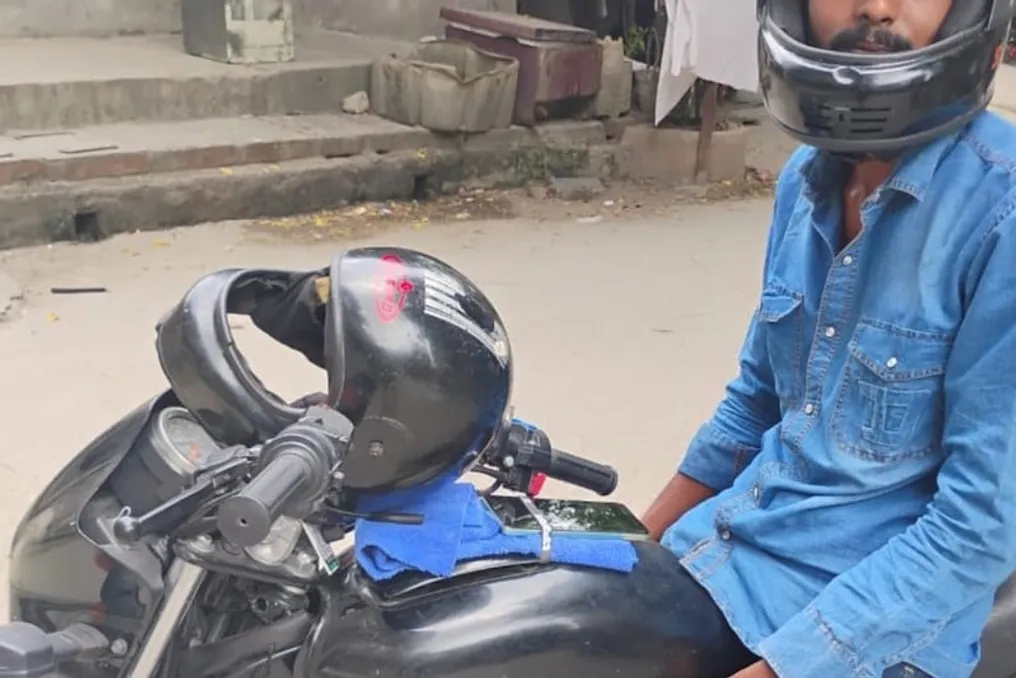
One day, using the Rapido service, the article's author met a rider named Vicky. He mentioned that he works not only for Swiggy but also for Rapido, and the motorcycle he rides does not belong to him but is rented.

Previously, Vicky worked for a company in Noida where his salary was 25 thousand. However, after layoffs, he lost his job. He is from Western Uttar Pradesh, and although he did not specify the exact area, his home is near Noida, which takes 4-5 hours to reach. Despite actively looking for work, he could not find a suitable position, and he needed to send money home.

A friend suggested he take up courier work while he searches for permanent employment. Since he did not have his own bike, his friend advised him to contact agencies like Rapido or Swiggy, which provide motorcycles for rent. A prepayment of 500 rupees was required for the motorcycle use, and the daily rental fee was 290 rupees; however, through a broker, he had to pay an additional 4500 rupees for the rental.

Vicky initially viewed this job as a temporary solution until he found permanent employment. However, the income from this activity turned out to be higher than his previous salary for a 9-hour workday. He explained that for delivering orders within a 2-kilometer radius for Swiggy or Zepto, he can earn up to 50 rupees. If the delivery happens after 9:00 PM in the same radius, the payment doubles, reaching 90–100 rupees.

He noted that if he earns 500 rupees in 4 hours of daily work, this income can double to 1000 rupees at night. Therefore, he advises against limiting himself only to daytime trips, as night shifts provide higher profits.

Vicky sets his own schedule, working only in the morning and evening: from 6 AM to 10 AM and from 8 PM to 11 PM. During this time, he usually completes at least 20 deliveries, sometimes even more. Even after deducting the motorcycle rental fee, he retains between 1200 and 1400 rupees daily. This income allows him to avoid taking on small side jobs earning 20–25 thousand per week. Furthermore, he has the freedom to manage his time without needing vacations or permission from a boss.

He also compared the working conditions with other services. For Zepto or Swiggy, a one-time payment of 1500 or 1700 rupees is required for a T-shirt and bag, after which a commission is charged for each delivery. In the case of Uber or Rapido, an initial account top-up of 180 rupees is needed, which covers up to 2000 rupees worth of rides and is valid for three months.

In Vicky's opinion, working as a courier is similar to running one's own business: the person sets their own work schedule and is not obliged to seek permission from anyone. He emphasized that he is the master of his own will, and his earnings directly depend on the volume of work completed.

How discounts work in food delivery apps: why the price on the receipt might be higher than expected
Read more
www.aajtak.in

How discounts work in food delivery apps: why the price on the receipt might be higher than expected

When opening food delivery applications, users often pay attention to discount offers that can reach 30, 40, or even 50 percent and more. However, the presence of a high discount percentage does not guarantee that the dish will be the cheapest option. Users frequently ask why the final bill is high despite a large discount.

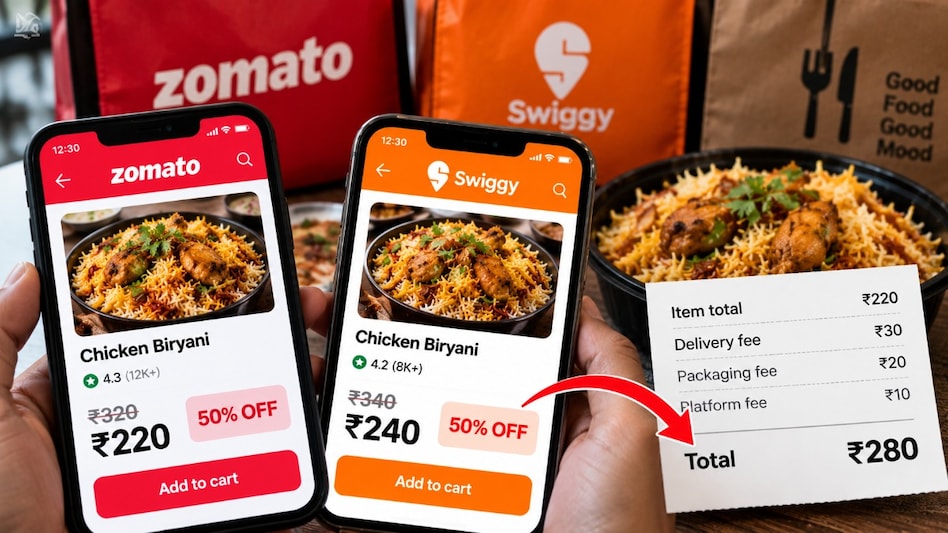
To understand this issue, it is necessary to realize that simply looking at the discount percentage is not enough. For example, if a restaurant sets the price of a dish at 200 rupees, but it is displayed in the app for 320 rupees, then with a 100 rupee discount, the price will be 220 rupees. Although a 100 rupee discount looks significant relative to 320 rupees, compared to the original restaurant menu price of 200 rupees, the customer still pays 20 rupees more.

In reality, the main complexity lies not in the price of the dish itself, but in the total bill amount. The price shown on the platform is not the full cost of the order. Various fees may be added to it, such as delivery, packaging, or processing fees, as well as commissions from the platform itself and other applicable payments.

According to current Zomato terms, the price displayed on the platform is provided by the partner restaurant and may include packaging or processing costs. The company also states that delivery costs can vary depending on distance, order amount, and time of day. Similarly, Swiggy's terms stipulate charges for processing, convenience, platform, packaging, small orders, and, in certain cases, a surge fee, with all applicable charges displayed during checkout.

If we take the example of a 320 rupee dish with a 100 rupee discount, 220 rupees remain after the discount. But if delivery fees and other charges are added to this amount, the final bill may exceed 220 rupees. Thus, the discount visible on the screen and the final amount to be paid are different things.

It is also important to understand whether restaurants can increase prices in apps. Zomato's partnership terms state that restaurants must set prices on the platform equal to or lower than those in their own channels, including the cost of food and packaging. Nevertheless, Zomato's terms for customers state that the price on the platform is based on information from the partner restaurant and may include packaging or processing fees. Therefore, one cannot conclude about all restaurants based solely on one Reddit post.

To understand the true benefit of a discount, one should look at the total amount payable after applying the discount. Many promotions have limitations; for example, a 50% discount may have a maximum limit of 100 rupees, meaning that for an order of 500 rupees, the discount will not exceed 100 rupees. Furthermore, some offers may require a minimum order amount, a specific payment method, or adherence to other rules.

There is also confusion surrounding taxes. Although one user on Reddit asserted something about taxes, this is not a general rule for all food orders. According to the government, the responsibility for paying GST related to restaurant services obtained through online delivery lies with the e-commerce operator. Information on applicable taxes and other fees is always available on the receipt.

Before ordering food, it is recommended to check three things: 1. What is the price of the dish on the restaurant's menu? 2. What is the actual discount amount in rupees? 3. What will the final amount payable be after adding delivery fees, packaging, platform commission, and applicable taxes?

Popular