How the T20 format affects the perception and popularity of ODI matches
Read more
IOL
iol.co.za

How the T20 format affects the perception and popularity of ODI matches

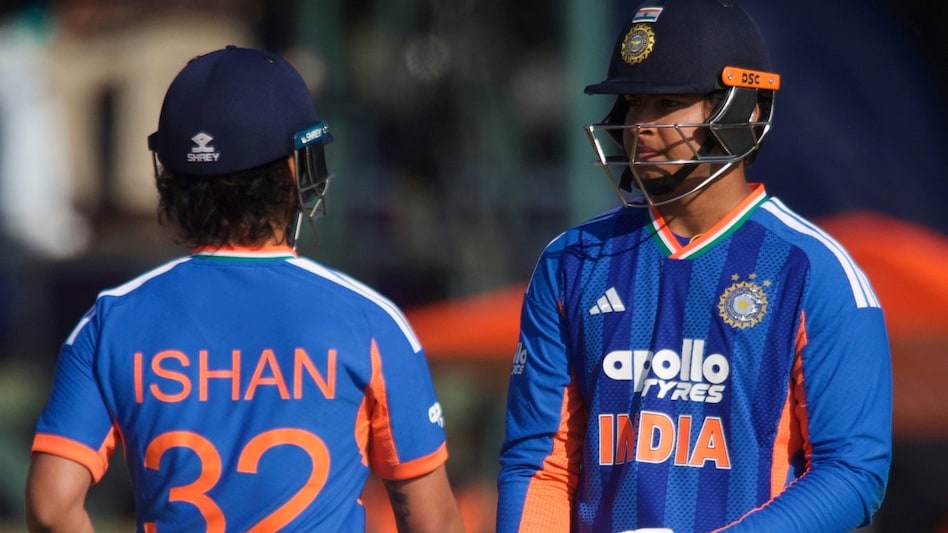
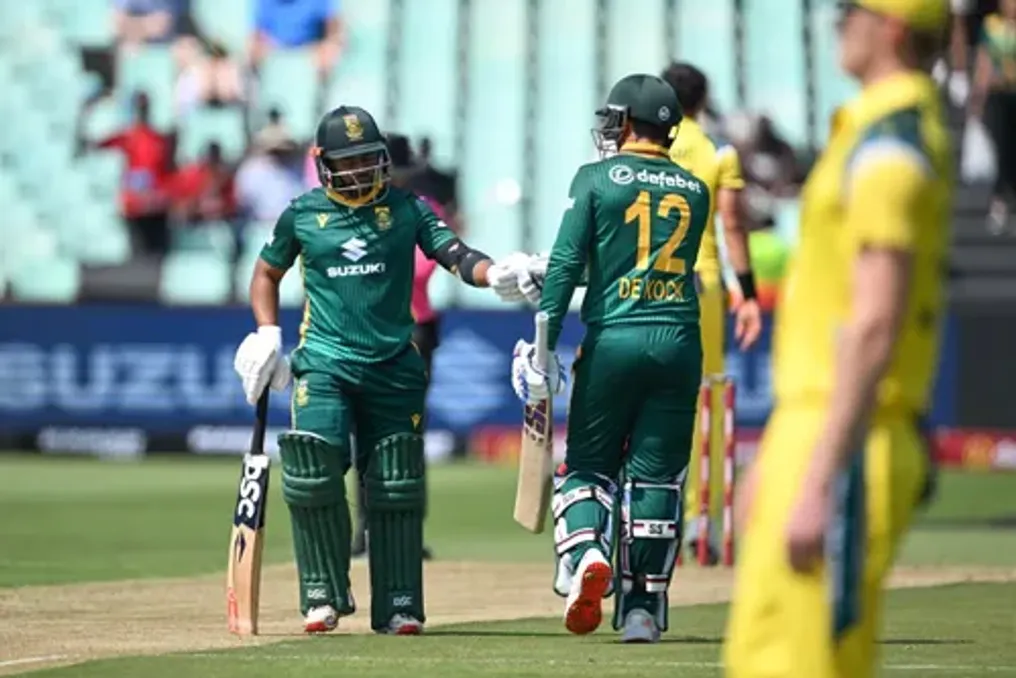
Watching the opening overs of the first ODI match between South Africa and Australia in Durban on Thursday, it became evident that modern fans may be subtly trained to value short formats while overlooking 50-over games.

The constant saturation of the cricket world with T20 content, driven by continuously emerging global leagues and tournaments, makes it difficult for One Day Internationals to maintain relevance outside of World Cup periods.

At the start of the game, the Proteas started slowly, losing six runs in the first three overs, after which Toni de Zorp was dismissed without scoring. Even Quinton de Kock appeared unusually sluggish, scoring only 14 runs off 18 balls. However, Matthew Breitschke played a brilliant, calculated supporting role, ensuring the team scored 112 runs off 106 balls, corresponding to a rate slightly above one run per ball.

Nevertheless, Marco Jansen's thrilling 75 runs off 59 deliveries added adrenaline to the viewing experience. The author noted that instinctively, he began to value Jansen's explosive play more than a patient, deserved century, which contradicts the traditional view of the game.

International cricket began with Tests in 1877 when Australia played against England, and it took nearly a century for the ODI format to debut in 1971. Although alternative innovations like Hong Kong Sixes and The Hundred tested other directions, T20 has established itself as the sport's largest financial driver.

Today, over eight major T20 franchise leagues dominate the global calendar, led by the Indian Premier League (IPL). Even at the domestic level, South Africa's SA20 is expanding exponentially ahead of its fifth season in January.

The career trajectories of Proteas veterans like de Kock and David Miller highlight the growing difficulty in maintaining the unique identity of ODIs. De Kock initially stepped away from ODIs after the 2023 World Cup to focus on global franchise opportunities such as the IPL, but later changed his mind last September, just two years before co-hosting the next 50-over World Cup in South Africa.

With over 7000 runs in 162 ODIs, a player of de Kock's caliber easily returns to the national team. Miller's statistics show an even sharper picture: despite playing 179 ODI matches as a middle-order mainstay, Miller participated in only four 50-over games in the last two years, including the Thursday match against Australia. During the same period, he played in 22 IPL matches and 15 The Hundred matches.

The main reality is that franchise T20 leagues provide the primary financial stability for modern players, and they prepare their physical and tactical conditioning specifically for this format. While Test cricket requires entirely different bowling strategies and radically different batting mechanics, ODIs have significant tactical overlap with T20. Applying T20 thinking to ODIs can often yield winning results, even if game situations sometimes demand tactical restraint.

Ultimately, it comes down to scale: ODIs last 100 overs compared to 40 in T20. The 50-over format inevitably includes long periods of lull—usually between the 15th and 30th overs, when teams consolidate, assess conditions, or recover. T20 simply does not allow room for such breaks.

This dynamic directly clashes with changing viewer behavior. Shorter attention span is not so much a reflection of cricket itself as a byproduct of the digital generation accustomed to watching endless short videos, dedicating only seven to ten seconds of attention to any topic.

Against this backdrop, sports administrators face a difficult task. Trying to attract a new audience to cricket today makes it increasingly difficult to justify the slow narrative of a regular ODI series, except perhaps during the World Cup.
Similar stories

Expert Discussion on Vaivava Suryavanshi's Potential in T20 and Test Formats
Read more
www.aajtak.in

Expert Discussion on Vaivava Suryavanshi's Potential in T20 and Test Formats

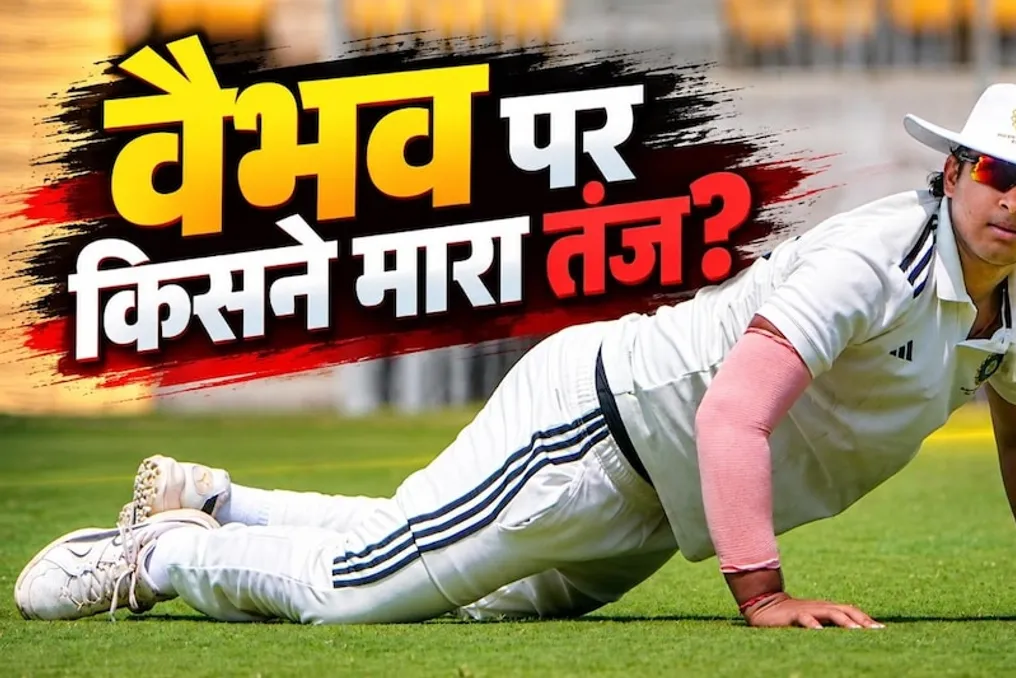
Young Indian batter Vaivava Suryavanshi is attracting attention due to his performances, but his future in the Test format is debated among cricket experts. Suryavanshi was part of the team for a T20 series against Afghanistan but did not make the starting lineup in the matches.

Nevertheless, he demonstrated his capability in the Test format by playing important matches for the team in the Duleep Trophy tournament, which strengthened his claim for a spot in the national team. Despite this, some cricket veterans believe that Suryavanshi is not suited for Test matches.

Former England spinner Monty Panesar questioned Suryavanshi's batting technique. He stated in a podcast that the batter's current technique would not allow him to achieve long-term success across all three formats: T20, ODI, and Test. Panesar believes that Suryavanshi will not succeed in Test cricket.

According to Panesar, in the current era, only a few players, such as Harry Brook, rank in the top 10 in both Test and T20. The expert emphasized that Suryavanshi currently lacks the correct technique for playing with red ball (Test).

Statistical analysis shows Suryavanshi's brilliant performance in T20, where he scored 1670 runs at an impressive strike rate of 216.32 and an average of around 43 across all T20 matches. However, his figures in First-Class, or red ball, look more modest: he scored only 399 runs in 17 matches with an average of 23.47.

On the other hand, former Australian captain Michael Clarke strongly disagrees with Panesar's assertions. Clarke is convinced that a talented player like Suryavanshi is capable of dominating all three formats. He cited Virat Kohli and AB de Villiers as examples, noting that these legends were not only dangerous batters in T20 but also great players in Test cricket.

According to Clarke, if Suryavanshi decides to play Test cricket, watching his performances will be a very exciting spectacle.

Possible T20 match between India and Afghanistan: Discussion about replacing Sanju Samson with Vaibhav Suryavanshi
Read more
www.aajtak.in

Possible T20 match between India and Afghanistan: Discussion about replacing Sanju Samson with Vaibhav Suryavanshi

The second T20 match in the series between India and Afghanistan is scheduled for September 15 (Tuesday). In the first game, the Indian team achieved a convincing victory over Afghanistan by a score of 7 wickets to 0, giving them an advantage in the series.

Before the second confrontation, the team's squad (Playing-11) is actively being discussed. There is a question about the possible exclusion of Sanju Samson. In the first T20, Sanju Samson was in the starting lineup but managed only 10 points across 8 matches.

Therefore, there is a discussion about whether the team management might consider replacing Sanju with the young Vaibhav Suryavanshi, who was not in the first T20 squad, where Sanju was prioritized.

Nevertheless, it is expected that the team management will still give Sanju Samson another chance in the second match.

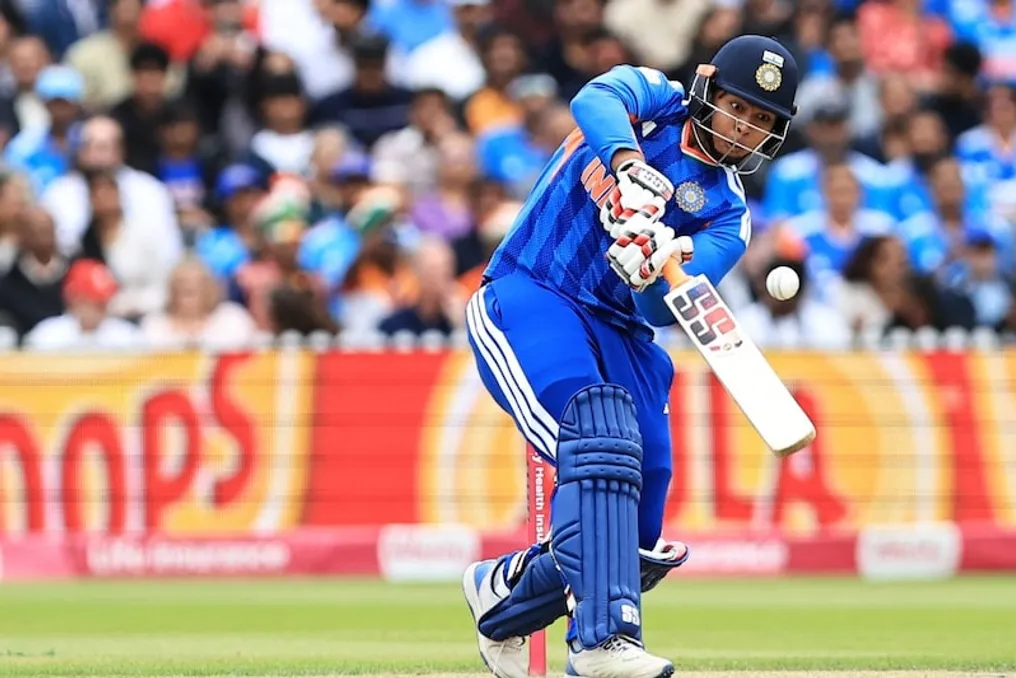
Vaibhav Suryavanshi, who is 15 years old, has attracted significant attention due to his recent performances. The decision to include him in the second T20 will be a significant choice for the Indian team. If Vaibhav is included, he could start alongside Abhishek Sharma, and Ishan Kishan might be entrusted with the wicket-keeping role.

Previously, Vaibhav was named 'Player of the Series' during the visit to Zimbabwe. In July 2026, he scored a total of 151 runs in three matches in Zimbabwe.

In the first T20, India reached a target of 157 runs in just 13.4 overs. Abhishek Sharma demonstrated a powerful performance, scoring 82 runs off 32 balls, while Ishan Kishan added 42 runs.

In the second T20, Washington Sundar may be included in the Indian team instead of Nitish Kumar Reddy. Nitish Kumar Reddy bowled 2 overs in the first T20, conceding 30 runs. Additionally, there is a possibility that Ravi Bishnoi will replace the injured Varun Chakravarthy.

Now India aims to win the second match and secure the series. Cricket fans are watching to see if Sanju gets another chance or if Vaibhav Suryavanshi returns to the Indian squad.

The projected Indian squad includes: Abhishek Sharma, Sanju Samson (wicketkeeper), Ishan Kishan, Shreyas Iyer, Tilak Verma, Washington Sundar, Shivam Dube, Axar Patel, Jasprit Bumrah, Arshad Singh, and Ravi Bishnoi. The projected Afghan squad includes: Ibrahim Jadaran (captain), Rahmanullah Gurgaz (wicketkeeper), Sedikulakh Attal, Darwish Rasuli, Ajmatullah Umarji, Gulbaddin Naib, Mohammad Nabi, Rashid Khan, Mujib Ur Rahman, Nur Ahmed, and Fazlhaq Faruqi.

Former player Krishnamachari Shrikant criticizes decision not to include Vaibhav Suryavanshi in the Indian squad
Read more
www.aajtak.in

Former player Krishnamachari Shrikant criticizes decision not to include Vaibhav Suryavanshi in the Indian squad

The Indian team defeated Afghanistan in the first match of the three-match T20 series, winning by seven wickets. After a confident start, the Indian squad aims to win the second game to gain an advantage in the series.

Young 15-year-old batsman Vaibhav Suryavanshi, who impressed with his powerful batting during the visit to Zimbabwe, did not get a chance to play in the first match against Afghanistan. Before the game, there were active discussions among fans regarding Vaibhav Suryavanshi's participation.

Despite India's comfortable seven-wicket victory, the decision not to include Vaibhav in the starting lineup sparked controversy. Former Indian selector and experienced player Krishnamachari Shrikant sharply criticized this decision by the team management.

Speaking on his YouTube channel, Shrikant noted that it was completely unclear why the player, who was the best in the previous match of the series, was suddenly excluded. He joked that when Vaibhav Suryavanshi didn't play yesterday, they started watching movies instead of the match on TV. His wife also expressed dissatisfaction, questioning why the star from the previous match was absent from the team today. He added that if such an ordinary viewer asks this question, one should consider what the player himself is going through.

Shrikant believes that constantly including and excluding a young athlete undermines his confidence. He stated that the team is treating Vaibhav incorrectly. Now, when he steps onto the field for the next match, he will have the fear of being excluded again if he does not score runs.

Shrikant emphasized that this young batsman, who has proven his worth in domestic cricket, India-A, IPL, and international T20, should be given consistent opportunities. Furthermore, he expressed regret over the treatment of Sanju Samson. He noted that Samson is sometimes included in the team and sometimes suddenly excluded, which does not contribute to the stability of any player.

It turned out that Vaibhav Suryavanshi participated in the final match of the Theleef Trophy, a red-ball tournament, just two days before the series against Afghanistan. Because of this, he had fewer opportunities to train with white balls (T20). In the first match, Sanju Samson played in place of him in the opening batting alongside Abhishek Sharma. Although Samson was dismissed after scoring 10 runs, the Indian team achieved the target of 157 runs in just 13.4 overs.

Popular