UAE Ministry studies the application of Agent AI to optimize financial services
Read more
Khaleej Times
www.khaleejtimes.com

UAE Ministry studies the application of Agent AI to optimize financial services

The UAE Ministry of Finance is considering the use of Agent AI to review financial processes and services, as well as to simplify procedures and reduce the time and effort required to complete government operations, a high-ranking ministry official reported.

Fatima Yousif Al Nakbi, Acting Assistant to the Deputy Minister of the Auxiliary Services Sector at the Ministry of Finance, specified that the ministry is engaging clients, strategic partners, and other stakeholders to determine the areas where Agent AI can be applied within its financial services and processes.

She stated that the Ministry has presented a series of proposed concepts for participants to evaluate and provide feedback, in order to identify opportunities for improvement and ensure that the proposed solutions meet real client needs. Furthermore, the ministry asks participants to indicate additional areas that should be considered, as their opinions will form the basis for further development of the proposed solutions.

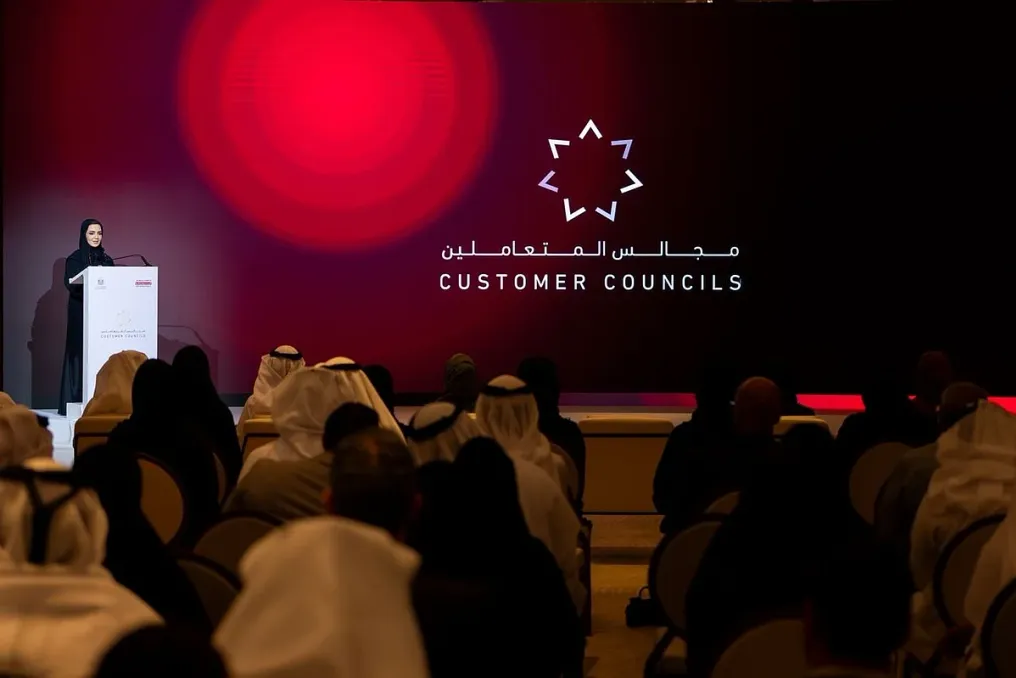
Al Nakbi's presentation took place at a Client Council meeting organized by the Ministry in Dubai as part of the third cycle of the 'Zero Bureaucracy' Program. This program focuses on reengineering financial operations and procedures, as well as exploring the direct and responsible implementation of Agent AI.

According to the Ministry of Finance, the new phase aims to advance financial services and procedures through Agent AI to support financial operations. The goal is to develop more proactive processes that save time and effort while maintaining proper governance and control.

The financial services and processes being studied in the third cycle cover six key areas: budget preparation; transfer of financial allocations between departments and programs; requests for the introduction or modification of fees for Federal agency services; employee payroll procedures; public procurement; and the final reporting cycle.

During the Client Council meeting, participants discussed how Agent AI can be directly and responsibly implemented in these areas, including the tasks it can support, the necessary data and input parameters, verification and validation stages, and precautions required before moving from testing to implementation.

Al Nakbi emphasized that clients, strategic partners, and employees with knowledge of relevant policies, procedures, and requirements play an important role in the co-creation process. Client engagement was also a key element of the Ministry's work during the first two cycles of the 'Zero Bureaucracy' Program, helping to identify issues, propose improvements, and evaluate revised services and procedures.

The Ministry stated that the first two cycles have led to tangible progress in streamlining procedures and eliminating unnecessary requirements in 2024 and 2025, laying the foundation for the third cycle with its increased focus on practical Agent AI implementation.

Feedback and recommendations received during the latest Client Council will help the Ministry's implementation teams in redesigning financial services and processes, as well as in creating frameworks for managing and monitoring their effectiveness.

'Zero Bureaucracy' Program aims to simplify government procedures, eliminate redundant requirements, and increase the efficiency of government services and operations. In its third cycle, the program places greater emphasis on reducing unnecessary burden on businesses and individuals in terms of time, effort, and resources, while supporting the efficient and secure implementation of Agent AI.

As part of broader efforts to involve clients in improving government services, the Ministry of Finance has launched several initiatives, including Client Councils, interactive workshops, and the Sadid Contest, which provides a platform for innovative ideas and constructive suggestions aimed at simplifying procedures and enhancing the customer experience. Through these initiatives, the Ministry seeks to engage clients and strategic partners more directly in the development and testing of solutions to create more efficient, flexible, and proactive financial services.

Similar stories

UAE Minister states that excessive focus on AI regulation may overshadow its practical benefits
Read more
www.khaleejtimes.com

UAE Minister states that excessive focus on AI regulation may overshadow its practical benefits

The UAE Minister for Artificial Intelligence, Digital Economy and Remote Work Applications, Omar Sultan Al Olama, noted that the country aims to provide businesses and individuals with early access to advanced technologies while ensuring control over confidential data is maintained. This is part of the UAE's efforts to accelerate the adoption of artificial intelligence across all economic sectors.

Speaking at the ForsaTEK event in Dubai on Monday, Omar emphasized that the UAE's approach is not focused on any single technology company or major partnership. Instead, the country is working to create an ecosystem that provides organizations with access to new technologies and helps them implement them safely.

He added that several technology-related announcements are expected in the coming months as the UAE strengthens its position as an attractive destination for individuals and organizations interested in accessing cutting-edge technologies. These comments came amid global discussions among governments and enterprises on how to regulate AI without slowing down innovation due to regulatory uncertainty.

Omar believes that the discussion about AI should go beyond regulation and shift the focus to demonstrating the real benefit of this technology for people. He also warned that too strong an emphasis on regulation can sometimes obscure the practical advantages of AI. Furthermore, people who fear artificial intelligence may be using algorithmic technologies daily without realizing the depth of AI integration into their lives.

According to him, the task is to educate people to become 'owners of the technology,' rather than those it displaces or suppresses. The discussion also highlighted the importance of technology in sectors such as aviation, where international connectivity requires airlines and airports to rely on systems, infrastructure, and regulations that operate across borders.

For established organizations like Emirates, Omar stated that innovation must be combined with the responsibility associated with managing large brands and services. He advised: 'Do not stop innovating. Take calculated risks. Do not just take risks.'

Omar noted that recognized organizations face a particular challenge because they have built a reputation that cannot be subjected to unnecessary risk. Instead of evaluating technologies solely based on traditional business metrics, such as revenue per employee, organizations should consider how the technology can improve the experience of the people they serve. In aviation, this means examining how technology can help airlines, airports, customs, border control, and other ecosystem elements serve a growing number of travelers without needing to expand infrastructure and staff at the same pace.

Omar stressed that technology will be crucial for scaling the passenger experience in the UAE, especially given the country's geography and the capabilities of its airport infrastructure. Moreover, he specifically pointed out that broader use of AI does not imply the complete exclusion of humans from service. While AI can efficiently handle routine tasks, travelers and customers still value human interaction in certain situations.

He cited education as an example, noting that the early expectation of complete transformation of education by large language models highlighted the importance of human interaction, including social and emotional intelligence. This same principle applies to airports and other customer-facing environments, where technology should complement human service, not replace it. Omar stated: 'You do not want to replace the entire airport with robots and AI.' Instead, technology should define where human interaction adds value and ensure human involvement where necessary.

In conclusion, Omar reported that the UAE is collaborating with numerous technology partners, and the country's strategy extends beyond a single partnership with a major global technology company. The broader goal is to give the UAE an advantage in attracting people and organizations that can choose to work anywhere in the world. This advantage will include quality of life, as well as early access to new technologies in a way that does not require organizations to give up control over confidential data.

Popular