South Africa proudly showcases its cultural heritage, yet local languages remain marginalized in education, science, technology, and public life. The author argues that heritage preservation must go beyond rituals, requiring African languages to become carriers of modern knowledge and opportunities.
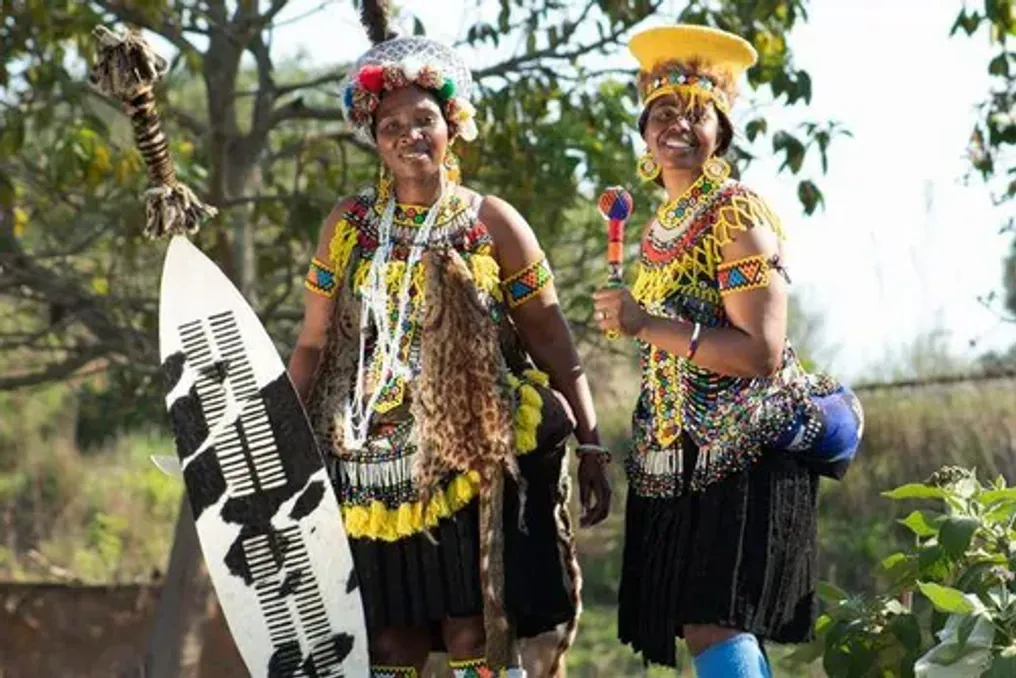
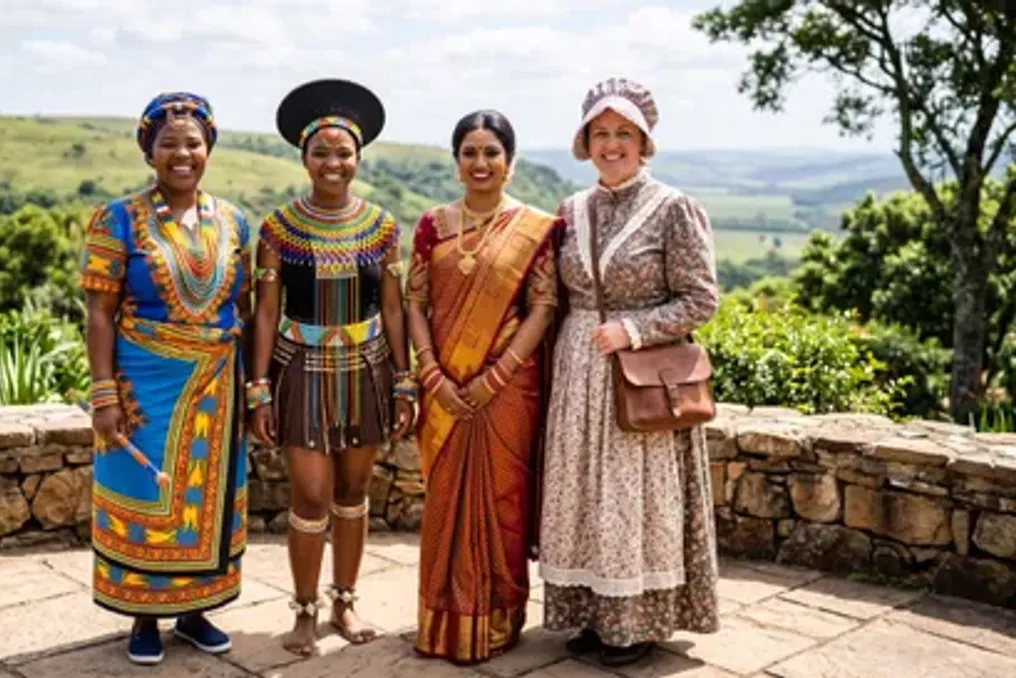
The country skillfully presents its heritage: it is beautifully performed, confidently executed, prepared, photographed, and temporarily moves from the periphery to the center of the national stage every September. Heritage Day has become one of the few moments when the country seems comfortably displaying its numerous cultural facets without immediately turning differences into conflict. This deserves protection.
However, a more complex question arises: what happens to a culture that can continue to be performed but can no longer reliably reproduce its knowledge?
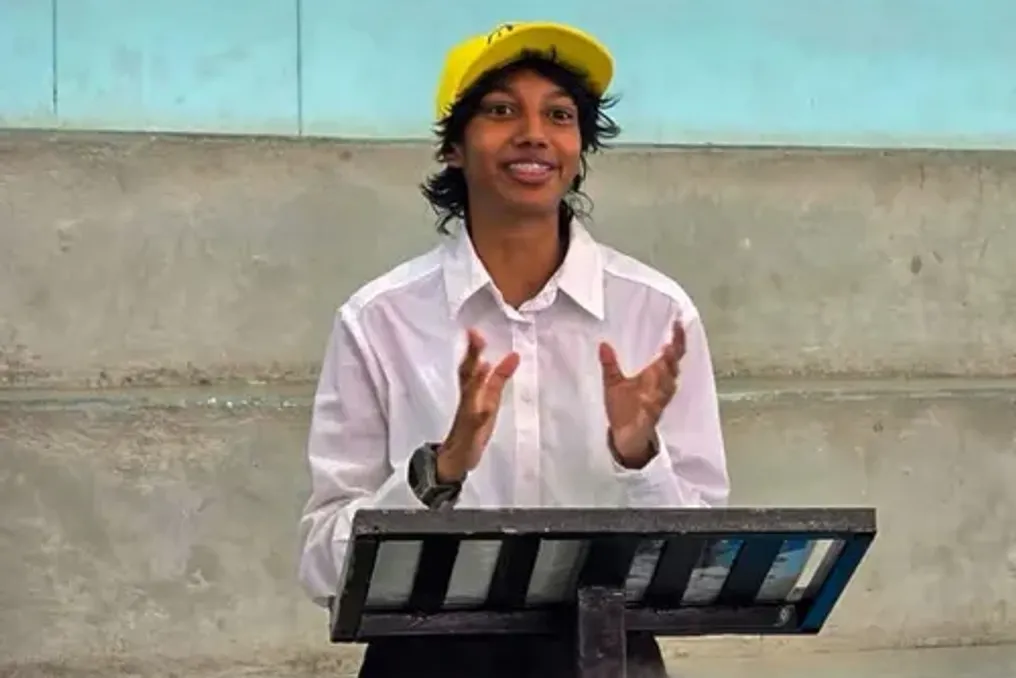
A recent story from Heritage Month vividly illustrates this problem. Wikimedia South Africa runs a month-long campaign urging volunteers to translate articles about South African heritage from English into local languages. During one session, a student preferred using Afrikaans over her mother tongue. When asked why, she explained that she could not write in her native language because the school she attended had never properly taught it.
There is something quietly destructive in this.
When Language Becomes a Ceremony
Language can remain alive in spoken word, becoming weak on paper. It can exist in jokes, family conversations, songs, prayers, and ceremonies, slowly disappearing from places where modern knowledge is stored, discussed, verified, and transmitted. This is not preservation; it is a narrowing of cultural life.
English and the Hierarchy of Knowledge
South Africa's approach to heritage has become very competent in symbolism. Eleven official vernacular languages are recognized alongside South African Sign Language. There are ceremonies, national holidays, royal institutions, museums, cultural festivals, and constitutional guarantees. Nevertheless, the hierarchy of languages in serious national affairs remains strikingly familiar.
English dominates universities, the corporate environment, a significant portion of the media, professions, scientific publication, technology, and major government sectors. African languages retain social significance and cultural richness but are too often viewed as languages of identity rather than languages of advanced knowledge.
A language is not considered fully alive just because people can greet each other in it. It must be able to explain a balance sheet, conduct a criminal case, teach calculus, discuss monetary policy, draft software documentation, describe a medical diagnosis, and engage in philosophical debate without constantly resorting to English for complex parts. If a language cannot do this, its speakers ultimately receive an unspoken message: your language is sufficient for home, but not good enough for the future.
The Digital Divide is Also Linguistic
This is where Heritage Month can become too comfortable. We dress children in traditional attire on Fridays, and on Monday, we send them back to classrooms where intellectual seriousness is still overwhelmingly associated with English. We celebrate local languages in speeches, while many parents rationally prefer English education themselves, as English remains the passport to university admission, employment, and economic mobility.
This contradiction cannot be resolved by blaming parents. They are reacting rationally to the society that was built. If English gives a child greater access to work, higher education, and a wider world, choosing to use it is not a cultural betrayal; it is an economic strategy. The real failure lies with the country that allows mastery in an African language and access to modern opportunities to appear as competing choices.
The Department of Basic Education has begun addressing part of this issue through mother-tongue bilingual education. This program extends instruction in African languages beyond the primary level, including mathematics and natural sciences, instead of forcing a sharp transition where many children moved from learning in their mother tongue to studying complex concepts predominantly in English. The department itself acknowledges that students in African languages have historically been disadvantaged by this transition. This is important progress.
But the deeper problem is not simply the language in which a teacher explains mathematics. It is whether the language itself is continuously expanding to carry the intellectual life of modern society. Languages do not become technically complex by decree. Someone must create terminology. Someone must write textbooks, edit dictionaries, translate concepts, produce literature, create digital corpora, voice films, publish scientific papers, and publicly debate which new words actually work.
Here, the digital age presents both opportunity and danger. Artificial intelligence is trained on vast amounts of existing text. Languages that are richly represented online enter this new era with a huge advantage. Languages with thin digital archives enter it already behind. If isiZulu, Sesotho, Tshivenda, or Xitsonga have far less available, structured, and high-quality material for searching than English, the next generation of AI tools will inevitably understand and serve them less effectively.
Thus, the digital divide is no longer just a question of internet access. It is also a question of which languages the internet knows. This must change our approach to linguistic development. Translating a Wikipedia article into isiZulu may seem insignificant compared to grand issues of economic development. But it is not. Every serious piece of knowledge added to a language strengthens that language's ability to survive in the knowledge economy.
The same applies to journalism, publishing, podcasts, academic work, and government institutions. South Africa must commission much more serious non-fiction literature in African languages. Universities should encourage intellectual production in these languages, rather than viewing publication in English as an obvious marker of scholarly seriousness. State broadcasters should not disproportionately limit local languages to entertainment content, radio call-ins, and cultural programs, while the most technically complex economic and political analysis leans toward English.
There is also an uncomfortable class dimension here. Fluent command of English increasingly functions as cultural capital. It signals education, employment potential, and membership in professional life. A child speaking flawless English is often perceived as intelligent even before they have said anything remarkable. A child struggling with English may be judged as intellectually weak, even though they are actually struggling only with the language in which intelligence is measured.
This is one of colonialism's most persistent achievements: not just imposing another language, but giving fluency in that language the appearance of intelligence itself.
Multilingualism Without Intellectual Subordination
None of this requires turning English into an enemy. English is one of South Africa's great assets. It connects us both domestically and globally. It provides South Africans with access to vast reservoirs of knowledge and allows people from different linguistic communities to communicate. Any serious attempt to weaken English would be self-destructive.
The goal should be supplementation, not subtraction. A truly multilingual South Africa should educate citizens who can operate confidently in English without abandoning the intellectual complexity of their mother tongues. This is harder than wearing traditional clothing once a year. It requires money, institutions, writers, teachers, publishers, technologists, and political seriousness. It requires parents to believe that an African language can take their child somewhere. This belief cannot be created by slogans; the nation's institutions must make it true.
Heritage Must Remain Useful
Heritage survives when it remains useful. Zulu culture did not survive centuries because each generation perfectly reproduced the previous one. It survived because people adapted the language, practices, and identity to changing circumstances while maintaining a recognizable cultural core. Living heritage is not an artifact preserved behind glass. It is inherited material that is constantly brought into alignment with the present.
This is why we should be concerned about that student who could speak her language but could not write it. She is not proof that young South Africans have abandoned their heritage. She is evidence that our institutions sometimes failed to prepare them for its continued transmission.
A country can lose a language long before the last speaker dies. It begins when the language ceases to be used for what society deems important. When science happens elsewhere. When law happens elsewhere. When technology happens elsewhere. When serious writing happens elsewhere. Eventually, the language remains vibrant in ceremonies but diminishes in authority. This is the danger South Africa must confront on Heritage Day. The question is not whether our children know the dance. The question is whether their language will still be capable of explaining the world they are dancing in.