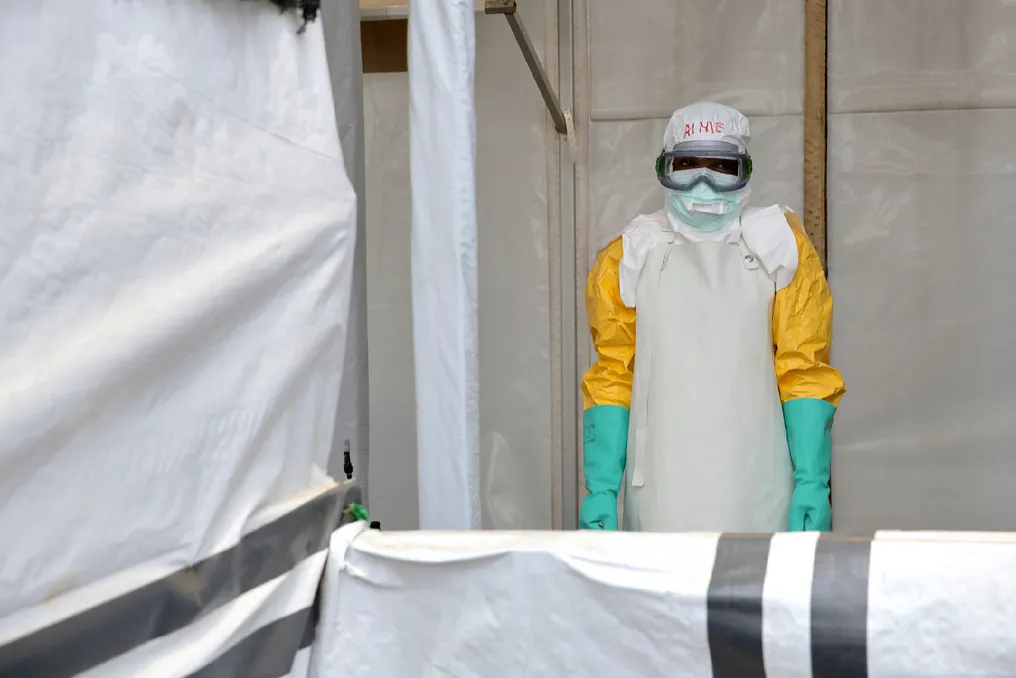
The World Health Organization (WHO) reported on Friday that the Ebola outbreak in the Democratic Republic of Congo has expanded to two additional health zones. As a result, the total number of affected people reached 63 across seven provinces.
New outbreaks have been detected in the areas of Bulu, located in the Sud-Ubangi province, and Dungu, situated in the Haut-Uele province, which borders South Sudan.
According to the WHO, as of September 23, there were 7,890 confirmed cases and 3,799 deaths registered in Congo.
WHO Director-General Tedros Adhanom Ghebreyesus noted that ongoing armed conflicts and population displacement complicate efforts to reach affected communities, track contacts, and contain the virus transmission.
Tedros emphasized that it is extremely difficult to view Ebola in isolation, as instability and forced migration restrict access to certain territories.
He also stated that the overall number of cases is decreasing due to improved contact tracing, safe burials, and the involvement of local communities. Nevertheless, virus transmission remains uneven in the affected regions.
The crisis response is complicated by the lack of a licensed vaccine or specific treatment for the Bundibugyo strain of Ebola. Clinical trials are currently underway to evaluate potential vaccines and treatments.
Furthermore, the WHO Pandemic Agreement was adopted at the World Health Assembly in May 2025, aimed at strengthening global cooperation in pandemic prevention, preparedness, and response.