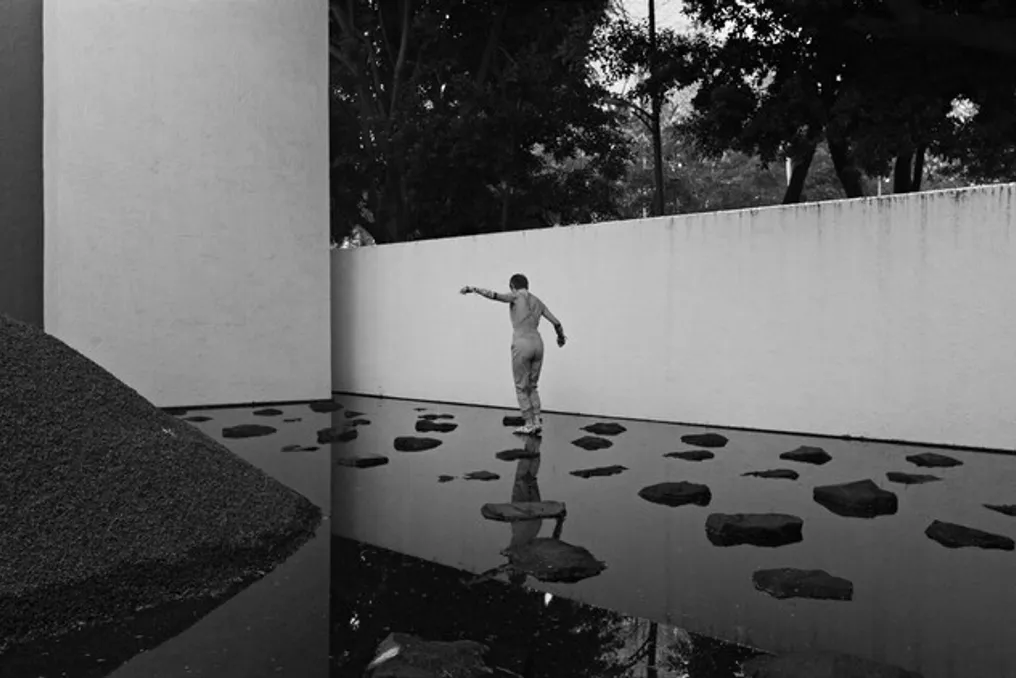
The El Eco Pavilion 2020, with the Cronoboros / TANAT project, exemplifies an innovative architectural approach based on the Manifesto of Emotional Architecture, originally published in 1953 by Mathias Goeritz.
Goeritz proposed a new modality of architecture that transcends the mere logical and rational understanding of environments, enabling the creation of buildings capable of articulating deep feelings. The El Eco museum serves as a case study for this architecture, as it moves away from traditional patterns and criteria, such as symmetry, structural coherence, and the idea that each space must have a single and determined function.
By reintegrating the emotional dimension into the field of architecture, it becomes possible to conceive of it as a component of a broader artistic system, where elements such as sculpture, painting, dance, music, poetry, and architecture are integrated into a cohesive unit.