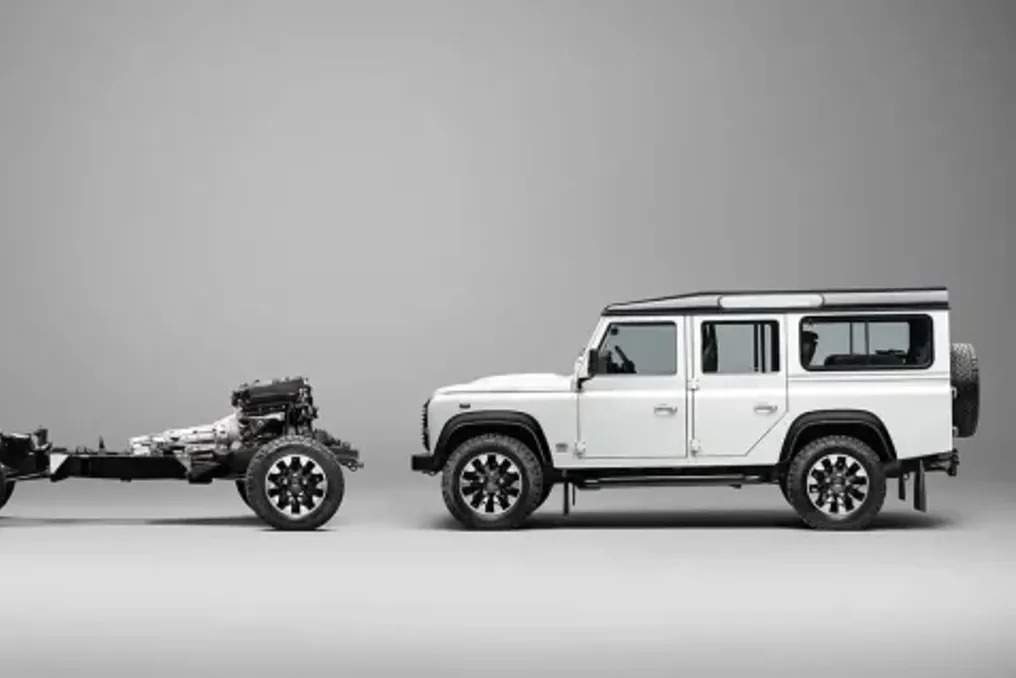
Land Rover is introducing a V8 engine in new Classic Defender units. This program, called Works V8 Conversion, launched on Wednesday (23rd), replaces the diesel Puma engine found in L316 generation Defenders with a 5.0-liter naturally aspirated gasoline V8 engine, which generates 405 hp and 52.5 kgfm, paired with an eight-speed ZF automatic transmission.
For the first time, owners have the option to bring their own vehicles in for this modification. Previously, in 2018, the division had produced 150 Defender Works V8 units with similar power, but these were based on cars that the division itself acquired and restored.
The new V8 engine replaces the 2.2 turbodiesel engine, which produced 122 hp and 36.7 kgfm, resulting in a power increase more than three times the original. Additionally, the six-speed manual gearbox is replaced. Although the new engine belongs to the same family as the one used in the current Defender, it does not have a supercharger.
This swap is part of a broader set of improvements. Each conversion includes the installation of a new chassis, Bilstein shock absorbers, Eibach coil springs, anti-roll bars, arms, and bushings. The braking system is upgraded to Alcon components, featuring four-piston calipers on all four wheels, in addition to 33.5 cm ventilated discs at the front and 30 cm at the rear.
Customers can also customize the finishes separately from the engine conversion. Wheel options include standard 16-inch steel wheels or 18-inch alloy wheels. Converted vehicles also receive Works V8 badges and a redesigned gear selector tunnel.
However, there is a significant restriction: the V8 engine can only be installed in Defender 90 and 110 models manufactured between 2012 and 2016, the period during which the utility vehicle used the 2.2 engine adopted to comply with Euro 5 emission standards. Production of this model ended in January 2016 at the factory located in Solihull, England. Vehicles produced from 2007 onwards can only receive updates related to wheels, suspension, and brakes.
The engine replacement is carried out exclusively at Classic Works workshops, located in Coventry, UK, and Essen, Germany. Other components can be purchased through Land Rover Classic Parts and assembled by the owner or a dealership. The conversion performed by the brand ensures that the history is documented in the official network, unlike a DIY installation, which may raise more questions in case of resale.
Land Rover has not disclosed the cost of the conversion nor whether the program will be available in Brazil. The company clarifies that availability, specifications, prices, and timelines depend on the vehicle's condition, its current configuration, and market conditions. Eligibility is only confirmed after an assessment conducted by a division specialist or a local dealership.
Dominic Elms, Director of JLR Classic, mentioned that the program was designed to cater to both owners who use the Defender daily and those who treat it as a collector's item.