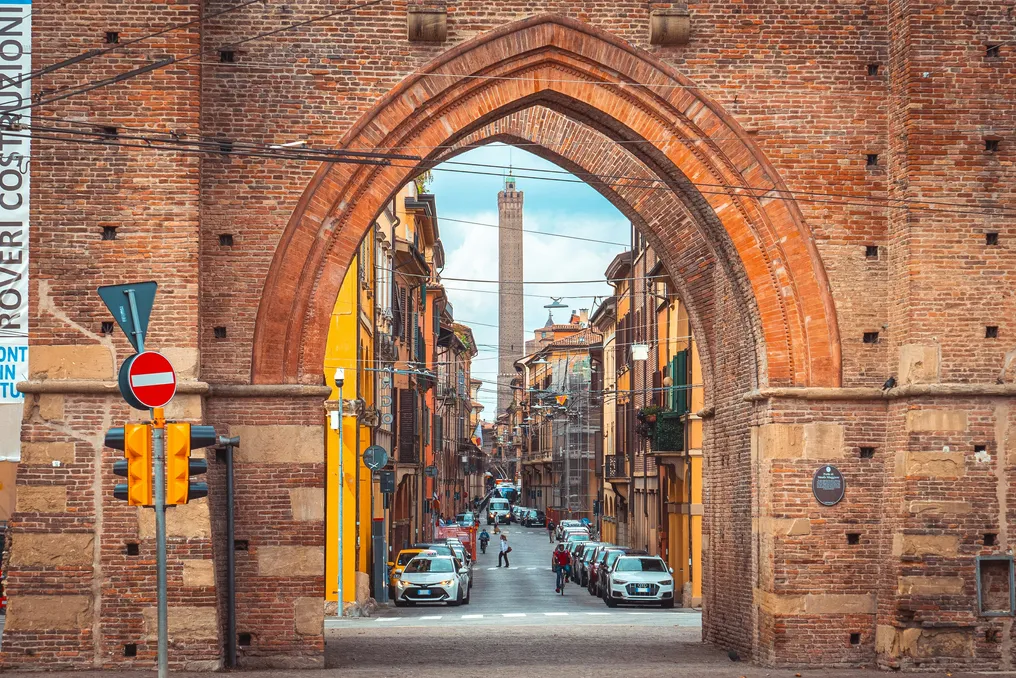
Located in northern Italy, approximately 376 kilometers from Rome, charming Bologna is a destination that does not always feature in tourist itineraries. The capital of the Emilia-Romagna region, this municipality is known for being less subjected to intense tourist flow and retains an authenticity reminiscent of a medieval village frozen in time.
The city attracts visitors not only with its historical buildings of warm tones and traditional tiled roofs (which earned it the nickname 'La Rossa,' or The Red), but also with the famous University of Bologna, founded in 1088. This institution, recognized as the oldest in the Western world, contributes both to attracting nightlife and to the city gaining another moniker—'La Dotta,' or The Learned.
The local cuisine is also rich and internationally renowned. Many consider Bologna the gastronomic capital of Italy, which has given rise to the city's third nickname—'La Grassa,' or The Fat One. It was here that the well-known Eataly chain originated. Beyond the main attractions, such as Piazza Maggiore, the municipality holds numerous places that remain unnoticed at first glance.
Despite Bologna being abundant with tourist sites, some of its charms do not reveal themselves immediately, requiring attentiveness. The old urban beauties are usually associated with the tall towers of Due Torri—Asinelli and Garisenda, two of the most famous monuments. Nevertheless, there are other equally fascinating medieval structures that often fall outside traditional guides.
Prendiparte Tower
An example is the Prendiparte Tower. It rises somewhat discreetly among the narrow streets. In the Middle Ages, this place served as a prison; today it functions as housing, but inscriptions left by former inmates can still be seen.
Another structure that has retained its historical atmosphere is the Torre degli Accogidi. Standing 61 meters high, this structure preserves the atmosphere of the 12th century and is located near St. Peter's Cathedral, one of the most important in Bologna.
In addition to the towers, the capital of Emilia-Romagna hides canals beneath the asphalt: in the past, the city was filled with canals primarily used for silk and wool industry. Most of this network was covered in the 20th century, but one can still admire the flow of Canale delle Moline, framed by the famous wooden window on Via Piella.
However, queues of tourists are often present in this area. To avoid them, one can stroll along Via Oberdan or Via Malcontenti: there, the canal flows quietly between old industrial buildings and courtyards dominated by warm hues.
Bologna's local cuisine is always a must-stop for those wishing to spend time in the city and experience daily life. The center of this culture is the famous Quadrilatero, an old medieval market in narrow alleys located near Piazza Maggiore, the city's calling card.
The area is surrounded by shop windows filled with artisanal pasta prepared before passersby. Regional cheeses, traditional meat delicacies, and dishes prepared according to family recipes closely linked to this region are sold there.
It is in the Quadrilatero that one of Bologna's most traditional addresses is found—Osteria del Sole, which has been operating since 1465 and offers a unique feature: it serves only wine. Therefore, the tradition among Bolognese people is to buy bread, cheese, and other food in neighboring shops to then eat them at the old wooden tables in the Osteria.
Nevertheless, to avoid the most popular tourist spots, the city has several rare treasures. For instance, Mercato delle Erbe—a hundred-year-old establishment opened in 1910—offers a unique dynamic: in the morning, it functions as a traditional vegetable market, and by evening, it transforms into a lively spot for snacks and treats.
In the direction of Bolognina—a charming neighborhood north of the municipal Historic Center, known for its vibrant and multicultural atmosphere—is Mercato Albani, another lesser-known but equally delicious alternative to include in a travel itinerary. This space is filled with small taverns specializing in Greek cuisine, stalls with artisanal cheeses, and wine shops known as enoteche.