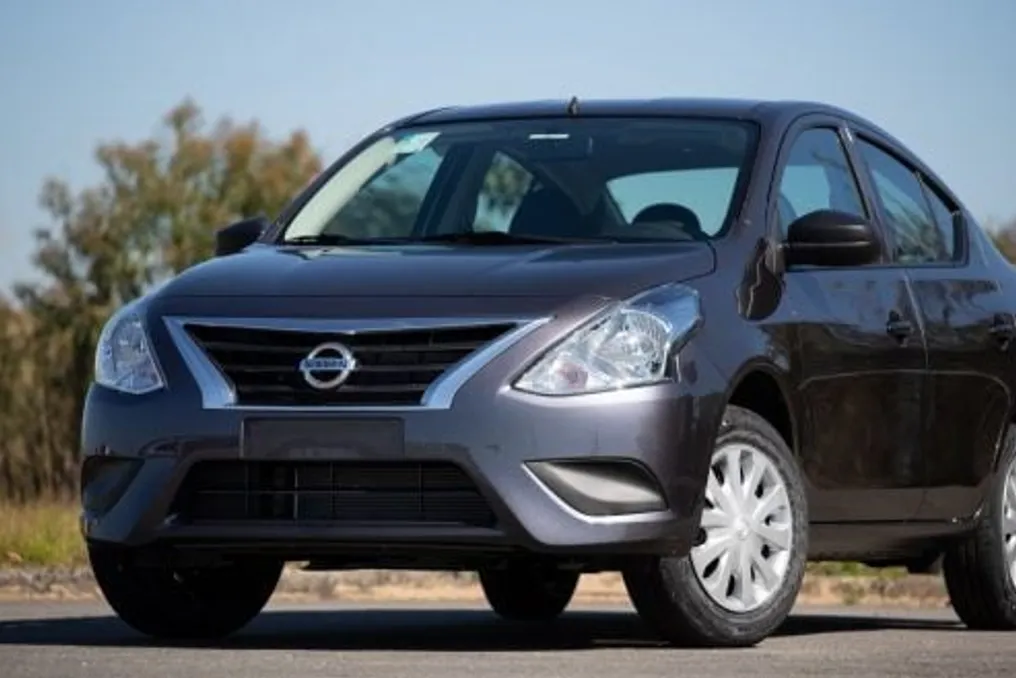
The first generation of the Nissan Versa established itself in the Brazilian market as a pragmatic sedan, ideal for those seeking an economical, practical, and easy-to-maintain vehicle.
Despite lacking major innovations in design or finishes, the model managed to offer space comparable to mid-sized vehicles, even while competing in the compact category. This characteristic attracted both urban drivers and those who use the car for professional purposes. Throughout its history, the Versa consolidated itself as an efficient urban option, comfortable for travel, and notable for its mechanical robustness.
This article details ten specific aspects of the 2018 Nissan Versa. The Versa arrived in Brazil in 2011, imported from Mexico and equipped solely with the 1.6L engine producing 111 hp. Built on the V platform, the same used by the March, the sedan aimed at the broader compact segment, where models like the Renault Logan and Chevrolet Cobalt were already competing.
Domestic production began in 2015, when the Versa started being manufactured at Nissan's new facility located in Resende, Rio de Janeiro. During this phase, the Brazilian sedan received subtle improvements in finishing.
The 2017 line introduced the three-cylinder 1.0L engine, which stands out for its low consumption. In the same period, the vehicle also gained an automatic transmission, adopting the CVT gearbox.
With the arrival of the second generation, imported from Mexico starting in 2020, the original Versa was renamed V-Drive. However, this nomenclature did not last long. Due to the pandemic and the arrival of the new generation, the Versa came to be called V-Drive in 2020, following the standard of other markets, such as the Mexican one.
In Brazil, the V-Drive was launched in four versions, offering 1.0L and 1.6L engines, with manual or CVT transmission options. To maintain price competitiveness, some equipment was removed from the versions. The most basic configurations came only with air conditioning, electric steering, onboard computer, power windows and locks, height-adjustable steering wheel, and 15-inch steel wheels. The sound system was omitted, leaving only basic preparation. The trunk interior cover was available only in the 1.6L versions.
The manufacturing of this first generation of the Nissan Versa, including the V-Drive version, was completed in October 2021.
Since the beginning, the 1.6L 16V engine has been present in the Versa, delivering 111 hp and 15.1 kgfm at 4,000 rpm. This setup provides adequate performance for daily use, with satisfactory accelerations, appropriate recoveries, and good behavior at cruising speeds.
The inclusion of the CVT gearbox in 2017 added greater comfort. However, its operation is characteristic of continuously variable transmissions, presenting high revolutions, a feeling of slippage, and an absence of perceptible jerks. There is no gear simulation, and the Sport button, discreetly positioned at the base of the lever, only gives the impression of gear lengthening.
The three-cylinder 1.0L engine, derived from the European HR12, emerged in the era of downsizing. With 77 hp and 10 kgfm, it surprises with its disposition, especially aided by the short ratios of the manual gearbox. Although it presents difficulties in hills and recoveries—as is common in naturally aspirated 1.0L engines—it demonstrates low vibration and well-controlled consumption.
The sedan has always distinguished itself by its efficiency. According to the 2018 PBEV/Inmetro table, the average fuel consumption was as follows:
The spacious interior was a strong point of the Versa, facilitated by the 2.60m wheelbase. Both the driver and passenger enjoy good legroom and shoulder room, although the seats are relatively narrow. In the rear seat, two adults and one child can travel comfortably. The trunk, with a capacity of 460 liters, is also a differential, allowing for the easy transport of bulky luggage.
The 2018 Nissan Versa was already a domestically produced model. Although the finish has evolved, rigid plastic remains the predominant material, as does the simple design.
The steering wheel, inherited from the Sentra, has a large hub but offers a good grip. The electric power steering is light and effective in maneuvers, although it could have presented greater progression at higher speeds. The positioning of the Nissan Versa resulted in some losses, such as the elimination of the split rear seat backrest. Furthermore, the suspension, already present in the Mexican model, did not undergo significant improvements in the Brazilian version.
For those looking for a balanced option in the used car market, the 2018 Versa SL 1.6 CVT is recommended, as it was the top-of-the-line version at the time. In terms of safety, it meets the legal minimum: front airbags and ABS, in addition to Isofix and rearview camera. Regarding comfort, it includes automatic air conditioning, electric steering, electric window controls, leather upholstery, height adjustments for the steering wheel and driver's seat. Externally, it features 16-inch alloy wheels and fog lights. The multimedia center has a 6.7-inch screen with integrated GPS, USB input, DVD and CD readers, and Bluetooth connectivity.
The 2018 Nissan Versa SL 1.6 CVT had the following average prices in the market, according to KBB Brazil data (September/2026). In 2020, before becoming V-Drive, the Versa received the Special Edition limited series, with a run of 550 units. This edition was based on the S version and included the 1.6L engine, CVT gearbox, air conditioning, steering wheel controls, onboard computer, remote key, and multimedia center, using 15-inch steel wheels.
Nissan has always maintained competitive service costs, and the Versa is known for its uncomplicated maintenance and affordable parts. It is possible to check the average prices of parts for the 2018 Nissan Versa with the 1.6L engine and CVT gearbox.