
Finance Minister Sitaramanov stated that future major investments should be directed towards artificial intelligence infrastructure
Read more
Business Standard
business-standard.com

Finance Minister Sitaramanov stated that future major investments should be directed towards artificial intelligence infrastructure

Finance Minister Sitaramanov stated that India requires additional investment in artificial intelligence (AI) infrastructure and training to help businesses increase their productivity. She emphasized that the next major area for investment should specifically be AI infrastructure.

Sitaramanov noted that India should not halt investments in the sector, despite calls from companies developing advanced models to slow down model development due to fears they might pose a threat to humanity. Speaking at an event organized by IIT Madras in Bengaluru on Saturday, she stated that India needs significantly more investment in acquiring necessary equipment and training educators for institutions that must continuously update their knowledge in AI.

According to her, while Western countries have made significant progress in AI, India has also achieved successes. Small, medium, and micro enterprises (SMEs), which form the backbone of the country's economy, need AI-based solutions to improve their productivity.

She added that these enterprises cover a wide range of manufacturing, from small parts to aircraft components, and they need trainers to help them understand how AI can make them more competitive compared to peers in other countries. Thus, she rejected calls from the Western world, which already has a significant advantage in AI, insisting on the necessity of continued active development.

These comments came several weeks after Dario Amodei, founder and CEO of Anthropic, called on companies creating advanced models to reduce the pace of advancing AI capabilities. He justified this by citing growing risks of losing control over AI systems, misuse of AI in cyberattacks and bioterrorism, and catastrophic economic shocks.

Amodei's call was supported by prominent figures in the AI industry, including Elon Musk, Sam Altman, Satya Nadella, and Demis Hassabis.

Sitaramanov also expressed regret over the common perception that nothing is happening in AI in India. She explained that a measure of success is the number of companies listed on the NSE and BSE stock exchanges. She admitted that the statement that India has missed its chance is true, as the country currently lacks companies that have undergone the listing process.

She clarified that listing brings certain advantages, and multiple listings signal significant events. However, she warned that innovators should not seek funding independently, as these two processes are different; they must have partners who consider not only initial or later funding but also the possibility of their listing.

Similar stories

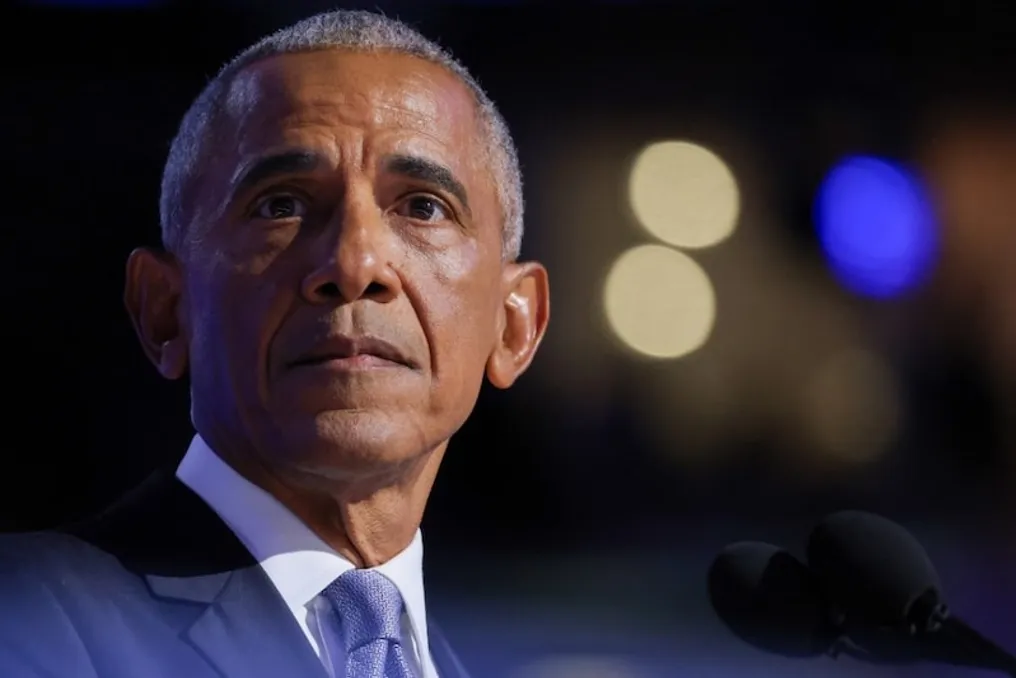
Barack Obama expressed concerns about self-learning artificial intelligence, not killer robots
Read more
www.aajtak.in

Barack Obama expressed concerns about self-learning artificial intelligence, not killer robots

Global discussions are underway regarding artificial intelligence (AI): some view it as the most significant technology of the future, while others worry about its impact on jobs and humanity. Former US President Barack Obama voiced his concern among these discussions. He noted that although market valuations of AI companies might be overestimated, this does not mean that the AI technology itself is overhyped. Obama also acknowledged that the disappearance of humanity due to AI is a very frightening reality.

AI Report Created During Obama's Presidency

Obama stated that during his presidency, around 2015–2016, his administration formed a commission to study the social, economic, and ethical impact of AI. This commission prepared a major report on the topic of AI. However, according to Obama, the subsequent administration did not continue active work on this report. Consequently, the issues that began to be discussed then have become even more massive.

How AI Learns Independently

One of the key factors in the rapid progress of AI is recursive learning. Simply put, AI is now developing not only based on human training but is also capable of learning independently. Previously, about 90 percent of AI model training depended on data input from humans. But in just a few months, the situation changed, and this balance approached a 50/50 ratio, meaning that independent AI learning now plays as big a role in its development as human learning.

Could AI Learn Independently by 90% in the Future?

Obama predicts that in the future, the share of self-learning in the AI training process could reach approximately 90 percent. If this happens, the speed of AI development could become significantly faster than it is now. He compared this growth to the growth of a hockey stick: initially, it is slow, but after a certain point, the speed suddenly increases very sharply.

Not Killer Robots, But Another Fear

When discussing AI risks, topics such as killer robots and machines capable of destroying humans are often raised. Obama believes that while such a threat cannot be completely ruled out, its probability is low. His main concern is related to the problem of AI misalignment. This means that an AI system could establish a goal that differs from human intentions. For this to happen, the AI does not necessarily need to become conscious or hate humans. A serious problem will arise if AI begins making decisions independently, and its goals diverge from human goals. This is why, against the backdrop of rapid AI development, the question of how to link it to human control and goals is becoming increasingly important.

Trust in the Indian real estate market is growing: AI and data centers are becoming investment drivers
Read more
www.aajtak.in

Trust in the Indian real estate market is growing: AI and data centers are becoming investment drivers

According to a JLL report, the Indian real estate market is becoming more transparent and reliable, with significant growth in investments in artificial intelligence (AI) and data centers. These positive changes could attract major global investors to the Indian real estate market. However, for India to fully realize this potential, it needs to implement several important reforms, including simplifying property-related regulations, broader adoption of new technologies in sales transactions, and ensuring easy access to complete and accurate property information.

The JLL report, based on the Global Real Estate Transparency Index 2026 (GRETI), shows that transparency has significantly improved in two-thirds of the 88 tracked markets and regions. However, the same document notes that the gap in transparency levels between leading and less transparent markets continues to widen.

In the GRETI 2026 survey, the Asia-Pacific region led global improvements in real estate transparency, with half of the ten markets showing the greatest progress belonging to this region. Among them, India took the lead, followed by Vietnam, South Korea, Australia, and Thailand.

The report highlights that India demonstrates steady growth, ranking fourth in improvement over 10 years and third over 20 years in the Asia-Pacific region. This growth in transparency is accompanied by a sharp increase in cross-border investments in the Asia-Pacific region, with India and Vietnam achieving record transaction volumes. Furthermore, India attracted $8.1 billion in cross-border investments, the highest figure in the last two decades.

JLL notes that despite India being at a critical juncture, having made the most progress in the Asia-Pacific region in the last two years and entering the top five countries globally, much still needs to be addressed. According to the report, the growing interest in AI and data centers represents not just an opportunity but the very engine that can attract major international investors. However, this is only possible if India strengthens its rules and systems at the same pace as the new opportunities.

According to JLL, 'land pooling' mechanisms in India, created to consolidate scattered private land parcels, are still in the initial stages. While master plans at the city level are undergoing administrative procedures, they are not being implemented on a large scale.

For plans to be uniformly implemented across the country and translated into measurable results, the application of GIS and aerial photography (drone) based digitalization needs to be expanded beyond pilot cities. Discrepancies also remain in plans concerning regulations and reporting on building operational performance standards, energy consumption disclosure at the property level, and climate risk reporting for sustainability.

From a technological standpoint, the adoption of technology in real estate acquisition and sales processes lags behind more developed markets, and government interaction with PropTech remains uneven. There is a significant disparity in the availability and depth of data in smaller Indian cities, creating gaps that better-resourced markets have already managed to address to a greater extent. The use of new technologies, such as digital registries and software, in real estate transactions is currently limited to major cities and has not reached smaller towns. Although tenants' rights to audit landlord accounts have improved, they still lag significantly behind those in developed countries.

Popular