
Every morning, entering through the high gates in one corner of Tashkent, I feel not just like a student, but like a young diplomat who will defend my country's interests on the world stage in the future.
Similar stories
MyGov platform implements voice assistant, application submission, and document recognition functions based on AI
The implementation of voice assistant capabilities, voice application submission, and automatic document recognition is planned for the MyGov platform. These solutions are based on artificial intelligence and are designed to simplify the use of public services through the MyGov platform.
Asliddin Abdufattohov, a representative of the Digital Government Project Management Center, announced this during the ICT Week Uzbekistan event. He noted that three solutions are planned for launch to facilitate citizens' interaction with government services on MyGov.
The first project is AI Assistant MyGov, which will act as a voice and text assistant. It will help users find the necessary public service and understand how to use it.
Furthermore, thanks to the MyGov Speech-to-Text system, users will be able to fill out applications using their voice. The Document AI system will simplify work for both citizens and civil servants by reading and recognizing paper documents.
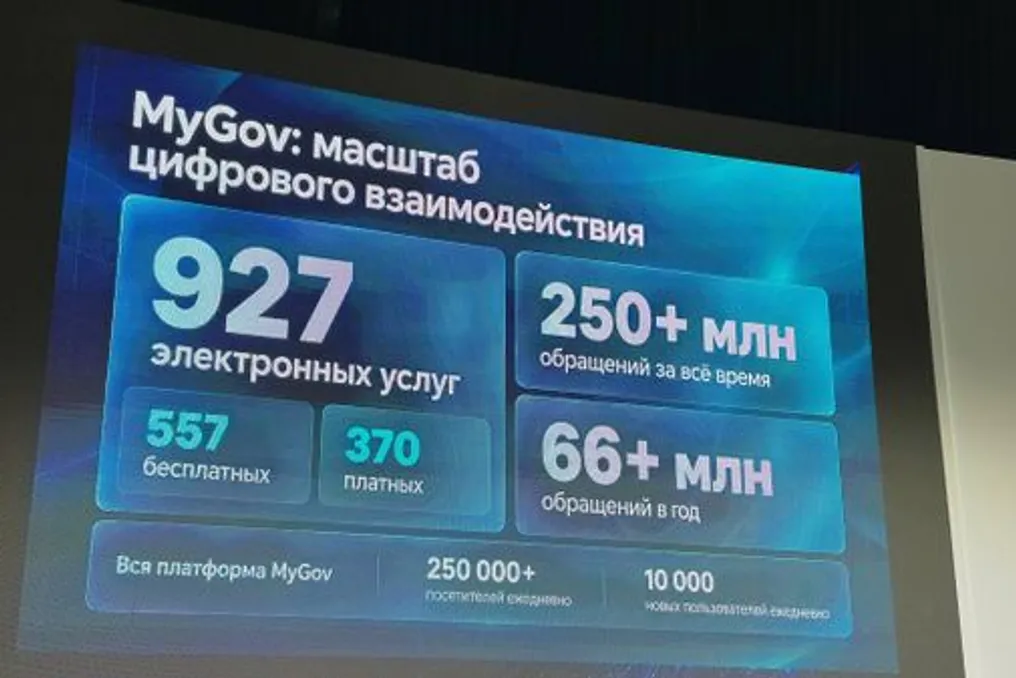
Currently, more than 927 electronic services are available on the MyGov platform, of which 557 are provided free of charge and 370 are paid. Since the platform's launch, citizens and entrepreneurs have accessed it over 250 million times, with over 67 million accesses registered in the last year alone.
Abdufattohov stated that more than 250 thousand people visit the platform daily, and about 10 thousand new users are added to the system monthly. The highest demand for services comes from the licensing, education, and real estate sectors, but services in business, economy, transport, tourism, culture, and sports are also actively used.
The MyGov mobile application is installed on more than 16 million users, providing the ability to access nearly 72 percent of all electronic services via smartphone. More than 200 services have been simplified according to the 'three steps' principle, over 130 composite and 21 proactive services have been introduced, and more than 150 informational certificates, previously issued in paper form, have been abolished.

Localization Program Ensures Production Independence
Due to various political and economic contradictions occurring worldwide, changes in transport routes, and increased delivery times, there is a sharp rise in prices for equipment, components, and raw materials imported from abroad.
This, in turn, has a direct negative impact on the stable operation of large industrial enterprises and their production rates.
EAEU Customs Officials Coordinate Approaches to Identifying Dangerous Shipments
Customs services of the Eurasian Economic Union (EAEU) have decided to further align approaches in the areas of risk management, information exchange, and supervision.
On September 13 in Tashkent, a meeting was held where EAEU member states discussed issues concerning the improvement of the risk management system and the strengthening of information exchange between customs services. This was reported by the Federal Customs Service of Russia.
The 66th meeting of the Working Group under the Joint Council of Customs Services of EAEU Member States took place in Kazan. Experts from the customs services of Armenia, Belarus, Kazakhstan, Kyrgyzstan, and Russia participated in the meeting.
The main topic of the meeting was the development of the risk management system in customs authorities. In accordance with the directive of the Supreme Council of the Eurasian Government, representatives of the Eurasian Economic Commission joined the Working Group's activities for the first time.
Participants discussed lists of goods with a high tax burden. The goal was to harmonize approaches to controlling such goods and expand data exchange, which is aimed at reducing the shadow economy and increasing the efficiency of customs control.
Draft decisions prepared following the discussions will be presented at the next meeting of the Joint Council of Customs Services of EAEU Member States.
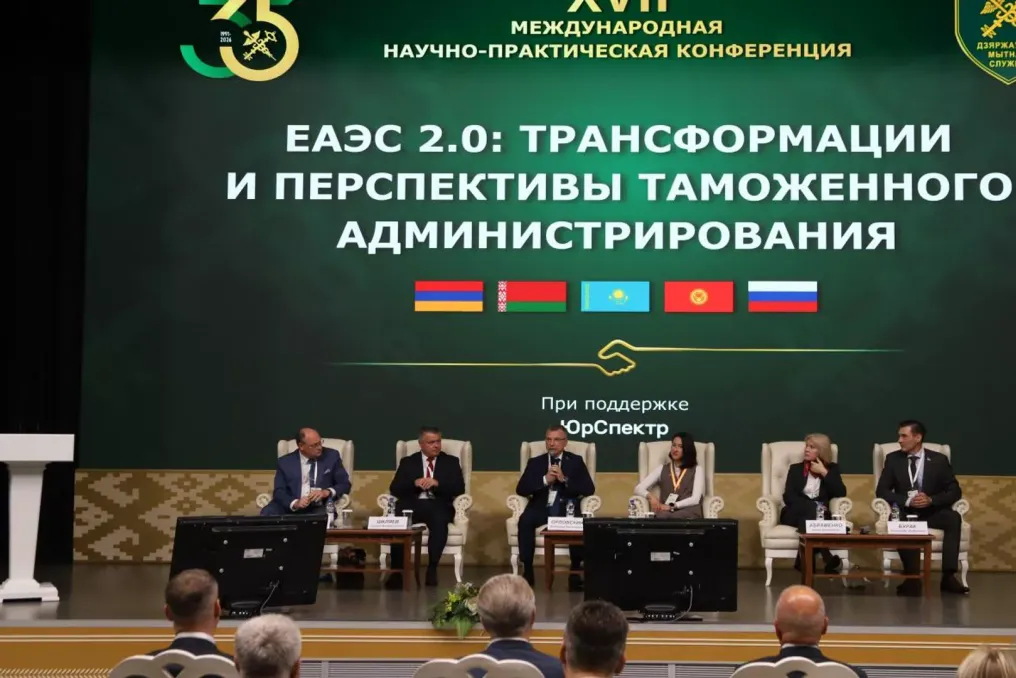
Additionally, an international conference titled 'EAEU 2.0: Transformation and Prospects of Customs Administration' was held in Minsk. The conference discussed issues such as improving customs declarations, control and information systems, and forming practices for applying unified law in the Union states.