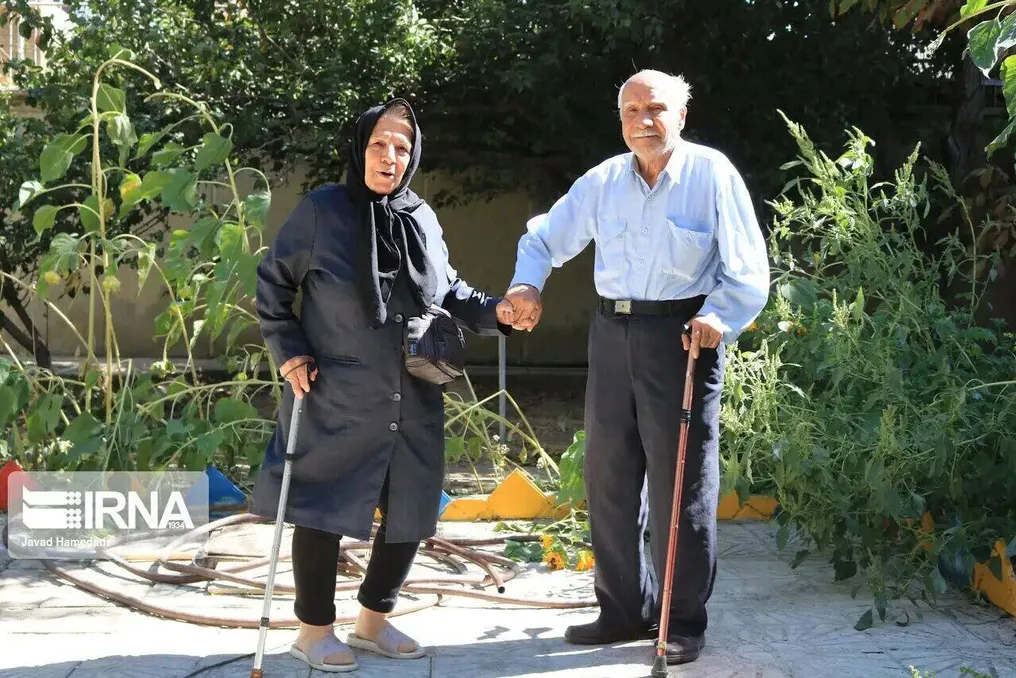
The Ministry of Health is observing National Elderly Week from September 26 to October 2 to raise public and policymaker awareness about aging issues, emphasizing healthy, active, and secure aging.
According to an IRNA report, key aspects of aging will be covered during this week, including the quality of life and health status of older people, the promotion of public health, expansion of care services for caregivers, and support for families of elderly citizens.
Among the goals of the week are encouraging a healthy lifestyle, maintaining a favorable environment, upholding the dignity, respect, and rights of older people in society and family, stimulating active participation in community life, supporting elder care, utilizing the valuable experience and abilities of the older generation, strengthening the role of the family in providing assistance, and attracting philanthropists, NGOs, the private sector, and other stakeholders in geriatric health.
The week also stresses the need to enhance the status, human dignity, respect, and rights of older people, promoting active aging and social participation, as well as supporting elder care through the involvement of philanthropists, NGOs, the private sector, and other institutions.
Each day of the week is dedicated to a specific theme: September 26 is 'Longevity, a different future, rethinking aging policies'; September 27 is 'Active, happy, strong, hopeful aging'; September 28 is 'Elderly participation: from service recipients to social assets'; September 29 is 'Age-friendly cities, neighborhoods, and homes for a better life'; September 30 is 'More years, healthier life'; October 1 is 'Silver economy, older people: opportunity, not cost'; and October 2 is 'Generations together: family, empathy, community for all ages'.
International Day of Older Persons is observed annually on October 1, and this year's theme is 'Age of Longevity: Rethinking Systems for Longer Lives,' which is an urgent call to address the challenges of an aging world.
Since older people already constitute 13 percent of Iran's population, and the country's birth rate continues to decline, demographic changes are accelerating. Current projections indicate that nearly a third of Iran's population will be aged 60 or older within the next 25 years.
Iran's aging presents significant pressure on the healthcare system, pension funds, social support agencies, and the national economy. To prevent the negative consequences of population aging, the country is implementing policies aimed at increasing the youth population and stimulating fertility.
Although aging is a natural part of the life cycle, society's approach to this phase will determine the living conditions of future generations. The increase in the number of older people brings not only increased demand for medical services but also a growing need for care, rehabilitation, home care, environmental adaptation, and social services, which will change the pension system and create serious challenges for it.
Demographic shifts require immediate action. Measures must be taken now to ensure the well-being and sustenance of older people in the future. The gap between the current situation and advanced aging provides an opportunity to develop policies and structural reforms; inaction will lead to much more complex consequences.
According to Marzieh Vahid-Dastjerdi, Secretary of the National Headquarters for Population, the youth population is one indicator that should be paid attention to. The youth population is the proportion of the population under 15 years old. Currently, it accounts for 21.5 percent of the total population in Iran, meaning 21.5 out of every 100 people are under 15, but this figure is declining due to falling birth rates.
Fortunately, Iran is in a demographic window of opportunity—a period when the majority of the population is of working age, and there are 15–20 years left before this window closes.
Alireza Raisi, an official from the Ministry of Health, notes that 'population decline itself is a consequence, not a cause; therefore, to reverse this trend, it is necessary to identify, analyze, and solve the various economic, social, cultural, and family factors that have led to the decline in fertility. Moreover, even if we manage to increase the population, we must remember that population aging is inevitable.'