The Ministry of Economy and Finance of Uzbekistan has commented on the draft presidential decree concerning pension reform. This document is available for public discussion until September 30th.
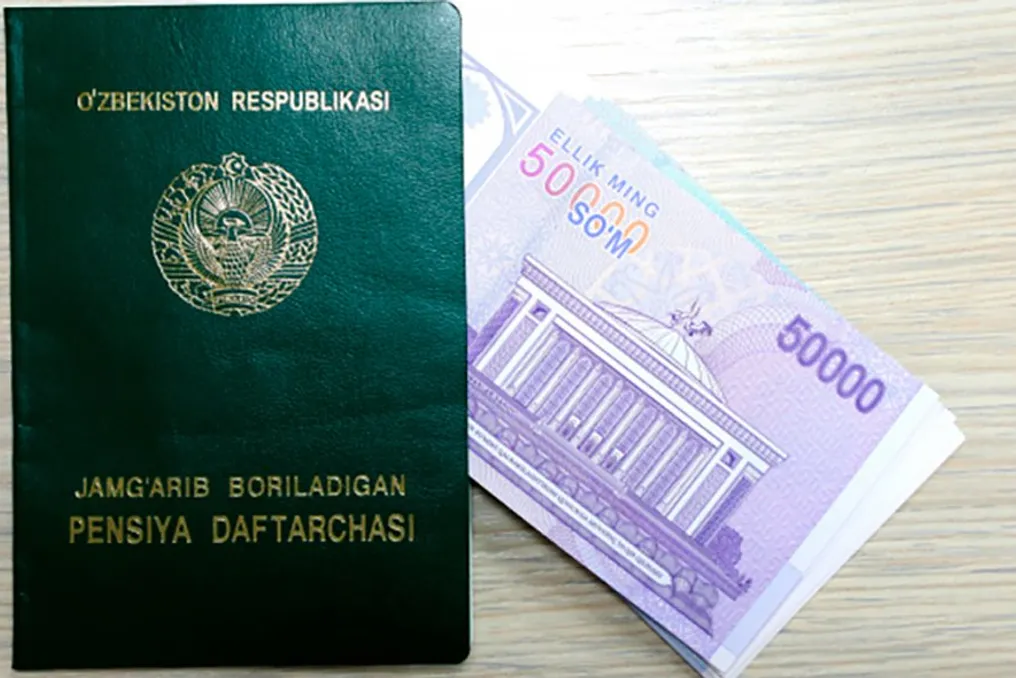
Currently, Uzbekistan operates a three-tier pension system. The state pension is formed through a social tax paid into the Pension Fund, while mandatory and voluntary savings pensions depend on citizens' contributions in their accounts at the National Bank. The law on pension provision was adopted back in 1993.
According to the Ministry of Economy and Finance, pension amounts have increased threefold and a half over the last ten years. Legislation mandates an annual pension increase of at least the inflation rate and stipulates that the minimum pension must not be lower than the minimum consumer expenses.
Reasons for the proposed changes to the system
The Ministry of Economy and Finance has highlighted several shortcomings in the existing system. Currently, pension calculation is based not on a person's overall participation in forming the Pension Fund throughout their entire working career, but rather on earnings from any five consecutive years out of the last ten years of work.
Furthermore, the maximum salary amount considered for pension calculation is limited to approximately six million soums. In the ministry's opinion, this amount no longer corresponds to the actual level of average wages in the economy. It is also noted that not all data regarding citizens' work experience and salaries is fully digitized.
Only 0.1% of the salary is directed to the mandatory savings pension system, which, according to the ministry, does not allow citizens to build up significant additional income for old age. The voluntary savings system remains unpopular: only 12.5 thousand people used it in 2025.
Another problem pointed out by the department is the low coverage of self-employed individuals by pension and social insurance. There are 5.9 million self-employed registered in the country, and only 2.9 million people were registered in 2025, but only 860 thousand paid the social tax.
The Ministry of Economy and Finance also emphasizes demographic changes. Since the retirement age was set in 1993 and has not changed since, it fails to keep pace with the growth in average life expectancy, which has risen from 67.9 to 75.4 years. In 2025, pensioners accounted for 11.2% of the population, and according to the ministry's forecasts, this share could reach 15% by 2040.
Proposals to raise the retirement age to 63 and 58 years
One of the key proposals is the gradual increase of the retirement age, which should begin in 2028 and increase by three months annually. By 2039, the proposed retirement ages are set as follows: 63 years for men (instead of the current 60 years), and 58 years for women (instead of 55 years).
The Ministry of Economy and Finance gives an example: a woman who turns 55 in January 2028 will only be able to retire after three months, in April. Additionally, starting in 2027, the option to retire one year before the established age is planned to be abolished.
Concurrently, there is a proposal to incentivize citizens to retire later. If a person continues to work and postpones pension application by six months, the upper limit of the salary considered for calculation may be raised to 14 basic units of pension calculation, which amounts to about 7.1 million soums. With a delay of 12 months, this limit can increase to 15 such units, or approximately 7.6 million soums. According to the ministry's calculations, this will ensure an increase in the pension amount by 8–15%.
Increasing the minimum service period to 15 years
Another proposal concerns the minimum working experience required to receive a pension. Currently, this period is 7 years, but the Ministry of Economy and Finance proposes increasing this requirement by one year annually, starting in 2027, with the goal of reaching 15 years by 2034.
For citizens who cannot accumulate the required service period, current rules will remain in effect: they will be able to receive an old-age allowance five years after reaching retirement age.
Pension calculation over a longer working period
The Ministry of Economy and Finance also proposes to gradually increase the earning period considered for pension calculation, from the current five years to twenty years. An exception is provided for 10% of the period with the lowest incomes, for example, if a person temporarily reduced their earnings due to illness or other reasons.
Starting in 2028, the upper salary threshold used for granting new pensions is proposed to be raised from 12 to 13 basic units of pension calculation, equivalent to an increase from approximately 6 million to 6.6 million soums.
Possibility of state co-financing of savings
As part of expanding the savings pension system, the Ministry of Economy and Finance proposes allowing citizens with incomes up to 7.6 million soums to voluntarily allocate 5% of their earnings to a savings pension account. The state may provide additional support in the form of an amount reaching 50% of the citizen's contribution.
To encourage the official declaration of high incomes, it is proposed to direct 1% of the portion of salary exceeding 7.6 million soums to a personal savings pension account through the paid social tax. By the end of 2027, the development of a bill regulating private and corporate pension funds, asset management, and protection of citizens' funds is also planned.
Mandatory social insurance for the self-employed
The Ministry of Economy and Finance proposes making the payment of the social tax mandatory for the self-employed, while the tax rate will remain unchanged. Currently, this amount is about 440 thousand soums per year, but citizens will be allowed to pay the tax in installments, for example, about 36 thousand soums monthly. In return, the self-employed individual will receive one year of work experience, pension rights, and the right to benefits for temporary disability, pregnancy, and childbirth.
Citizens with official incomes will also be offered the opportunity to voluntarily pay the social tax for non-working family members, allowing them to accumulate work experience and the right to future pensions.
Abolition of social tax benefits
To ensure the financial stability of the Pension Fund, the Ministry of Economy and Finance intends to stop providing new social tax benefits and completely abolish existing benefits by 2030. During the 2027–2028 period, all 25 services of the Pension Fund are planned to be transferred to electronic and proactive formats. Artificial intelligence, an automated call center, and the 'Pensiya' mobile application will be introduced.
Thanks to the unified profile, a citizen will be able to view their work experience, paid social tax, and expected pension amount, and the system will proactively notify them of any gaps in their service record. After reaching retirement age, the pension will be assigned automatically, without the need to submit applications or provide paper documents. Currently, the Pension Fund provides 18 types of services electronically, with old-age and disability pensions already being assigned proactively, and an average of 3.8 million services are provided electronically and proactively each year.
Preservation of existing pensions
The Ministry of Economy and Finance specifically emphasized that the presented proposals do not imply a revision of already granted pensions and allowances. The department stated that the main goal of the reforms is not to reduce existing payments or save funds, but to create a system where the entire labor contribution of a citizen, their official earnings, service time, and paid social tax are fairly reflected in the pension amount.
According to the ministry's estimates, this reform should strengthen the link between pension amount and labor activity, promote the development of personal, private, and corporate pension savings, and ensure the full transition of pension services to electronic and proactive formats.