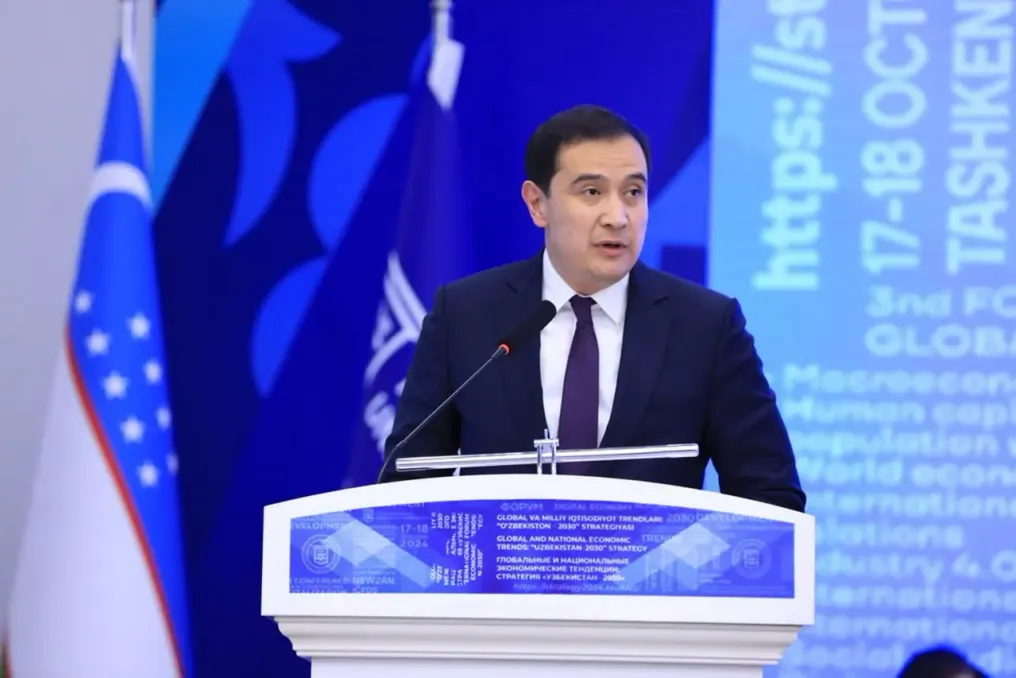
The World Bank's Central Director for Central Asia, Nadji Benhassin, noted that nearly a decade of economic transformations has significantly changed Uzbekistan's development model. However, the country now needs to find new sources of sustainable growth and create more quality jobs for young people.
According to Benhassin, after many years of having a predominantly closed economy, Uzbekistan has begun opening its markets, strengthening macroeconomic foundations, liberalizing prices and exchange rates, and actively integrating into the global economy.
He emphasized that despite the COVID-19 pandemic, Uzbekistan's GDP has grown by an average of almost 6% annually. According to his estimates, GDP per capita has more than doubled: from $2,190 in 2017 to a projected $4,661 by 2026.
Requirements for the next stage of reforms
According to the official representative of the World Bank, the next stage requires eliminating microeconomic constraints for investments in specific sectors, while structural reforms must continue. He highlighted the importance of improving the business environment, eliminating competition distortions, and ensuring equal conditions for state and private companies.
Benhassin also drew attention to demographic factors: about 60% of Uzbekistan's workforce is under 30 years old. Although state investments can contribute to infrastructure and education system development, he believes that the required quantity and diversity of jobs can primarily be provided by the dynamic private sector.
To identify new opportunities, the World Bank has prepared the Country Private Sector Diagnostic (CPSD). This study analyzes the limitations and potential for private investment in the tourism, logistics, and pharmaceutical sectors.
Based on the assessment, implementing the recommendations of the CPSD in these three industries could attract billions of dollars in private investment and create hundreds of thousands of jobs by 2030.
Benhassin also pointed out Uzbekistan's advantages, including a large domestic market, strategic location along emerging trade corridors, cultural and natural potential, and a developing industrial base. In his opinion, these advantages can support growth in investment, exports, and employment if a more predictable, transparent, and competitive business environment is created.
The World Bank views the CPSD not merely as a list of reforms for the sake of reforms, but as a practical basis for unlocking commercially viable opportunities in specific sectors. Benhassin particularly noted that the results of the reforms should be evaluated not only through macroeconomic indicators but also by the economy's ability to create higher-quality jobs, help companies expand, and attract foreign investors.