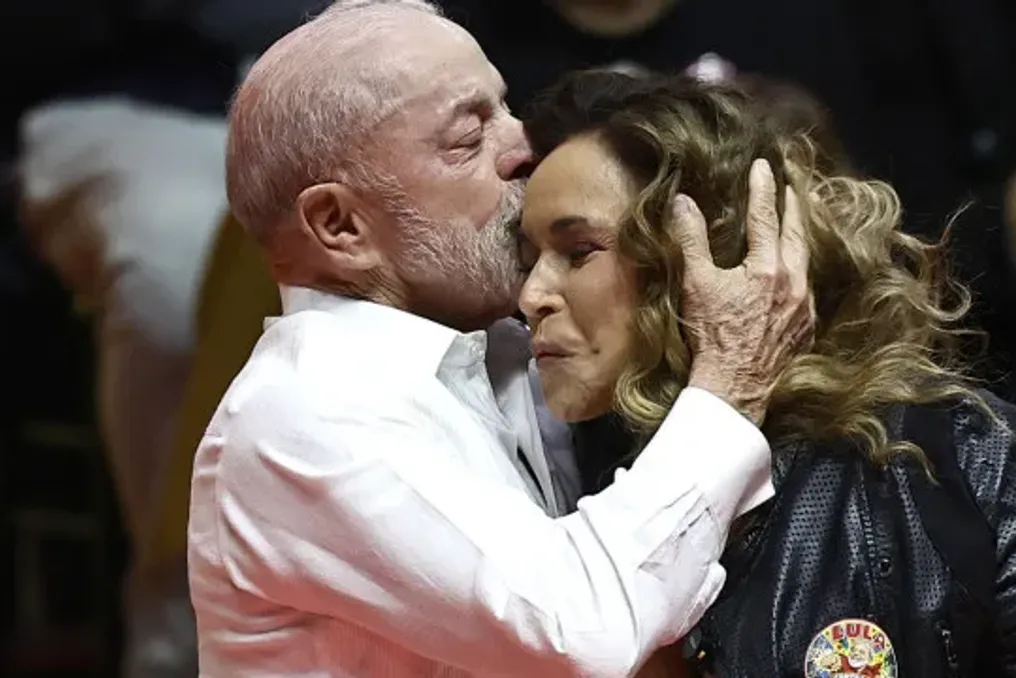
Lula da Silva assured Brazilian entrepreneurs of the need for fiscal stability, stating that responsibility for financial imbalances would fall on the poorest population. This declaration was made during a dinner held at a hotel in São Paulo, which hosted approximately 700 guests, including leaders of various large corporations, nine days before the election.
Brazil faces the challenge of the fiscal deficit, which reached 9.34% of the Gross Domestic Product (GDP) in July, adding to a public debt equivalent to 82% of the annual GDP.
In his speech, Lula also directed criticism at his main opponent, Flávio Bolsonaro, warning that he would hand over all of the country's mineral wealth to the United States if elected. Furthermore, he criticized US President Donald Trump, asserting that while he was in office, decision-making power would belong to the Brazilian people, refuting Trump's ambition to dominate Latin America.
Although he did not mention his rival by name in the polls, Lula characterized Flávio Bolsonaro as a representative of 'barbarism,' while he himself defended the principles of democracy, institutionalism, and policies aimed at fostering industry and national development.
Lula also guaranteed that he would seek to implement a political reform aimed at reducing the parliament's influence on the public budget, in addition to proposing a reform of the judicial system in response to the corruption scandal involving the Supreme Court.
Ministers and authorities who spoke before Lula emphasized that maintaining the current administration provides Brazil with legal security, economic stability, and access to international markets.
Dario Durigan, Minister of Finance, stated that during Lula's fourth term, the reduction of interest rates, currently set at 13.75%—a factor that hinders consumption and investment—will be treated as a 'state policy.' To achieve this, Durigan committed to managing public finances with good fiscal practices while maintaining social actions to promote 'social justice.'
In voting intention polls, Lula is technically tied with Flávio Bolsonaro, the main opposition candidate and son of former President Jair Bolsonaro (term 2019-2022), ahead of the elections scheduled for October 4.