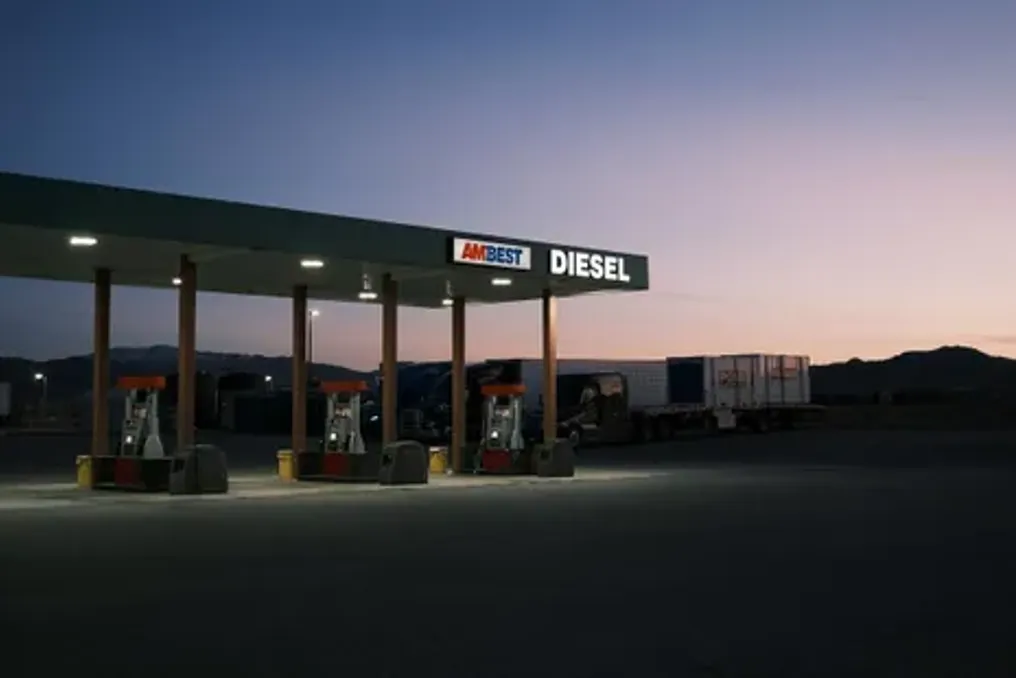
A global shortage of diesel fuel is pushing wholesale prices to record levels, while disruptions at oil refineries are intensifying pressure on already limited crude oil reserves.
In 2026, fuel prices rose sharply due to Middle East wars, which disrupted crude oil supplies and damaged refineries, leading to a capacity deficit felt at gas stations.
Diesel prices worldwide are reaching new highs due to conflicts in the Middle East and Ukraine, which disrupt raw material supplies and damage refineries, creating a shortage of refining capacity.
However, the rise in diesel prices appears to be happening faster than anticipated surges in crude oil prices, and even faster than gasoline prices. For example, the wholesale price of 50ppm diesel increased by a substantial R10.95 between March and September 2026, while gasoline rose by R6.58 over the same period.
This shortage is particularly acute for diesel, as there are few quick alternatives for sectors such as freight transport, agriculture, construction, and manufacturing.
Disruption of Oil Supplies
French officials recently estimated that the global market is experiencing a deficit of about 10 million barrels of crude oil per day. This creates a significant gap in the market, which consumed approximately 105 million barrels per day before the conflict in the Middle East began in February.
The initial disruption was particularly severe after Iran blocked the Strait of Hormuz, through which about one-fifth of global oil supplies pass. However, some consequences were mitigated when Saudi Arabia redirected part of its exports to the Red Sea, and some tankers resumed using the strait.
As reported by AFP, reserves have somewhat stabilized the global oil market, as many countries entered the crisis with commercial and strategic reserves after production exceeded consumption in 2025.
According to the International Energy Agency (IEA), demand has also decreased by more than a million barrels per day, as China significantly cut its crude oil imports and switched to other energy sources. Nevertheless, world oil reserves have reportedly decreased by about 507 million barrels since the start of the war.
Why is Diesel Under Such Pressure?
The aggravating factor is not necessarily the availability of crude oil, but what happens after it is extracted. Diesel fuel prices have reached record levels in both Europe and the United States. The average American price reached $6.52 per gallon (R106) on Monday, equivalent to approximately R28 per liter. In France, diesel reached a record of €2.41 (R45) per liter on Sunday, according to an AFP analysis.
South Africa is also facing record diesel prices since October, with current forecasts indicating a wholesale price of R31.80 next month, compared to the previous high of R30.62, excluding retail markup. This means diesel could have risen by approximately R14 since the start of the Middle East war, placing a serious burden on an economy heavily reliant on diesel for commercial transport.
The rise in global diesel prices reflects the shortage of refined petroleum products and the growing limitation of refinery capacities. Economist Paul Krugman recently argued that the current energy crisis is increasingly related to petroleum refining products rather than crude oil itself, as reported by AFP.
Western countries have banned the import of Russian petroleum products, while Russia has imposed restrictions on fuel exports. Simultaneously, Ukrainian attacks have damaged Russian refineries. This has forced countries previously dependent on Russian supplies to compete for alternative sources, driving up prices.
Gulf countries are also major exporters of refined petroleum products, but attacks on refineries and other energy infrastructure in the region have further narrowed supplies, according to AFP. This means that even a rapid resumption of shipping through the Strait of Hormuz will not immediately solve the diesel shortage.
Yaniv Shah, Vice President of the consulting company Rystad Energy, stated: 'Diesel prices have risen in all regions because the disruption is global, but Europe is particularly vulnerable.'
Is There a Solution?
There are no immediate solutions. Shah noted: 'On paper, there is some untapped potential, but very little that can be quickly activated and supplied with the necessary crude oil.'
Resuming oil shipments through the Strait of Hormuz is likely to be the fastest way to ease the pressure. This would also allow Asian refineries to receive more raw materials and increase the availability of refined fuel. However, even this will not immediately restore the global diesel market to normal.
Toril Bosoni, Head of Oil Industry and Markets at the IEA, warned last week that if Gulf supplies remain limited and commercial stocks continue to fall rapidly, higher prices and weaker demand may be required to close the supply-demand gap.
Shah emphasized: 'Demand for diesel fuel is relatively insensitive in the short term, as freight transport, agriculture, construction, and industry have few immediate alternatives.'
The main takeaway is that the global diesel market remains particularly vulnerable as refinery capacities are constrained and geopolitical turmoil continues unabated.