Series of matches between South Africa and New Zealand as an alternative to hosting the Rugby World Cup
Read more
IOL
iol.co.za

Series of matches between South Africa and New Zealand as an alternative to hosting the Rugby World Cup

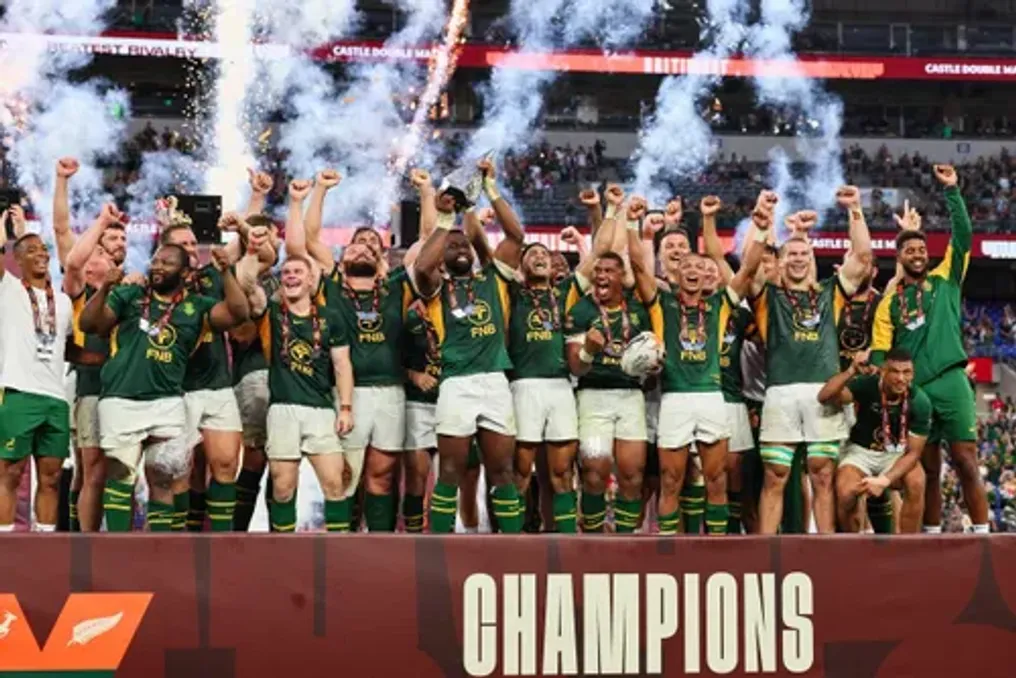
The Springboks team celebrated a victory over the All Blacks with a score of 43:28 in Baltimore, concluding the 'Rugby's Greatest Rivalry' series with a 3:1 result. This win allowed them to avenge their defeat in the 1996 series.

For South African rugby fans, the 1995 World Cup remains an almost mythical memory associated with the nation uniting around the Springboks, including figures like Nelson Mandela and François Pinaar at Ellis Park. However, this might be the only time many South Africans will see the Springboks playing for the Webb Ellis Cup on their home ground.

Therefore, the Rugby's Greatest Rivalry (RGR) series has become significant not only as four test matches between the Springboks and the All Blacks. SA Rugby and NZ Rugby have transformed this annual series into the closest financial substitute for hosting the World Cup—a major international event that generates significant revenue, mobilizes a huge fan base, and provides both countries with their own global rugby spectacle.

This is becoming increasingly important as the economic conditions for hosting the World Cup prove unfavorable for traditional rugby powers like South Africa and New Zealand, who are less economically viable compared to regions with stronger currencies or greater commercial potential.

International Rugby

SA Rugby CEO, Rian Oberholzer, clearly stated that World Rugby must host its flagship tournament in markets where it can generate the most revenue. At the launch of Rugby's Greatest Rivalry in March, Oberholzer told IOL: 'The World Cup is the only source of income for World Rugby. It must fund the entire rugby ecosystem, and all members receive some funding from the World Cup. Therefore, World Rugby must host the World Cup where they can earn more money and go where they receive the greatest support from local authorities.'

Subsequently, Oberholzer became even more direct regarding the commercial disadvantage of South Africa and New Zealand. He noted: 'If we compare ourselves to Europe, for example, I don't see the money generated from South Africa ever being the same as what would be generated from Europe, or perhaps in the future somewhere in the Middle East.' He emphasized that this decision belongs to World Rugby, not SA Rugby, adding: 'World Rugby will host World Cups where they can make more money. We all have to understand this, and you cannot complain and demand the World Cup in your country while earning less, and then want a larger share of the annual grant you receive from World Rugby. It is about generating income to sustain the entire rugby system.'

In Oberholzer's view, the days when the World Cup could simply rotate between traditional rugby nations for sentimental reasons are over. He concluded: 'I think we have moved away from the philosophy that everyone should have an equal chance to host the World Cup. New Zealand and South Africa cannot guarantee the necessary revenue from the World Cup that World Rugby requires. I do not see this as negative for us; it is more a matter of what is best for the interests of World Rugby.'

The upcoming World Cup calendar confirms his point. The 2027 tournament will be hosted by Australia, the 2031 road show will move to the United States, and the 2035 event has received bids from Spain, Italy, Japan, and the Middle East, with Qatar, Saudi Arabia, and the United Arab Emirates among the contenders. A successful applicant is expected to be announced at the end of next year.

Thus, for South Africa and New Zealand, RGR represents an opportunity to create their own mega-event instead of waiting for the World Cup, which may never return to their shores.

The 2026 RGR season proved to be a great success in many aspects. SA Rugby earned approximately 200 million rand just from ticket sales for the eight-match series, and the final in Baltimore brought an additional 90 million rand to the union, which it might not have received if the fourth match had been held in Loftus Versfeld or Kings Park.

Financial figures are only part of the story. The 71,000 spectators at M&T Bank Stadium were believed to be over 80% expatriates from South Africa, creating an incredible sea of green and gold thousands of kilometers from home. These images told a story themselves—from the arrival of the Springboks at 2 am to the sounds of vuvuzelas, barbecues, and celebrations continuing long after the final whistle.

Baltimore demonstrated that the Springboks can bring their version of home advantage with them. This is important because South Africa's outstanding World Cup record—four titles in eight tournaments—does not give it greater right to host the tournament. The commercial equation carries more weight.

SA Rugby and NZ Rugby cannot control where World Rugby will hold the World Cup. But they can benefit from their great rivalry, build an event around it, and stage it in markets where it can generate new revenue while strengthening their global brands.

The Baltimore match also showcased commercial potential. Two of the Springboks' main sponsors, Coca-Cola and Nike, are based in the United States, and the match allowed SA Rugby to deepen its relationship with the market that will host the 2031 World Cup.

Some of the most valuable outcomes cannot be quantified on a balance sheet. During the week, social media was filled with images of South Africans enjoying the extraordinary sight of the Springboks match in America. The expat community turned Baltimore into a green and gold carnival, sending an unequivocal message to SA Rugby: there is a huge overseas Springboks community ready for mobilization.

The task now is to continue building on this. If SA Rugby can turn the 'Braai Army' in America into a genuine traveling fan base, then by the time the 2031 World Cup arrives in the United States, the Springboks might gain something close to a home advantage. It won't be Ellis Park 1995, but it could be something better.

Perhaps this is the true legacy of Rugby's Greatest Rivalry: South Africa and New Zealand may have lost the realistic prospect of hosting the World Cup, but they found a way to create something that can come close to it.
Similar stories

Match between Springboks and All Blacks in Baltimore becomes a landmark event for world sport
Read more
iol.co.za

Match between Springboks and All Blacks in Baltimore becomes a landmark event for world sport

In Baltimore, USA, which transformed into a meeting place of nations, cultures, and sporting traditions that day, the first encounter between South Africa's Springboks and New Zealand's All Blacks on American soil took place in the history of their long-standing rivalry.

The Springboks team defeated the All Blacks with a score of 43–28, concluding an impressive 3–1 series. Beyond the sporting result, the attendance was historically significant: official attendance reached 68,173 people, marking the largest crowd for any rugby match in American history.

This match concluded the four-game 'Greatest Rugby Rivalry' series and marked the first time these historic opponents met in the United States, although both teams had previously played separate matches in America.

The event also demonstrated America's growing connection to rugby, as the country prepares to host the men's Rugby World Cup in 2031 and the women's tournament in 2033.

The significance of this event extends far beyond attendance records, commercial opportunities, or the triumph of the Springboks. It served as a reminder that sport possesses a rare diplomatic language. Nations that may have political disagreements are still capable of meeting within agreed-upon rules. People separated by oceans, history, and customs can recognize courage, discipline, and self-sacrifice in each other.

Sporting competition allows people to compete fiercely without denying each other's humanity. The Springboks understand this truth better than many. South Africa's national rugby team once reflected the racial divisions of the apartheid era, and for many Black South Africans, the Springbok emblem symbolized oppression and exclusion.

Nevertheless, Nelson Mandela understood that the symbol dividing his country could become a tool for its healing. When South Africa hosted and won the Rugby World Cup in 1995, Mandela wore the Springbok jersey. This simple gesture showed white South Africans that they were part of a new nation, and Black South Africans that reconciliation required courage from everyone.

This did not erase the country's painful history, but it created a shared moment where millions of people could envision a different future. This is why the film 'Invictus' continues to resonate; it was not just a film about rugby, but about leadership, forgiveness, and the difficult work of building a nation from people who were taught to fear one another.

The modern Springboks continued this legacy. Captain Siya Kolisi represents a South Africa that apartheid never wanted to show the world: a young Black person of humble origins reaching the pinnacle, leading a diverse national team to consecutive world championships.

The All Blacks demonstrate their powerful culture. Their haka is not an empty spectacle but a declaration of identity, heritage, unity, and readiness. Watching the haka performed before 68,173 people in Baltimore meant witnessing a culture that refuses to leave its heritage behind while entering the modern world.

It also teaches America a lesson: unity does not require uniformity. The Springboks do not abandon their South African identity, and the All Blacks do not dilute their Māori or New Zealand traditions. They stand proudly as themselves, yet share one field, respect one whistle, and exchange handshakes after the battle.

Political culture often teaches us to view disagreements as hatred, and opponents as enemies. Rugby offers a healthier model. Athletes confront astonishing force, but violence is regulated by rules, discipline, and mutual respect. Competition does not eliminate dignity; rivalry does not necessarily have to turn into contempt.

Baltimore proved to be the ideal American host for this historic first time. It is a city too often described through its difficulties, ignoring its beauty, resilience, and international potential. On that Saturday, the world saw a different Baltimore: energetic, hospitable, diverse, and capable of hosting one of the greatest spectacles in world sport.

Sport cannot sign treaties, end wars, or erase injustice. However, it is capable of creating emotional conditions in which people begin to see each other differently. It gives strangers something common to celebrate, and nations a peaceful arena where pride can be expressed without destruction.

South Africa and New Zealand arrived in Baltimore as fierce rivals, and their fans came with different flags. The Springboks left as champions. Nevertheless, inside that record stadium, we all became part of one historic gathering.

In conclusion, the power of sport lies in the fact that for a few precious hours, it does not ask where we come from, but shows who we can become together.

Springboks win first tournament of greatest rugby rivalry, Erasmus downplays gap with All Blacks
Read more
iol.co.za

Springboks win first tournament of greatest rugby rivalry, Erasmus downplays gap with All Blacks

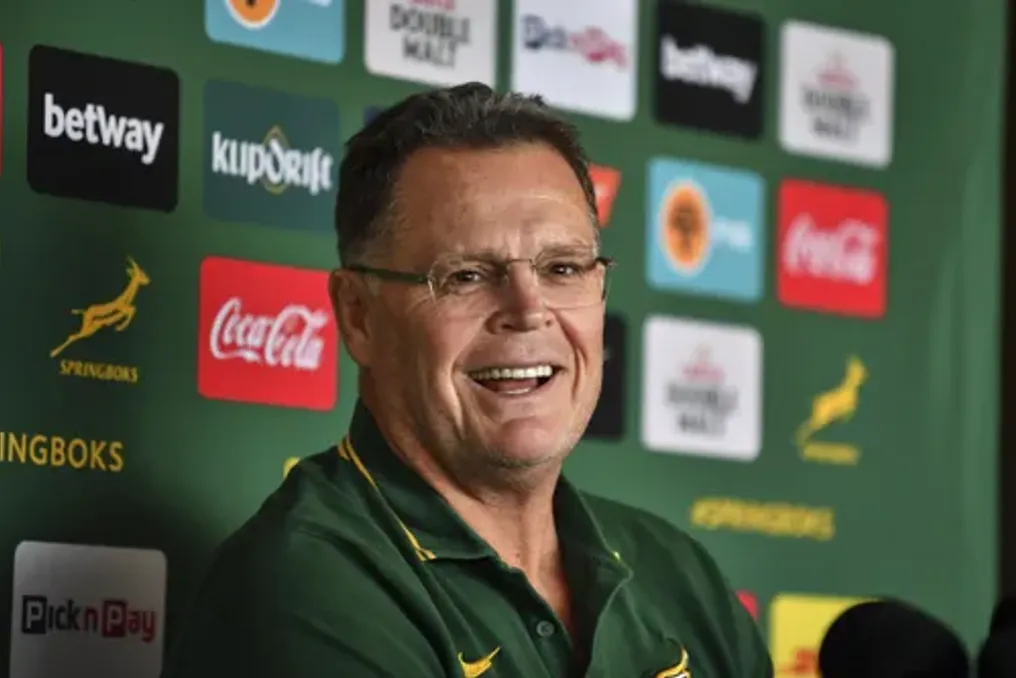
Springboks coach Rassie Erasmus expressed satisfaction after his team defeated the All Blacks in Baltimore on Saturday. Despite the Springboks starting with a 0-1 deficit, they managed to win the first four-match 'Greatest Rugby Rivalry' tournament with a score of 3-1 after a tense final in Baltimore.

Greatest Rugby Rivalry

The Springboks secured the series with a convincing, albeit error-prone, victory of 43-28 over the All Blacks at M&T Bank Stadium on Saturday. This win was an impressive turnaround after the visitors shocked the world champions in the first match at Ellis Park Stadium.

The Boks team responded to the defeat by winning the next three games in Cape Town, Soweto, and Baltimore, thereby claiming the title of the first series champion. Although the trophy was won in the US with a very convincing triumph, Erasmus quickly downplayed the final score, discussing the difference between the two teams.

Responding to the question of whether the 3-1 victory makes the team better against opponents, Erasmus noted: 'I wouldn't say we are the best team. At sixty minutes I thought we were still balanced.' He added that the victory was achieved due to more points on the board, considering this probably the most important thing in most games. He emphasized that until the last eleven minutes he was not sure of the victory.

Although the Springboks controlled the game at various times, the All Blacks did not give up and continued to apply pressure until the final whistle. The converted touchdown by substitute player Bioden Barrett late in the match allowed the Kiwis to maintain a more respectable score, demonstrating their fight.

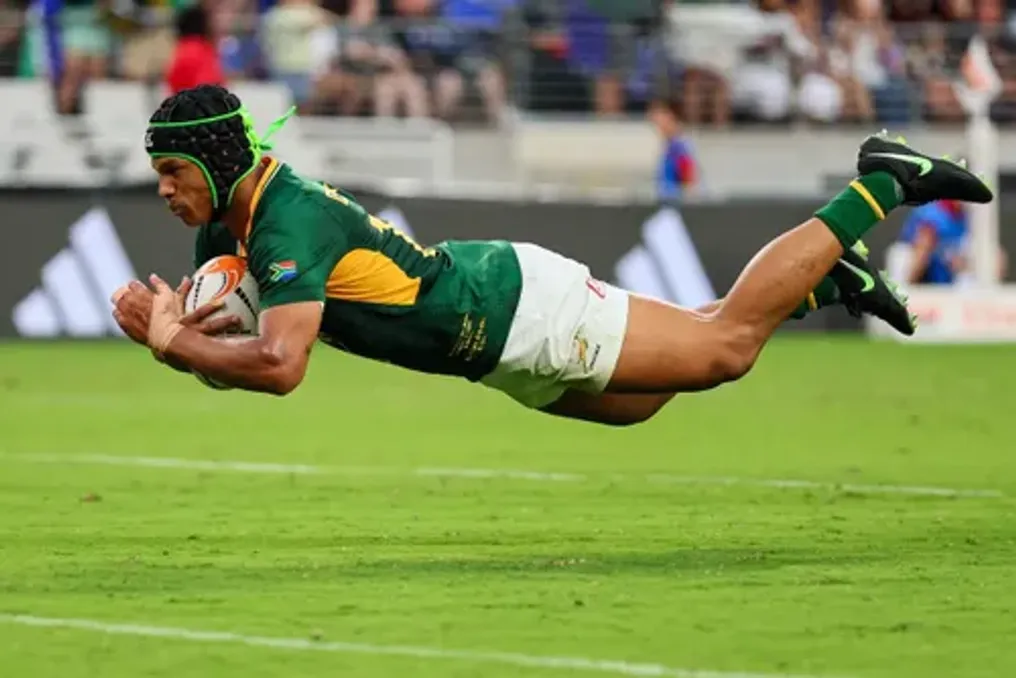
The Springboks' dominance in the forward play, as well as skillful second-row attacks in the second half, ensured constant scoring. The decisive moment came in the last 10 minutes when winger Kurt-Lee Arendse broke through the defense to score the crucial touchdown. Following this, substitute forward Cameron Hanekom scored the sixth touchdown for the Boks.

Commenting on the game, one player noted: 'When Kurt-Lee scored, it was a turning point. He started to outrun the guys. He admitted that he was experiencing a mental and physical slump after concussions. The game was still balanced then. Sometimes someone like Cheslin Kolbe changes the game, today the whole team did it, but I think Kurt-Lee did something special.'

Popular