Why Masculinity is Important for James Bond: The Screenwriter's Opinion
Read more
Aaj Tak
www.aajtak.in

Why Masculinity is Important for James Bond: The Screenwriter's Opinion

The image of James Bond in Hollywood has evolved over more than six decades, transforming from a simple intelligence agent into an entire cinematic universe. This universe includes firearms, fast cars, expensive watches, stylish suits, martinis, and a fearless, passionate agent capable of reaching any point in the world. Bond's identity is shaped as much by his masculinity as by his missions.

Although Bond is loyal to Britain, his attraction to women has been a long-standing part of his persona. He is often perceived as the embodiment of the 'universal man'—007 has become a symbol of a certain type of male ideal, lifestyle, and cinematic masculinity.

A discussion arises about whether the next James Bond could be a woman. However, the real question is whether his core identity will change if the gender of a character so deeply associated with the male sex for six decades is altered. Will audiences accept a woman in the role of 007, or will she have to create an entirely new image?

The debate has been going on globally: should James Bond be played by a woman? Among generations raised on the image of a lighthearted man, there is discussion about whether the new Bond should be Black or if it should be played by a woman. In this discussion, an interview with Charlie Higgins, Bond's screenwriter, was analyzed, in which he stated that playing a Black character would cause no problems, but making Bond a woman would be meaningless because Bond completely embodies masculinity.

To understand Higgins' words, one must look at the origins. James Bond is the creation of British writer Ian Fleming. Bond is an agent of British intelligence MI6. In his 1953 novel 'Casino Royale,' Fleming created this character. James Bond is not just an agent armed with weapons; Fleming portrayed him as a handsome, confident man who loves expensive clothing, alcohol, and gambling, preferring fast drives. He always looks cool even in life-threatening situations, and his attraction to women is part of his personality.

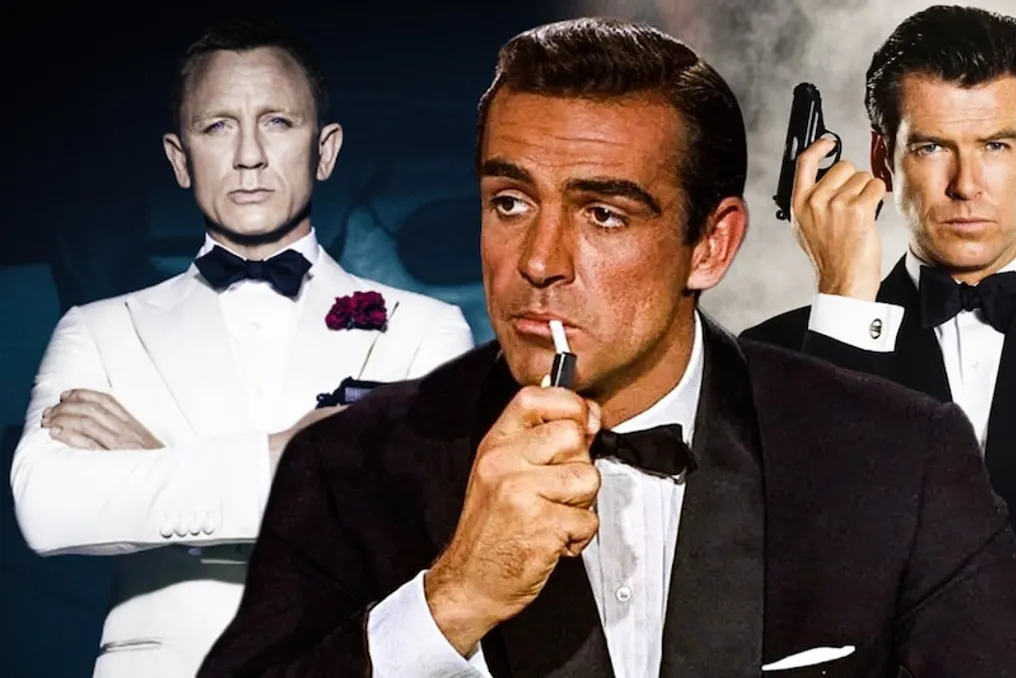
The film industry has repeatedly amplified this image. The author recalls seeing Sean Connery in the role of James Bond for the first time and considering him nothing less than a Greek god—tall, blond, a beautiful man with a romantic stride, whose face is impossible to look away from. Sean Connery became the first actor to play James Bond. After him, actors such as Roger Moore, Timothy Dalton, Pierce Brosnan, and Daniel Craig took on the role. Each actor slightly transformed Bond according to their time: some added humor, others romance, and Daniel Craig elevated him to a new level.

The most interesting aspect of Bond is that his masculinity is not limited to demonstrating strength. Higgins explained this aspect by saying that Bond is a kind of men's fantasy. He stays in luxury hotels, travels the world, and drives fast cars, even though his profession is killing. But there is another side to the masculine nature in Bond's history: he constantly immerses himself in some activity, mission, or goal to avoid internal problems.

For a man like Bond, constant engagement in missions can serve as a way to evade the emotional world. This is where the discussion about whether Bond should be made a woman becomes complicated. Will not only the gender, but the entire history associated with this male character change? Today, women in cinema can act, spy, save the world, and defeat enemies—this is no longer news, and technically it is absolutely possible.

However, if a female actress were to take on the role of Bond, she could carry out the mission with the same dedication and drive the same car, but the social foundation of her experience would change. The behavior that meant freedom to travel, live alone, and build relationships with many women for a male agent might not be perceived the same way in the case of a female character. What was part of the old cinema of the male hero could take on a completely different meaning in the image of a woman.

Higgins sets no restrictions regarding race or skin color for Bond. He clearly stated that Bond can be Black, and there is no problem with that. The issue is not skin color, but the fundamental component of the character's nature—his masculinity.


Similar stories

Release of 'Avengers Endgame Encore' causes excitement among fans and beats Rajamouli's 'Baahubali' record
Read more
www.aajtak.in

Release of 'Avengers Endgame Encore' causes excitement among fans and beats Rajamouli's 'Baahubali' record

The film 'Avengers Endgame Encore,' the most successful picture from Marvel Studios, was re-released under a new title. The original 2019 blockbuster was part of the biggest cinematic event for MCU fans. However, after seven years, it was shown again because the appearance of Marvel's most dangerous villain, Doctor Doom, is expected. This factor significantly influenced the film, which collected huge revenue on its premiere day.

Despite being a re-release, 'Avengers Endgame Encore' generated incredible public interest and set numerous box office records once again. According to Sakencilk, the film earned a net income of 7.25 crore rupees on Friday. The highest earnings came from the English version, to which the creators added exclusive four-minute footage.

In India, the film was shown on only 3600 screens, but nevertheless set a unique record by earning more money in the first day than any other re-released film. Before the release of 'Avengers Endgame Encore' in the domestic market, 'Baahubali The Epic' by S.S. Rajamouli dominated, collecting 5 crore. The Marvel film surpassed this figure.

This success proves that India is ready for the upcoming Marvel film 'Avengers Doomsday.' There is high cinema hall occupancy, and people of all ages are going to watch this movie, creating an impression of the revival of the best days of the MCU. Fans are eagerly awaiting 'Doomsday,' and the possibility of seeing a hint of this film in 'Endgame Encore' caused great enthusiasm. It is expected that when 'Doomsday' is released in December, the box office collection will be colossal.

As for 'Avengers Endgame Encore,' Joe Anthony Russo directed it, who is also working on the future film 'Avengers Doomsday.' Robert Downey Jr. returns as Doctor Doom after playing Iron Man. The question remains whether he can repeat his former success.

Grand Ramlila Performance from Ayodhya to take place in Delhi: Kejia Lidj Mejo to play Sita, Ravi Kishan to play Rama
Read more
www.aajtak.in

Grand Ramlila Performance from Ayodhya to take place in Delhi: Kejia Lidj Mejo to play Sita, Ravi Kishan to play Rama

Residents of Ayodhya are eagerly anticipating the grand Ramlila performance, which promises to be even larger and more special this year. This world-renowned 'Ramlila from Ayodhya,' depicting the story of Indian culture and the ideal man Prabhu Shri Rama, will be held in Delhi.

This year, Kejia Lidj Mejo, a participant in the 'Miss Universe India 2026' contest, will portray Mother Sita, while Bollywood star and Bharatiya Janata Party (BJP) MP Ravi Kishan will appear as Lord Rama.

The large-scale event is scheduled from October 10 to October 20 at the Mavalankar Hall, located in the prestigious Constitutional Club of Delhi. The era of Treta Yuga will be presented in a new form there, utilizing beautiful decorations, modern technology, and large LED screens.

According to Subhash Malik, founder and chairman of Ramlila, this grand performance has been held on the sacred land of Ayodhya for the past seven years and has gained immense love both in the country and abroad. Last year, by combining online and offline formats, it was watched by about 620 million viewers.

This year's Ramlila will feature many renowned actors from Bollywood and Bhojpuri cinema playing various roles. Among them are: Ravi Kishan (MP and actor) as Lord Rama; Kejia Lidj Mejo (Miss Universe India 2026) as Mother Sita; Manoj Tiwari (MP and actor) in various important roles; Arun Bakshi as King Lanka Ravana; Bindu Dara Singh as Kumbhakarna; Avatar Gil as Meghanada; Punit Issar as Lord Parshuram. Additionally, Raja Murad and other distinguished artists will participate in this historical presentation.

Tashin Singh's film 'Sugarcane, Burning' to be shown at Canadian festival
Read more
iol.co.za

Tashin Singh's film 'Sugarcane, Burning' to be shown at Canadian festival

Tashin Singh's latest film, born in South Africa, titled 'Sugarcane, Burning,' will screen at the International South Asian Film Festival (iSAFF) 2026 in Canada on Friday as part of the 'Second Chances' short film program. This film, written and directed by the London-based filmmaker, is based on Singh's family history and explores themes of migration, heritage, and the experience of Indians from South Africa during colonial rule.

'Sugarcane, Burning' is set in the late 19th century when thousands of Indians crossed the ocean to colonial Natal in South Africa under the indenture system, bringing with them fragments of language, memory, and home. At the center of the story is a young woman named Mira, standing on the threshold of motherhood, balancing what she has inherited against what she will pass on.

Through matrilineal memory, she returns to the image of her own mother, feeling her touch, language, and breath, and confronting the quiet ruptures left by migration and the passage of time. As the past converges with the present, Mira reflects on what endures: the names given to us, the words that are hard to hold onto, and the invisible burden passed down through generations. Like fields that must be burned before planting, loss and heritage exist side by side.

The film was shot in KwaZulu-Natal last October as a graduation project for the London Film School, with Katishka Kiara Chandralal and Sivani Chinanpan in the lead roles. The South African film 'Sugarcane, Burning' will be screened at the International South Asian Film Festival (iSAFF) 2026 in Canada.

Indentured Labour

Singh, who is 30 years old, was born and raised in Pietermaritzburg and stated that the film originated from a fragment of his own family history. His great-grandfather traveled from India to Natal decades ago as a smuggler aboard a ship. He shared: 'This story began long before I realized it could become a film. Decades ago, my great-grandfather boarded a ship from India to Natal, hiding as a smuggler. That is almost all I know about my family's arrival in South Africa. However, from this fragment grew generations of movement, silence, resilience, and longing—a story familiar to many descendants of migrants.'

Continuing, Singh noted: 'Studying the lives of Indians from South Africa, I realized the depth of what was carried during colonial rule and apartheid: the emotional, physical, financial, and cultural oppression rooted in families, bodies, and land. These stories are not distant from me. They live in questions of who we are, what we have inherited, what has been taken, and what remains. This film is my attempt to look at that heritage.'

According to Singh, 'Sugarcane, Burning' is a meditation on ancestry, absence, and the ceaseless act of preserving what remains. Singh began researching the film in late 2024, and scriptwriting started in early 2025 with co-writer and producer Nicole Magabo Kgugundu. The film was completed in February.

The world premiere took place in Pune, India, in June, followed a month later by a screening at the London Indian Film Festival. The film will also return to South Africa to be shown at the FAME Short Film Festival in Cape Town at the end of October, marking its South African premiere. There, it was nominated for awards for Best Student Work, Best Costume Design, and Best Makeup and Styling.

Prior to this, Singh worked as a journalist and then transitioned to documentary filmmaking in Cape Town. Later, he earned a Master's degree in Film Production from the London Film School. His works span fiction, documentary, and essayistic films, often examining personal experience against broader historical and social landscapes. He concludes: 'My cinema is dedicated to what is difficult to see: inherited silence, the private life of migration, the emotional architecture of families, identity confusion, and the ways in which history survives in gesture, landscape, and memory.'

Rooted in the South African experience and shaped by questions of diaspora, masculinity, and belonging, Singh works on projects across South Africa, the UK, and India. He adds: 'My films strive for a poetic, formally attentive language for intimate stories marked by historical heritage.'

Popular