South Africa marks Heritage Day with call for strengthening national unity
Read more
CGTN
cgtn.com

South Africa marks Heritage Day with call for strengthening national unity

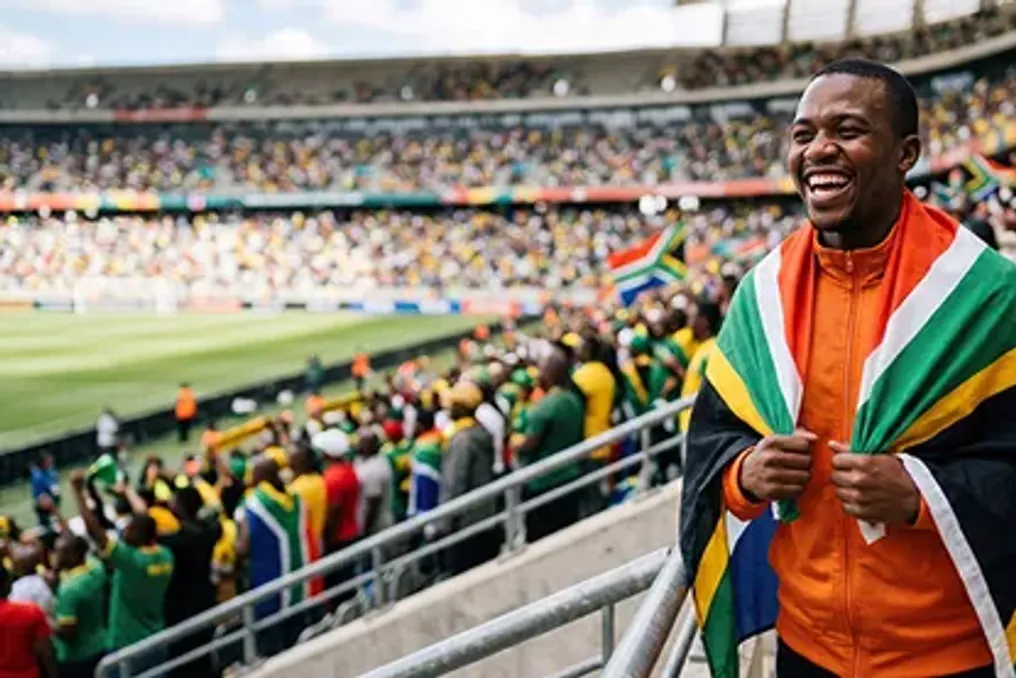
The Republic of South Africa marked National Heritage Day on Thursday. President Cyril Ramaphosa called on citizens to protect the country's cultural heritage and work towards strengthening national unity.

Speaking at the Bongolethu Stadium in Oudtshoorn, Western Cape, Ramaphosa emphasized that the diversity of cultures, languages, and history of South Africa should contribute to uniting people and supporting efforts to build a more just society.

He stressed the need to preserve traditional knowledge and customs for future generations, including the work of traditional healers, storytellers, musicians, diviners, and craftspeople.

Ramaphosa also condemned gender-based violence, stating that violence and the killing of women have no place in South African society. His remarks came after the recent discovery of nine women's bodies in Ekurhuleni, Gauteng province.

The president is expected to address the nation in the coming days with a report on government measures to combat gender-based violence and investigate murders. Furthermore, he called for joint action to address issues of unemployment, corruption, as well as alcohol and drug abuse, noting that these difficulties continue to affect communities across the country.

Similar stories

South Africans Celebrate Heritage Day with National Braai
Read more
cgtn.com

South Africans Celebrate Heritage Day with National Braai

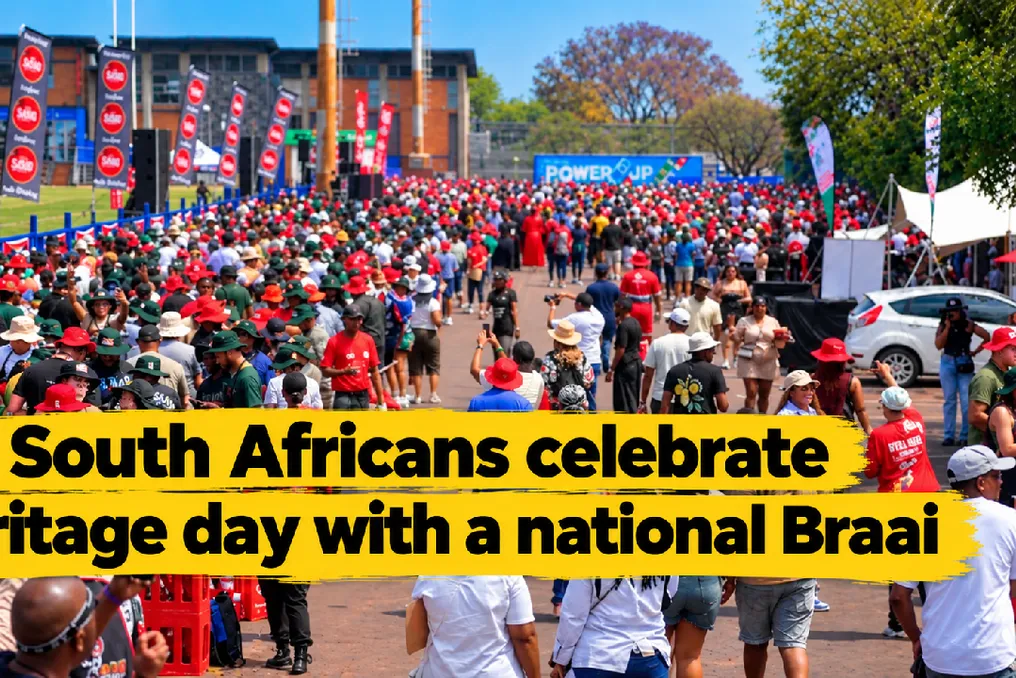
The tradition of cooking meat over an open fire in South Africa spans centuries and remains an integral part of the country's culture. Every year on Heritage Day, celebrated on September 24th, the braai takes center stage as people across the country gather around fires, food, and family.

Jan Braai, who helped launch the National Braai Day 25 years ago, states that this tradition was conceived as a way to provide South Africans with a shared day of celebration. He noted that the goal of this initiative is to create a national holiday for South Africans and those who wish to be South African, comparing it to global examples such as St. Patrick's Day in Ireland or Thanksgiving in the USA.

In Pretoria, about 3,000 people gathered to set a world record for the largest braai. For many, this tradition unites the diverse cultures and languages of South Africa. Celeste Meyerberg, co-owner of Catercom, emphasized that regardless of where a person comes from—be it English, Afrikaans, Xhosa, Zulu, or Sepedi—everyone enjoys the braai, and what matters most is the smell coming from the fire and charcoal.

Furthermore, the braai holds deeper historical significance in the country. During apartheid, when racial segregation limited social interaction, home braais served as places where people could gather and socialize. Today, many South Africans view this tradition as a symbol of unity and Ubuntu. Thus, from its historical roots to modern Heritage Day celebrations, the braai remains a shared tradition that brings South Africans together.

List of Events for Heritage Day 2026 in Johannesburg and Pretoria
Read more
iol.co.za

List of Events for Heritage Day 2026 in Johannesburg and Pretoria

Heritage Day celebrates the uniqueness of South Africa, and in 2026, there are many ways to commemorate it. Johannesburg and Pretoria are turning this national holiday into a large-scale celebration encompassing music, food, fashion, games, running, and traditional kasi culture.

Whether you plan to spend the day immersing yourself in local culture, discovering something new with family, or simply looking for a reason to get out of the house, there will be an activity for everyone on September 24th.

Here are some events worth considering, whether it's biltong and wine tasting, jazz, sphatlho dishes, or cosplay.

Events in Johannesburg

Comic Con Africa 2026

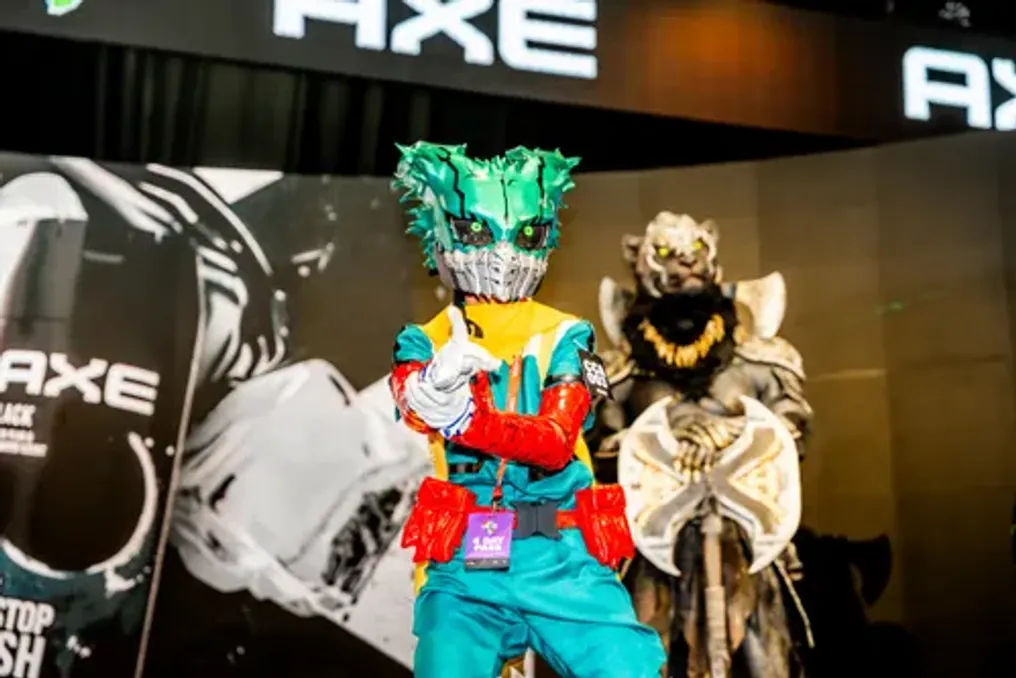
The massive African pop culture festival will take place at the Johannesburg Expo Centre, Nasrec, from September 24 to 27, 2026, daily from 09:00 to 18:00. The festival kicks off on the national holiday and will include gaming zones, esports, cosplay contests, an Art Alley, and appearances by international celebrities. Tickets are required and can be purchased through Comic Con Africa.

HiChai: Heritage Day Edition

This vibrant cultural event is dedicated to food, fashion, tea and cocktails, as well as music and special readings. It will take place on Thursday, September 24, 2026, from 16:00 until late evening, at Modern Tailors located at 189 Oxford Road, Rosebank, Johannesburg. Tickets are available from R150 via Quicket or Dineplan.

Free the Jazz Concert

On Thursday, September 24, 2026, at 10:00 AM at Sandton City, located at 83 Rivonia Road, Sandhurst, Sandton, there will be a free outdoor jazz concert. It is family-oriented and celebrates local talent as part of the Standard Bank Joy of Jazz Fringe event.

Curaprox Run the Greens

We invite you to move after sunset on Thursday, September 24, 2026, starting at 18:30. Registration runs from 17:30 to 18:30. The venue will be Kyalami Country Club at 433 Maple Road, Kyalami AH, Midrand. Participants can run or walk 5 km or 10 km along a scenic route through the golf course. The cost for adults is R120, while for children under 12 and seniors over 60, it is R80.

Heritage Day: Biltong and Wine

On Thursday, September 24, 2026, at 18:30 at Cedar Square, located at Cedar Road, Fourways, Johannesburg, there will be an evening dedicated to South African heritage. This event combines local South African flavors with wine for a relaxed Heritage Day celebration.

Events in Pretoria

Sphatlho Festival

On Thursday, September 24, 2026, from 9:00 to 18:00 at Giant Stadium, Tshwane, Pretoria, one of Pretoria's largest festivals dedicated to kasi lifestyle and culture will take place. The festival will bring together music, local performances, diverse food, and a strong sense of community. Tickets start from R120 and are available through Computicket Box Office.

From jazz and festivals to biltong, sphatlho, and superhero energy, Heritage Day 2026 promises to be a celebration suitable for every resident of South Africa.

South Africa's Heritage as a Bridge Between the Continent and the World
Read more
iol.co.za

South Africa's Heritage as a Bridge Between the Continent and the World

Heritage is often perceived as what we inherit from our predecessors, found in monuments, museums, archives, languages, traditions, and places of memory. However, heritage extends beyond a mere reference to the past; it is also connected to understanding one's own identity, interacting with others, and shaping a desired future.

For South Africa, heritage plays a particularly significant role, as its history is closely linked to the history of the African continent and the global struggle for dignity, human rights, and freedom. The experience of liberation, transition to democracy, and constitutional settlement has generated lessons that extend beyond national borders.

The Constitution itself reflects this forward-looking goal. Its Preamble speaks to the necessity of healing past disagreements and building a unified, democratic South Africa capable of occupying its rightful place among the nations of the world. It is here that heritage can transform from a simple remembrance into a form of cultural diplomacy.

Although diplomacy is usually associated with governments, ambassadors, and formal negotiations, nations also communicate through their culture, history, people, and institutions. The realm of heritage can create a different diplomatic context where people meet not only as representatives of governments but also as individuals striving to understand one another. South Africa possesses a compelling history that can be shared.

Furthermore, it should be remembered that heritage should not be presented as a collection of isolated national stories, as African histories have always intersected. Movements, languages, ideas, cultures, and struggles crossed borders long before the emergence of modern nation-states. Therefore, South Africa has the opportunity to use its heritage to strengthen connections on the continent. Institutions such as Freedom Park serve as platforms for studying, documenting, and embodying these connections. Their mandate includes presenting African history from an African perspective and collaborating with African and international organizations in this field.

Such work can take many forms: joint research, exhibitions, conferences, educational programs, cultural exchange, memorial events, academic partnerships, and heritage tourism. These activities may seem diverse, but they share a common goal—creating opportunities for people and institutions to meet through history and culture. There is also an important opportunity to enhance the production of African knowledge.

For a long time, African history was interpreted through external frameworks. While international scholarship is important, African institutions must also have the capacity to research, preserve, and interpret their own historical systems of knowledge. Recognizing this, UNESCO highlights the importance of Africa's living heritage for strengthening cultural identity and shared values, and UNESCO's current work on African World Heritage involves capacity building and collaboration among heritage specialists. Thus, heritage institutions can become centers of knowledge, rather than just repositories of objects and memories.

This is especially relevant for youth. A young South African should have the opportunity to visit a heritage institution and learn not only about the origins of their country but also about how its history connects to the rest of Africa and the world. Similarly, a young person from another African country should have the opportunity to see aspects of their own history reflected in South Africa's heritage spaces. In this way, heritage can contribute to developing a stronger sense of African identity without diminishing the diversity of individual nations and communities.

There is also an economic aspect. Heritage-based tourism can create opportunities for local communities, cultural practitioners, researchers, entrepreneurs, and youth. International partnerships can expand these opportunities by linking heritage institutions with tourism networks, universities, museums, and cultural organizations worldwide. Recent initiatives supported by UNESCO in South Africa demonstrate the potential of partnerships that unite culture, heritage tourism, sustainable development, and community benefit.

However, perhaps the greatest diplomatic value of heritage lies in its ability to create spaces for complex conversations. South Africa's reconciliation experience does not offer a simple formula that can be exported to other countries, as every society has its own history and circumstances. Nevertheless, our experience demonstrates the importance of confronting complex historical events, rather than erasing them. The constitutional project was explicitly aimed at healing divisions, establishing democratic values, and creating a society based on human rights and social justice. These discussions remain relevant far beyond South Africa.

Shared histories between countries serve as a powerful reminder of humanity's interconnectedness. For example, our own Truth and Reconciliation Commission (TRC) drew inspiration from Chile's National Commission for Truth and Reconciliation, established by President Patricio Aylwin to investigate serious human rights violations resulting in death and disappearance during the military dictatorship from 1973 to 1990. Parallels also exist between our Freedom Park and Chile's Museum of Memory and Human Rights.

Our heritage is not just a record of where we have been. It is a resource for understanding where we are and a bridge to where we can move together. For South Africa, this bridge must extend beyond its borders, into Africa and the wider international community. If we invest in heritage as a platform for research, education, cultural exchange, tourism, and dialogue, we can ensure that our places of memory do more than just preserve yesterday. The vision of Freedom Park becoming a leading national and international icon of humanity and freedom directly points to this possibility. Consequently, we have a responsibility not only to remember the past but to make that memory useful, using it to deepen understanding, strengthen relationships, and promote a more connected Africa and a more understanding world.

Dr. Hilton Fischer is the Executive Director of the Freedom Park heritage site, located in Pretoria. He previously served as an ambassador to Chile and Indonesia, respectively.
Popular