Geely launches 2.2 MW ultra-fast charger, surpassing BYD's system power
Read more
AutoPapo
autopapo.com.br

Geely launches 2.2 MW ultra-fast charger, surpassing BYD's system power

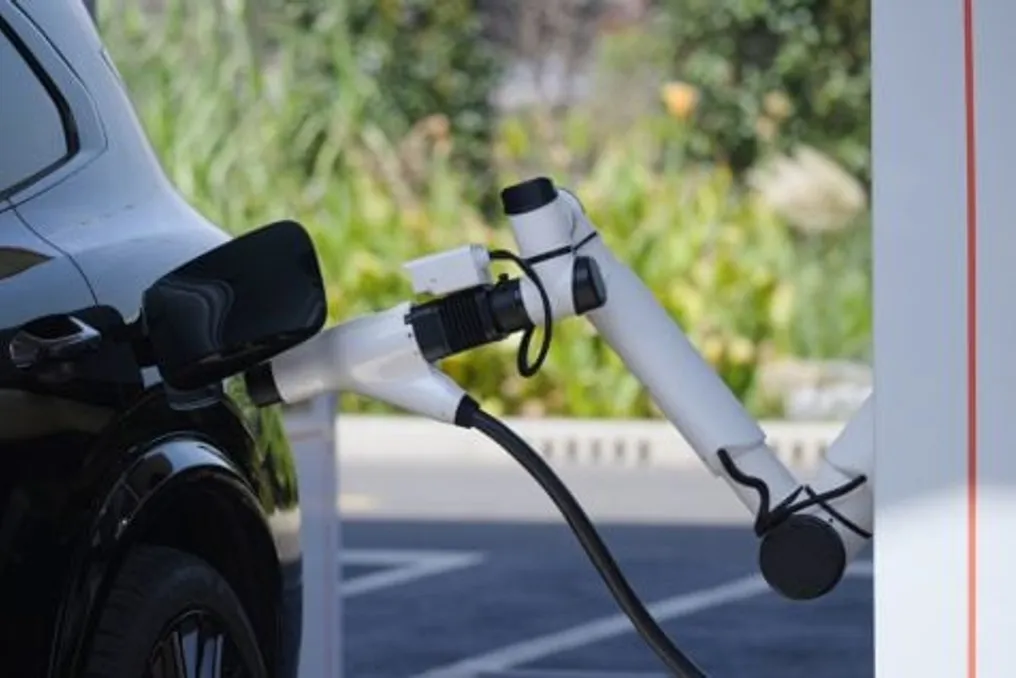
Geely unveiled a new ultra-fast charging system in China on Wednesday (23). According to the manufacturer, this system can charge an electric vehicle battery from 10% to 70% in just 4 minutes and 30 seconds. Under normal temperature conditions, the process from 10% to 97% takes 8 minutes and 40 seconds.

This innovation comes as a direct response to BYD, which is considered the main competitor in the Chinese market. To achieve these charging times, the system requires a 2.2 MW infrastructure, with a peak of 2,250 kW, in addition to batteries designed to accept high charging rates.

The power of this new system exceeds the capacity of BYD's Flash Charging 2.0 by approximately 50%, which operates at 1.5 MW and takes nine minutes to go from 10% to 97%. Despite this notable difference in energy delivery, the charging times practiced by both companies end up being quite similar.

This announcement occurs amid intense technological competition in the Chinese market, where electric vehicle sales have registered an 11-month consecutive decline until August. Manufacturers are competing for consumers by offering advancements in autonomous driving, greater range, and ultra-fast charging capabilities.

Regarding infrastructure, BYD plans to establish 90,000 stations by 2028, according to information cited by Deutsche Bank after a meeting with the company's board of directors.

To ensure the battery withstands this high charge without damage, Geely employs artificial intelligence both in the cloud and within the vehicle itself. Deep learning models and virtual simulations continuously monitor cell health, manage thermal control, and prevent potential risks.

The system, named Xingrui PowerMind, was developed in collaboration with the Chinese company StepFun. It aims to keep the average battery temperature around 55°C, with a maximum limit set at 65°C.

Zhang Dewang, a Geely executive, told Reuters that current charging speeds are already close to physical limits, indicating that the benefits of even faster charging tend to decrease progressively.

The complete technology, which uses a 12C rate battery, is already implemented in the Lynk & Co 10 and Zeekr 001 models, belonging to the group's premium line. For more accessible models, Geely is developing a 6C version of this new battery, which will be introduced in the updated Galaxy E5 electric SUV, promising to go from 10% to 70% in about 8 minutes and 25 seconds.

This technical scalability demonstrates an inherent limit: the charging point power can only be fully utilized if the vehicle is capable of supporting the electrical current. Compact vehicles, focused on high sales volume, generally have less robust electrical architectures and components, limiting their maximum charge absorption, regardless of the charger used. Real performance is also influenced by temperature and charge level.

In the Brazilian market, Geely operates in partnership with Renault, from which it acquired a stake in the local operation, marketing the EX2 and EX5 electric SUVs (which also have hybrid versions). Zeekr, the group's premium brand, also has a sales presence in the country.
Similar stories

New BYD ETT 44 electric truck charges in just 20 minutes
Read more
olhardigital.com.br

New BYD ETT 44 electric truck charges in just 20 minutes

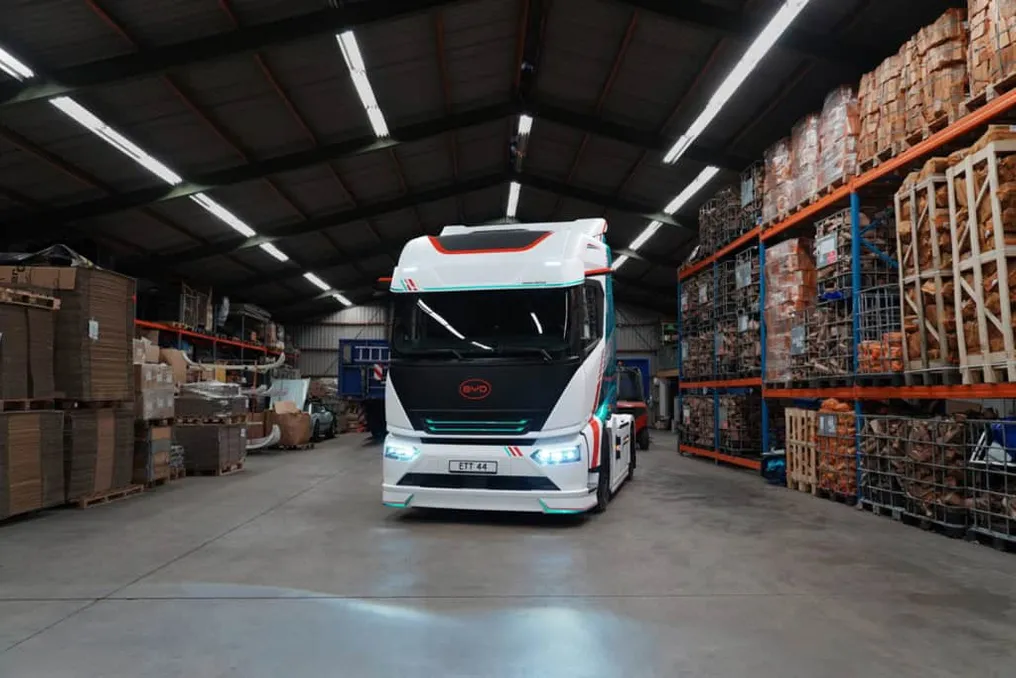
BYD unveiled its most comprehensive heavy electric truck, the ETT 44 model, at the IAA Transportation 2026 exhibition in Hanover. This truck boasts a range of up to 600 km, is equipped with a 651 kWh battery, and supports charging power exceeding 1.5 MW.

The manufacturer has integrated fast-charging technology, used in their electric vehicles, into these transport vehicles. The goal is to reduce truck downtime and advance the company in the European heavy transport market.

The ETT 44 is a 4x2 tractor designed for combinations weighing up to 44 tons. It utilizes a 651 kWh Blade battery and an 851 V architecture. Its nominal power is 743 hp, with a maximum of 1000 hp.

The battery comes with a 10-year or 1.2 million kilometer warranty. When using a DC CCS2 charger, the truck accepts up to 420 kW and charges from 20% to 80% in approximately one hour.

Thanks to BYD's Megawatt Charging system, the power exceeds 1.5 MW. In this mode, the same charging duration takes about 20 minutes, adding up to 400 kilometers of range. The company previously applied FLASH Charging technology in passenger cars and is now implementing it in commercial transport, starting with trucks.

Stella Li, Executive Vice President of BYD, emphasized this concept, stating: 'Less time charging. More time on the road.'

In addition to the ETT 44, BYD also presented rigid 4x2 and 6x2 trucks in Hanover, including 26-ton versions for hauling with body swap capability, as well as hooklift models. The company's portfolio also includes the E-Vali electric van and the EYT 2.0 electric warehouse tractor, covering vehicles from 3.5 to 44 tons.

The ETT 44 is also equipped with features such as adaptive cruise control, automatic emergency braking, lane keeping, and blind spot detection. The manufacturer calls its strategy 'Total Cost of Mobility,' which combines vehicles and all necessary elements for operation.

According to BYD data, its commercial vehicles are already operating in over 100 countries and more than 400 cities. Competitors such as Daimler Truck, Volvo, Scania, and MAN are also developing electric trucks, and megawatt charging is becoming an important element of this competition. Theoretically, the ETT 44 offers a range of 600 km and a charging power of over 1.5 MW.

Additional Information

BYD states that it has installed 10,000 1500 kW chargers in five months and plans to reach 15,000 megawatt charging stations in China. Furthermore, the company intends to bring this technology to the Canadian market. This strategy positions BYD differently in European competition, as the manufacturer works with both the vehicles and the charging infrastructure. It remains to be seen whether the company can replicate the success it achieves with electric vehicles in the truck market.

The answer also depends on the regulatory environment. The European Union has already introduced tariffs on Chinese electric vehicles, while BYD aims to expand its presence in the European heavy transport market.

Popular