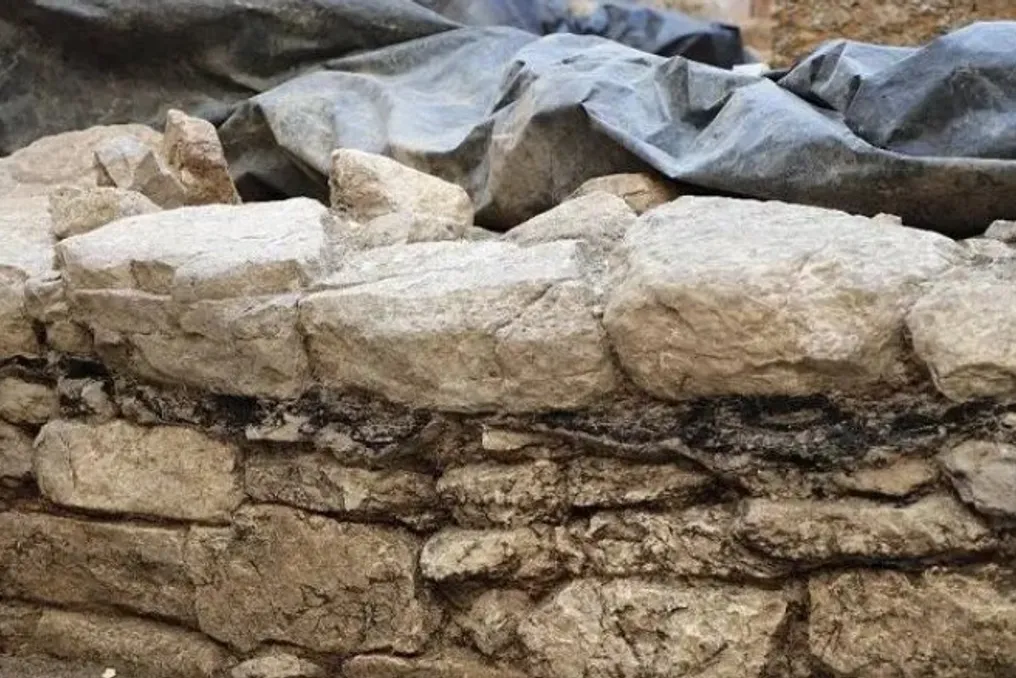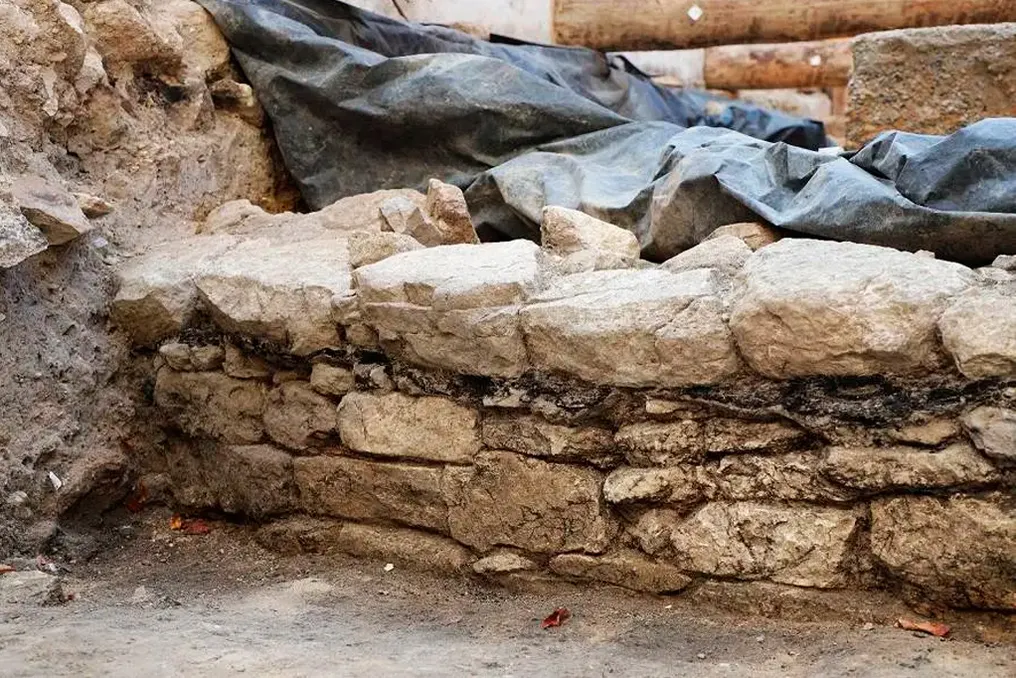
A wall dating back approximately two thousand years, discovered on the island of the River Seine, may correspond to the defenses of ancient Lutetia, the city that gave rise to Paris and was dominated by Julius Caesar.
Between 58 BC and 52 BC, Julius Caesar conducted several campaigns to subdue Gaul, a territory that currently covers France, Belgium, and part of Italy. This period, known as the Gallic Wars, was characterized by confrontations between the Gauls, Celtic peoples, and the Romans.
A notable event was the conquest of Lutetia, a city in Gaul established by the Parisii tribe in the 3rd century BC. Caesar took control of Lutetia in 52 BC, from which the city of Paris emerged. However, the exact location of Lutetia remains unknown to historians.
Documents, including records of Julius Caesar, suggest that the city was located on an island in the Seine River and suffered fire and bridge destruction after the Roman invasion, although no record is entirely accurate. There are theories that Lutetia was located in the center of Paris or in the commune of Nanterre, in the metropolitan region of the French capital.
This debate may be about to be resolved thanks to archaeological excavations carried out on the Île de la Cité, on the island of the River Seine, where ruins of a wall that could have protected Lutetia were found.
Archaeologists were working on the property of the Hôtel-Dieu Hospital, opposite Notre-Dame Cathedral, Paris's oldest hospital, aiming for future construction on the site. Instead of finding only old hospital rooms, workers located a twenty-meter section of the wall and, behind it, a two-meter thick platform.
Furthermore, Gallic spearheads were discovered nearby, along with carbonized materials and the remains of a building that had been set on fire. This discovery was announced this week by the French Ministry of Culture.
The structure of the wall is composed of large blocks and beams, following Gallic tradition, and has a carbonized coating, which corroborates Julius Caesar's accounts. Carbon dating is also favorable, indicating that the wall was erected between 200 BC and 10 BC.
Despite the strong evidence, experts emphasize that new investigations, studies, and analyses are necessary to definitively confirm that it is the wall of Lutetia. Catherine Pégard, Minister of Culture of France, stated in a press release: 'We may be facing one of the most important vestiges ever discovered for understanding Gallic Lutetia. Scientific caution requires that its function and chronology still be verified, but the convergence of evidence is particularly remarkable.'