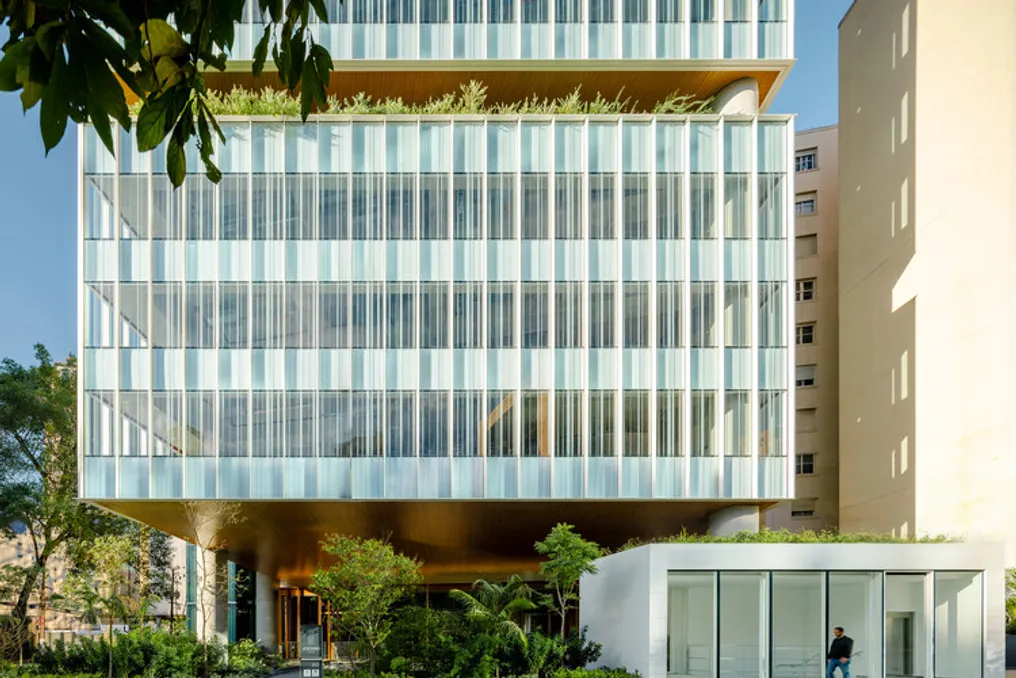
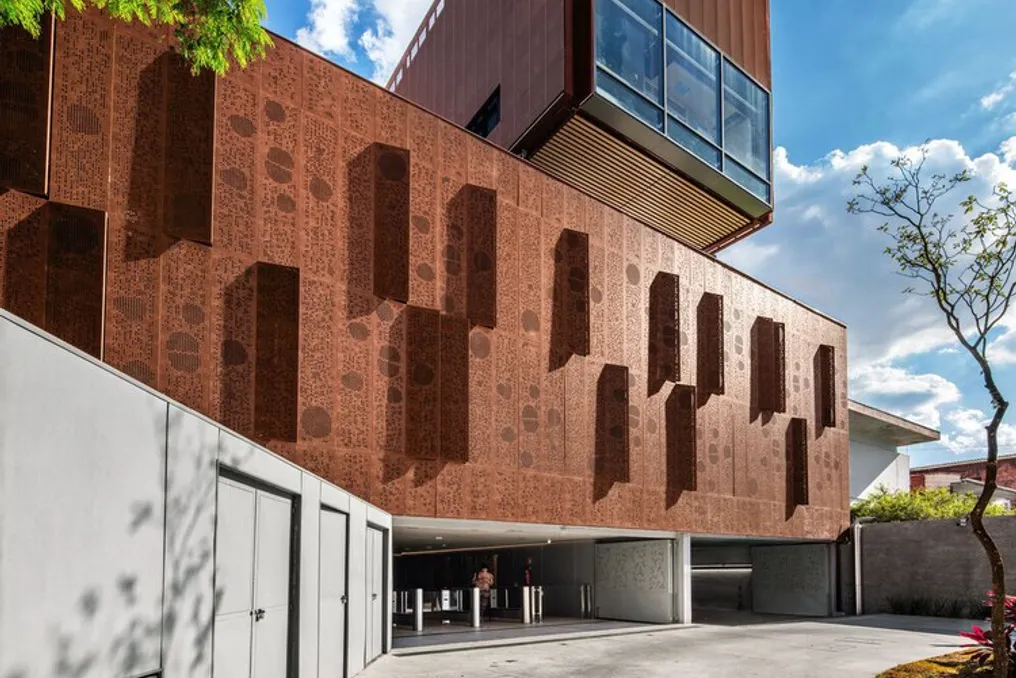
Jeronimo Faria Lima Building Project in São Paulo by Perkins&Will
Read more
ArchDaily Brasil
archdaily.com.br

Jeronimo Faria Lima Building Project in São Paulo by Perkins&Will

Located at one of the most notable corners of São Paulo, where the movement of Brigadeiro Faria Lima Avenue meets Jeronimo da Veiga Street, the Jeronimo Faria Lima Building was conceived with a goal that transcends merely its height, shape, or visibility in the urban landscape.

The project has a broader aspiration: to integrate the meeting point between architecture and the city as an essential element of urban life.

Project Gallery

Information about the project was provided by the development team.

Similar stories

From classrooms to courtyards: ten Brazilian universities are reshaping the learning space
Read more
archdaily.com.br

From classrooms to courtyards: ten Brazilian universities are reshaping the learning space

The concept that the university building should be a continuous territory, interconnected by ramps, courtyards, and open voids, allowing the educational experience to go beyond the classroom, was established by Vilanova Artigas and Carlos Cascaldi when they created the Faculty of Architecture and Urbanism at the University of São Paulo in 1961, in São Paulo. This vision emerged during a period of change in higher education in Brazil, which evolved from serving a limited public to catering to a vast and heterogeneous population.

The growth of higher education in Brazil has been significant: while there were approximately 226,218 undergraduate enrollments in 1960, this number rose to nearly 10 million in 2023. This advancement has also altered the dynamic between the university and the urban environment. The Brazilian system, influenced by both the public network and the private sector, has generated various institutional models and forms of occupation.

In this scenario, the campus has transcended its function as mere physical support, beginning to function, in many cases, as an urban infrastructure, concentrating movements and offering spaces for social interaction. The legacy of FAU-USP remains important not as a rigid model to be copied, but as a lens through which to understand the university in its relationship with the city.

The presented projects demonstrate a variety of adaptation methods. In Porto Alegre, the firm AT Arquitetura used a full 13,000 m² court for the new Unisinos campus, adapting to the commercial scale of the avenue where it is located. In São José dos Campos, the Dutch firm KAAN Architecten, in collaboration with URBsp, designed the Anhembi Morumbi University campus as a grouping of volumes around courtyards, prioritizing an aesthetic more linked to urban design than to that of the isolated building.

Meanwhile, in Juazeiro do Norte, in the interior of Ceará, the firm Lins Arquitetos Associados proposes a different solution for Unileão: four blocks inserted among existing structures, connecting the campus through gardens and social areas. This illustrates how university architecture in the Northeast manages to dialogue with the climate and local dimension, maintaining a strong urban connection.

These examples show that the projects do not follow a single typology, but rather respond to a common reality: the modern Brazilian university is in constant evolution and adjustment. The interventions focus on working with what already exists—be it the city, previous buildings, the climate, or flows—resulting in architecture that transcends the limits of the building itself and contributes to the formation of the city.

Below, ten higher education projects in Brazil are detailed that highlight this plurality of approaches.

Italy launches St. Francis Way as competitor to Santiago de Compostela
Read more
viagemeturismo.abril.com.br

Italy launches St. Francis Way as competitor to Santiago de Compostela

As part of events commemorating the 800th anniversary of the death of Saint Francis of Assisi, which occurred on October 3, 1226, Italy introduced a new tourist route at the end of July. This path, named Cammino di Francesco – Il Cammino della Luce, aims to offer a richer experience for lovers of religious pilgrimages and serves as a local analogue to the famous Camino de Santiago in Spain.

The Italian Ministry of Tourism seeks to create a more organized 'St. Francis Way' for believers and tourists who previously had to follow unofficial routes on their journey to Assisi.

Estimates suggest that over 300,000 people traveled along various religious trails in the country in 2025, which is a growing but still modest figure. In contrast, over 530,000 pilgrims passed along the Camino de Compostela during the same period.

Before the creation of the new St. Francis Way, pilgrims arriving in Italy had to move along irregular trajectories, often accompanied by poor navigation on some sections. There were frequent reports from parishioners that they got lost in the field due to a lack of signage or insufficient route maintenance.

Another issue was visiting small towns that were unprepared to host visitors. In the absence of an official map, not all local communities had developed commerce to support weary travelers. To solve this problem, Italy invested 40 million euros in improving infrastructure and marking, striving to overcome historical difficulties and form a more cohesive experience.

The officially approved version of the St. Francis Way includes various directions passing through the regions of Abruzzo, Emilia-Romagna, Lazio, Marche, Tuscany, and Umbria. The total length of the route is 1,546 kilometers, which can be walked, and it ends in Assisi. This is only a small part of a network of similar hiking routes across Italy; it is estimated that there are about 150 such pilgrimage trails in the country, covering approximately 33,000 kilometers of roads.

The culmination of the St. Francis Way is the opportunity to peacefully explore the inland areas of Italy that are not typical tourist destinations. Preserved medieval villages and untouched natural beauty create a landscape seemingly frozen in time, with the final section between Sansepolcro and Assisi being particularly well-known.

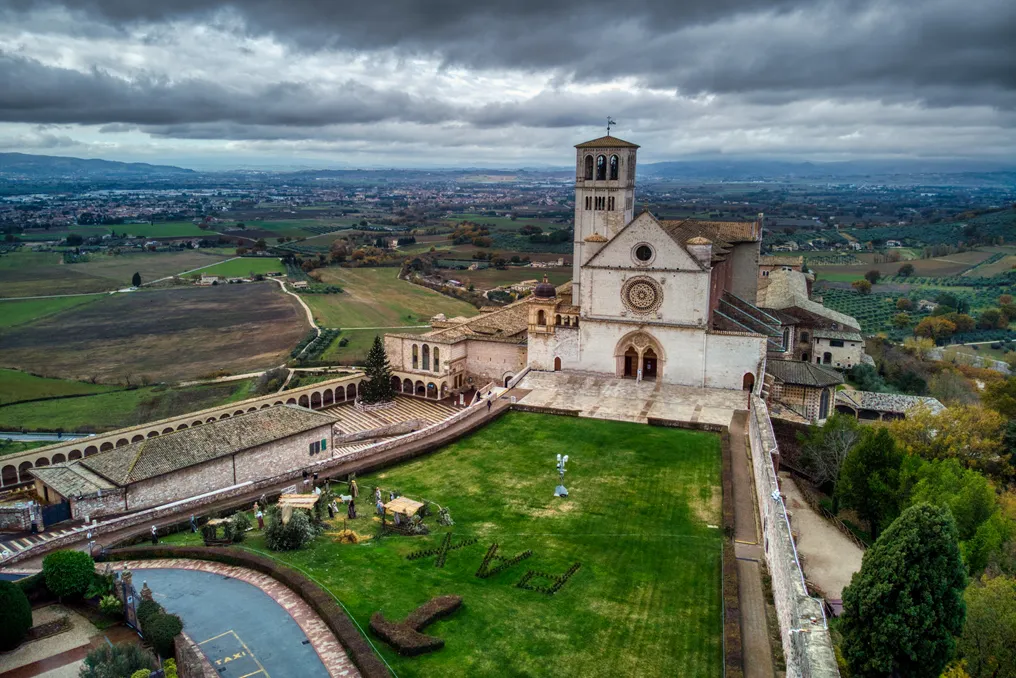
Regardless of the starting point, the route always leads to Assisi—a place that is an attraction in itself. The sanctuary city, recognized as a UNESCO World Heritage site where Saint Francis was born and died, has attracted pilgrims for centuries, even before the official launch of the new route, in search of a connection not only with nature and history but also with a spiritual bond, similar to what happens on other religious paths.
Popular