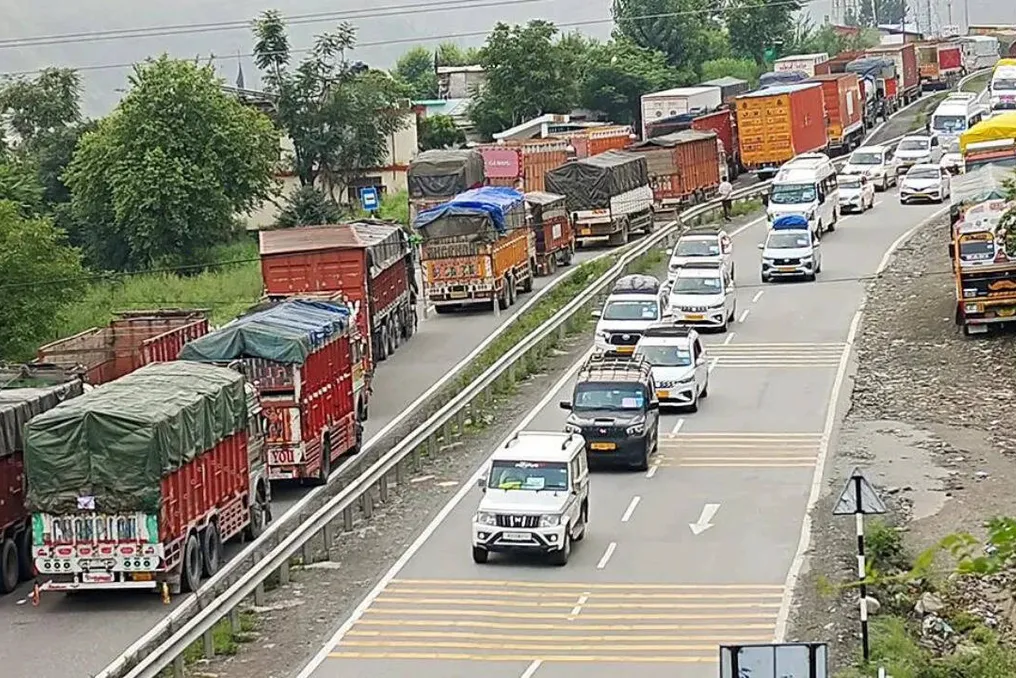
As part of an innovative step for the road sector, the government used plastic waste in the form of a wet mixture with bitumen to lay a section of asphalt road. This approach is intended to reduce the need for importing the main construction material while addressing the growing problem of plastic pollution.
On Thursday, a pilot test section was laid on the main carriageway of the NH-44 highway in Jansi. Project participants reported that this technology can reduce the consumption of traditional bitumen by approximately 4%, thereby lowering the demand for a material that India significantly imports to meet domestic needs. Furthermore, it was noted that the modified bitumen could cost about 20% less than regular bitumen.
The technology of wet treatment of plastic waste for producing high-quality modified bitumen from plastic waste (W-PMB 76-10) was developed by the Indian Institute of Technology (IIT) in Varanasi as part of a research program funded by the Ministry of Road Transport and Highways. IIT (BHU) will monitor the characteristics of this pilot section to assess its long-term engineering quality and suitability in real conditions.
India produces about 25,000 tons of plastic waste daily. Until now, plastic waste has been used in road construction exclusively in dry form, mixed with aggregates when laying the bituminous layer. The new method involves directly mixing recycled plastic with bitumen before laying, making this a first of its kind pilot project on a national highway.
Officials emphasized that this technology offers numerous advantages, including the reuse of plastic waste with added value through a scientifically controlled process, as well as improved resistance of bituminous mixtures to rutting at high ambient temperatures and heavy axle loads.
This technology recently received patent protection. Low-density polyethylene (LDPE), used in the process—a soft, flexible, and lightweight thermoplastic material derived from oil—includes discarded irrigation pipes, office files, and plastic folders. The material was processed with the support of local recyclers and SMEs, opening up the possibility of integrating local waste recycling with infrastructure development.
An official representative noted that laboratory tests demonstrated that LDPE-modified bitumen possesses better resistance to moisture damage and greater resistance to rutting at elevated temperatures. The modifier enhances the stiffness and performance characteristics of the asphalt at high temperatures, helping pavements withstand constant deformation under heavy traffic and extreme temperatures.