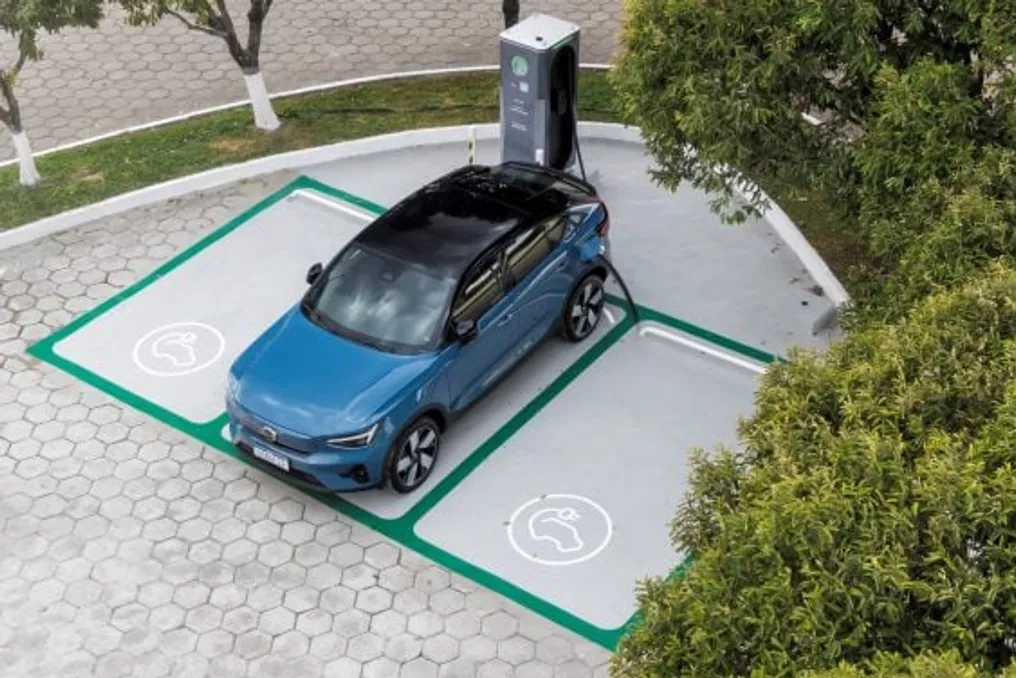
Brazil is on the verge of reaching the milestone of 30,000 charging devices for electrified vehicles. According to data collected by the Brazilian Electric Vehicle Association (ABVE) and the Tupi mobility platform, 29,896 public and semi-public charging points were registered in the country in August. This figure represents a 77% increase compared to the same month in 2025.
The number of points increased by 4,441 compared to the previous study conducted in May, corresponding to a 17.4% network expansion during the quarter. In approximately two thousand municipalities, which accounts for about one-third of Brazil's 5,570 cities, there is at least one charging station, and more than a thousand are equipped with fast charging.
The total fleet of fully electric vehicles and plug-in hybrids in Brazil amounts to 633,133 units. This results in a ratio of 21.4 vehicles per charging point. Of this total, 313,140 units (49%) are purely battery-powered models, and 325,993 units (51%) are plug-in hybrids.
Slow alternating current (AC) charging dominates the registered points, accounting for 18,485 devices. According to ABVE, these devices are intended for daily use and are typically located in residential and commercial complexes, offices, long-term parking lots, and fleet garages.
Fast direct current (DC) charging stations, primarily used during travel, account for 11,411 units, or 38.2% of the total. Their number grew by 32.6% between May and August.
The highest concentration of the network is observed in the Southeast region, which has 12,673 points. This is followed by the South region (7,270), Northeast (5,581), Central-West (3,340), and North (1,015). The Northeast region showed the most significant progress during the quarter, increasing by 22.8%. In the North region, which has the smallest network, 58.1% of the points are fast charging stations, which is the highest proportion in the country.
According to ABVE, the network expansion is driven by the steady decrease in equipment costs, technological development, and operator scaling. Furthermore, the organization notes growing demand for medium and long-distance travel, the electrification of corporate and logistics fleets, and increased consumer confidence.
According to Tupi Executive Director, Davi Bertoncello, the main issue for consumers right now is the availability of a charging station on their route. He noted that equipment costs have decreased, technology has matured, and operators have learned to install stations. However, he emphasized that 'the bottleneck is now before the charging station,' pointing to issues with timelines and conditions for connecting new loads to the electrical grid.
This issue is being discussed within the scope of public consultation 033/2026 by the National Electric Energy Agency (Aneel), which was opened on September 10. The consultation proposes modernizing connection rules for distributed generation, energy storage, electric vehicles, and flexible loads, accepting proposals until November 9.