Tashkent Metro to Receive 56 New Cars in 2026 to Update Fleet
Read more
UzDaily
uzdaily.uz

Tashkent Metro to Receive 56 New Cars in 2026 to Update Fleet

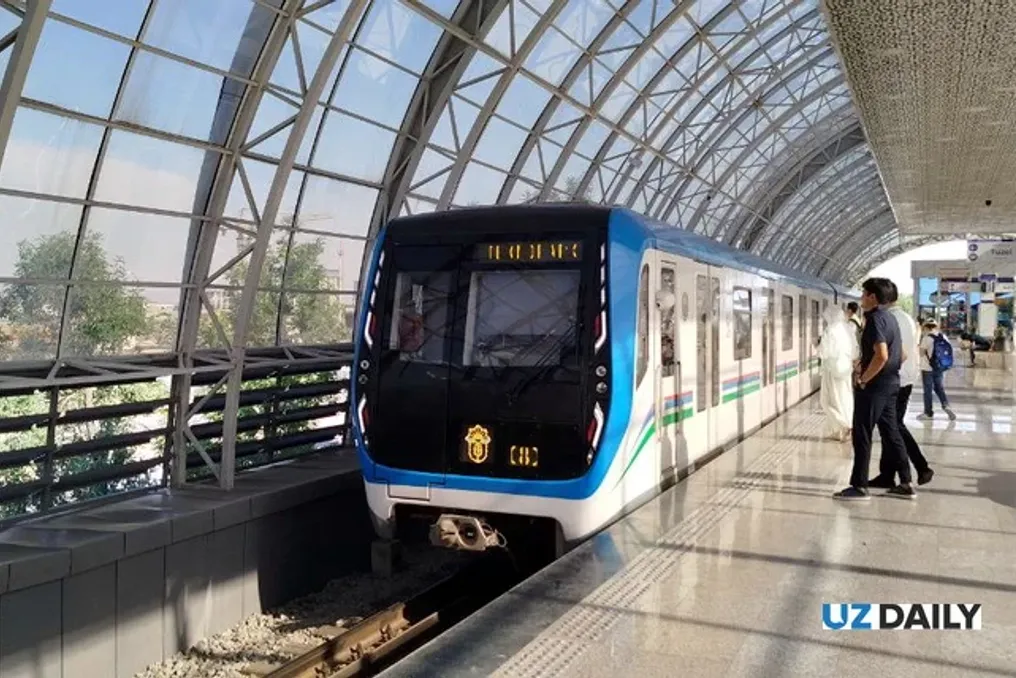
The Ministry of Transport of Uzbekistan announced that in 2026, the Tashkent metro will be supplemented with fourteen modern trains, which include 56 new cars. It is planned that all supplied trains will be put into operation before the start of the new academic year.

This delivery is part of a program to update the metro rolling stock and improve the quality of passenger service. Thanks to these acquisitions, almost seventy percent of the capital's metro fleet has been modernized.

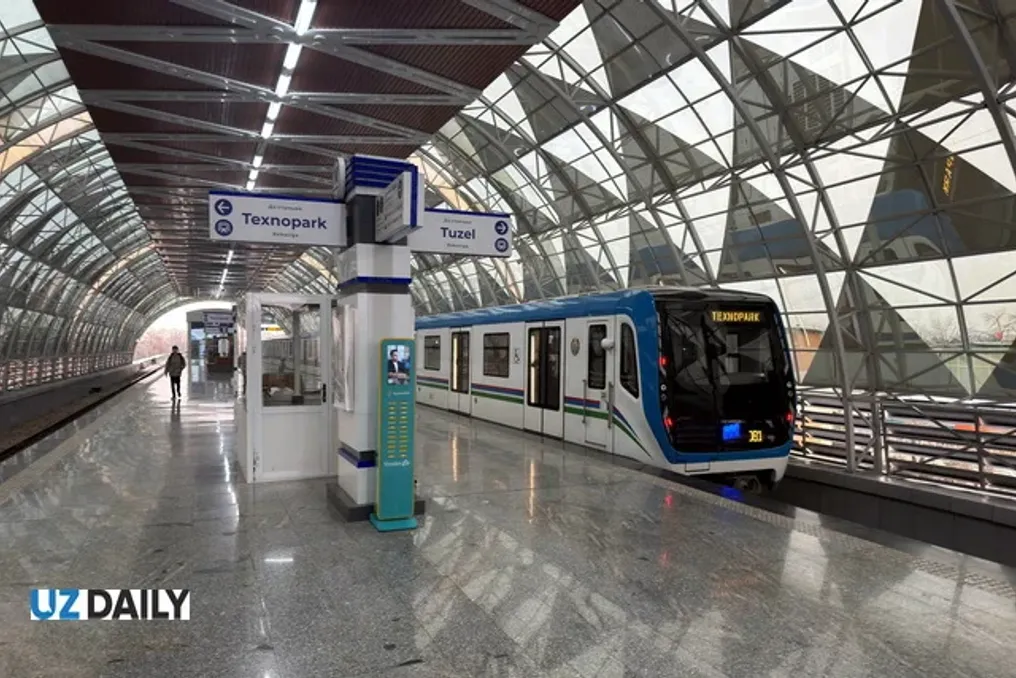
The new trains operate on four lines of the Tashkent Metro. Their introduction has allowed for a reduction in travel intervals, including during peak hours. On the Chilanzar line, the interval during peak hours is from 1.5 to 2 minutes. On the Uzbekistan line, the interval is about three minutes, and on the Yunusabad line, trains run every four minutes. On the Elevated Ring Line, metro movement operates at an interval of seven to eight minutes.

The acquisition of new sets is aimed at creating more comfortable conditions for passengers and further increasing the efficiency of the capital's metro system.
Similar stories

Tashkent buses transport about 1.5 million passengers daily
Read more
uzdaily.uz

Tashkent buses transport about 1.5 million passengers daily

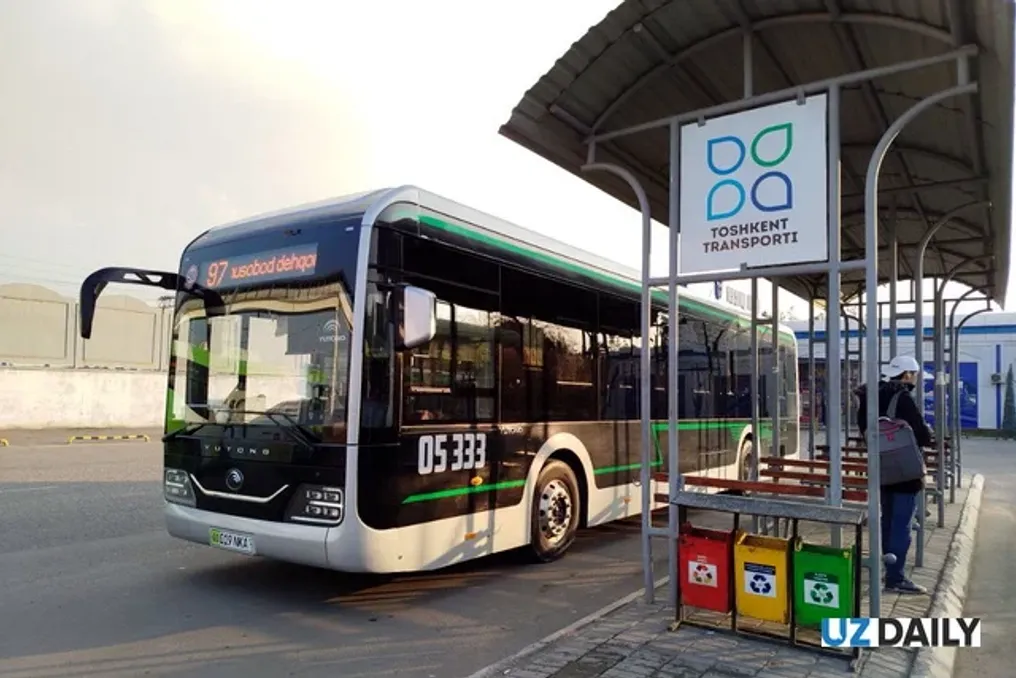
Bus transportation in Tashkent, the capital of Uzbekistan, reaches an average of 1,491,117 passengers daily. Public transport in the capital operates on 165 routes, which are serviced by Tashshahartranskhizmat JSC.

During the period from 07:00 to 10:00, which is the morning peak time, 343,997 passengers used city buses on September 16.

The highest passenger flow during this period was observed on Route 131, which runs between the Dustlik-2 residential area and the Olimpiyskiy residential area, carrying 5,166 passengers. Routes 116, connecting Medgorodok and Chilanzarsky market, also transported a significant number of passengers with 4,402 passengers, and Route 24, running between the TTZ bus station and the sixth quarter of the Yunusabad residential area, carried 4,131 passengers.

Additionally, Route 38, linking the Almazar mahalla and the Uzbekkishlokmash plant, transported 3,661 passengers during the morning hours. Overall, the 165 routes managed by Tashshahartranskhizmat provide transport services for an average of 1,491,117 passengers per day.

Tashkent Metro Increased Train Frequency and Reduced Headways During Morning Rush Hour
Read more
uzdaily.uz

Tashkent Metro Increased Train Frequency and Reduced Headways During Morning Rush Hour

A decision was made in the capital of Tashkent to increase the number of metro trains and reduce service intervals during the morning rush hour.

This decision was made following monitoring of passenger flow in the capital's metro system, conducted by the Tashkent Traffic Control Center in collaboration with Toshkent Metropoliteni JSC.

Details of Changes on the Lines

On the Chyllanzar line, the number of operating trains between 7:00 AM and 8:00 AM was increased from 27 to 28. An additional train was introduced to improve service frequency.

On the Uzbekistan line, the number of operating trains between 7:00 AM and 10:00 AM was tripled from 16 to 18. As a result of this change, the interval between trains was reduced from 3.5 minutes to 3 minutes.

Furthermore, on the Uzbekistan line, service intervals were significantly reduced throughout the day compared to previous figures.

The Traffic Control Center reported that the measures taken will allow for a reduction in passenger waiting times at stations and more efficient use of the transport system's existing capacity.

The Center continues to monitor passenger flow and traffic in the capital, and needs identified during the analysis are being addressed in stages, in cooperation with relevant structures and through practical steps.

Tashkent recorded over 1.5 million private vehicle trips in one day
Read more
uzdaily.uz

Tashkent recorded over 1.5 million private vehicle trips in one day

According to data from the city's Traffic Management Center, a total of 1,514,915 vehicles traveled through the streets of Tashkent on September 10.

The Center continuously monitors traffic conditions, congestion, and public transport operations. The highest number of cars was registered during the morning rush hour, from 07:00 to 08:00, when their number reached 254,906. The evening peak, observed from 18:00 to 19:00, showed a figure of 314,669.

During the day, 1,667 buses operating on 170 routes were used. These buses made 21,761 trips, transporting 1,407,899 passengers. Additionally, 995,806 people used the Tashkent metro throughout the day.

Chilanzar station was the busiest, registering 52,858 passengers. It was followed by Buyuk Ipak Yuli station with 51,541 passengers, Beruni with 37,742, Chinor with 34,997, and Almazar with 32,403.

Traffic Congestion Situation

According to the Center's information, a seven-point congestion was recorded at the intersection of Sagban and Korakamish streets, as well as on P. Mahmud street, from 08:00 to 09:00. Congestions exceeding seven points were observed in eight locations, including Fargona Yuli, Choshtepa–Sh. Rustaveli, Gavhar–Sh. Rustaveli, Nukus–A. Kakhgor, Tashkent Ring Road–Charbog, Tashkent Ring Road–Choshtepa, Oibek–Shahrisabz, and T. Malik–M. Ulugbek.

In the evening, between 18:00 and 19:00, a seven-point congestion was noted at three points: Choshtepa–Sh. Rustaveli, Gavhar–Sh. Rustaveli, and Nukus–A. Kakhgor. Seven other locations had congestion exceeding seven points: Fargona Yuli, P. Mahmud street, Sagban–Korakamish, Tashkent Ring Road–Charbog, Tashkent Ring Road–Choshtepa, Oibek–Shahrisabz, and T. Malik–M. Ulugbek.

To stabilize traffic, traffic light operating modes were adjusted, and the duration of the green signal was increased in some directions. Traffic police officers were also deployed at several intersections.

Works and Violations

Municipal services carried out work on 14 streets on September 10, including Moikurgon, Uzumbog, Korasaroy, Osh, Mukimi, Shurtepa, Bogishamol, Chukursay, M. Yusuf, M. Ulugbek, the first lane of Katartal, Akkurgan, Tashkent Ring Road–Katta Darkhan, and Khonzodabegim. These works partially affected traffic movement.

During checks for compliance with traffic rules, the Department of Road Safety recorded nine instances of driving in pedestrian zones, 17 parking violations, 32 cases of stopping in unauthorized places, and 49 instances of driving in the 'A' lane. In addition, 85 cases of pedestrians crossing roads in unauthorized places were registered.

Three road traffic accidents occurred in the capital during the day, resulting in injuries to three people. No cases involving serious injuries or fatalities were recorded.

As part of the modernization of road infrastructure, about 20,000 meters of road markings were applied.

The Traffic Management Center recommends that drivers plan their routes in advance, take into account congestion during peak hours, and use alternative routes if necessary. The situation center monitors road conditions in the capital in real time.

Popular