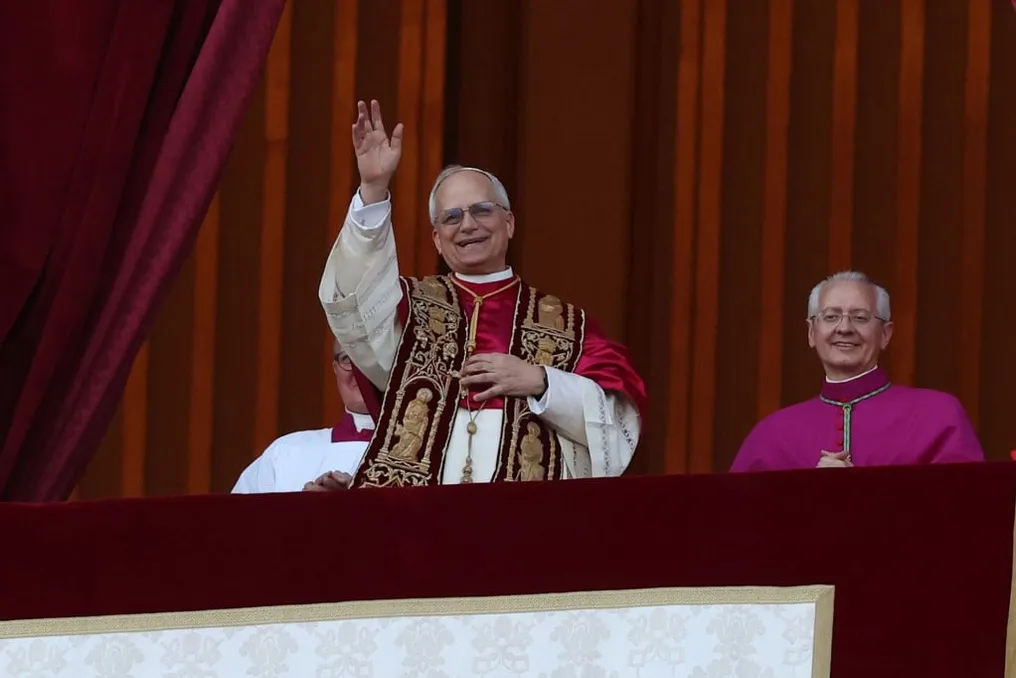
Pope Leo XIV warns about the risks of Artificial Intelligence and the loss of humanity's space
Read more
Olhar Digital
olhardigital.com.br

Pope Leo XIV warns about the risks of Artificial Intelligence and the loss of humanity's space

Pope Leo XIV focused on the dangers of artificial intelligence during his four-day visit to France. In a statement made at the Élysée Palace this Friday (25), the pontiff argued that it is crucial to pay closer attention to the ethical use of this technology to prevent machine progress from weakening humanity in daily life.

As the first American to lead the Catholic Church, Leo XIV emphasized the urgency of preparing people to face the effects of AI. According to him, technological advancement must be complemented by education focused on ethical discernment.

Warning about a future conditioned by machines

During his speech in Paris, the Pope warned that artificial intelligence has the potential to drastically alter the way people interact with technology. He signaled the risk of a scenario where machines increasingly dictate aspects of daily life.

Leo XIV stated: 'If we want to avoid losing our humanity amidst a 'machine paradise' that invades and conditions our daily lives, there is an urgent need for education in ethical discernment.'

The Pope's concerns go beyond AI. He also mentioned other social trends that, in his view, could turn science and technology into profit-driven activities, citing genetic manipulation, surrogacy, human organ trafficking, and the possibility of planning one's own death.

The defense of ethical reflection on technology constitutes a central point of Leo XIV's stay in France. Although AI was a main theme of the trip, the pontiff also fulfilled an extensive agenda in the country.

Upon arriving at Paris-Orly, Leo XIV was received by President Emmanuel Macron and his wife, Brigitte. On the plane to Paris, he expressed his intention to convey a message of peace during the visit, stating that 'It is a message that, at this moment, as we all know, is particularly important.'

While still on the flight, the Pope was questioned about President of the United States Donald Trump's attempt to block CNN and other media outlets from accessing the White House. Leo XIV reiterated his support for press freedom.

The trip takes place amid discussions in France regarding abortion, assisted suicide, and the role of the Church in a society characterized by the separation between State and religion. Despite this broad schedule, the warning about the limits and risks of artificial intelligence advancement gained prominence at the beginning of the visit.

Similar stories

Pope Leo XIV warns about AI risks and demands global regulations for technological control
Read more
olhardigital.com.br

Pope Leo XIV warns about AI risks and demands global regulations for technological control

Pope Leo XIV reiterated his warnings about the dangers of artificial intelligence and advocated for the need to establish global standards to oversee this technology. The Vatican identifies potential threats to security, international peace, and social harmony.

The pontiff has been addressing this issue since the beginning of his mandate. As reported by Reuters, he is expected to resume this discussion in a speech at the Unesco headquarters in Paris this Friday.

The Vatican's concern about AI is not recent; in 2019, the Holy See organized two conferences on technological risks. In one of them, then-Pope Francis warned that the dissemination of disinformation generated by AI systems could lead to a world war.

In the following year, the Vatican joined forces with Microsoft, IBM, the Food and Agriculture Organization of the United Nations (FAO), and the Italian government in a call for an artificial intelligence whose purpose was not merely to increase profits or progressively replace workers.

Discussion on AI

Leo revived the debate in May, calling on world leaders to implement international rules to monitor the sector. He also warned that AI systems have the potential to spread fake news, fuel conflicts, and steer the world toward a cycle of endless wars.

During a meeting held on Thursday with the Pontifical Academy of Sciences, the Pope stated that while artificial intelligence can bring benefits to humanity, it has also introduced 'new dangers to international security and peace.' Therefore, he requested that world leaders exercise prudent governance.

Discussion Fronts in the Vatican

One of the aspects that most concerns the Vatican is the development of weaponry systems. In the May encyclical, Leo observed that such technologies have evolved 'almost beyond any human capacity to manage them.'

Father Paolo Benanti, a Vatican consultant on artificial intelligence matters, drew an analogy between AI-equipped drones and landmines due to the risk of indiscriminate targeting. Detailing the possible effects of the technology, he emphasized that 'the transformative power of AI... can generate a magnitude of social changes that are very difficult to predict.'

Benanti also compared the risks of AI to those of nuclear weapons. According to him, nuclear weapons require storage in specific locations and can be counted and controlled, whereas artificial intelligence is significantly less visible.

Cardinal Pietro Parolin, the Vatican's chief diplomat, reinforced last week the defense of international regulation. At an event in Rome, he emphasized that countries cannot face the technology in isolation. Parolin declared: 'The future of humanity is truly at stake here,' advocating for the participation of all in creating common guidelines.

Dialogue with the Private Sector

Dialogue with the private sector has already begun. Chris Olah, co-founder of Anthropic, participated in the launch of the May document. Benanti informed Reuters that some conversations with corporations are conducted locally by bishops, given the decentralized structure of the Church.

On September 16, the Conference of Bishops of the United States established a new working group focused on artificial intelligence, after several of its leaders met with industry executives. This initiative aims to discuss ways to keep technology serving humanity and combat the risks it presents.

Popular