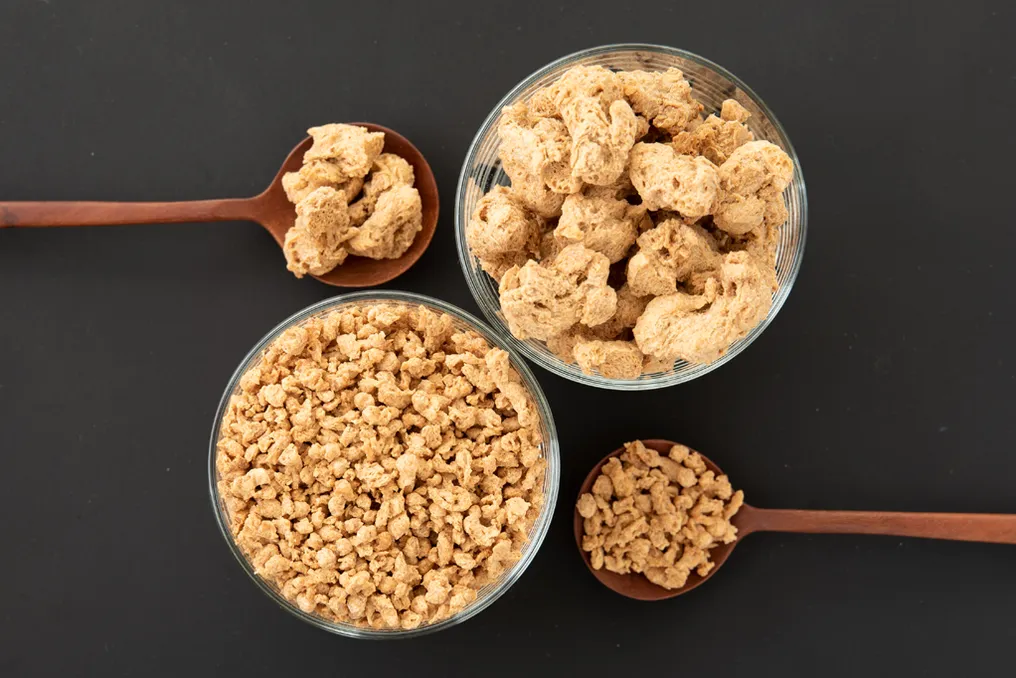
The first version of textured soy protein (TSP) was developed by the American company Archer Daniels Midland during the 1960s. The success of this product came years later when it began to be incorporated into school lunch programs in the United States.
TSP is a byproduct generated in the process of extracting soybean oil. After the oil is removed using a solvent, a soybean flour remains, half of which constitutes protein. This flour can be transformed into concentrated soy protein, enriching its protein content to about 70%.
Both the flour and the concentrated protein serve as a base for manufacturing TSP. When mixed with water, they form a solid mass. This mass is then heated and subjected to high pressure through a small orifice, a method known as extrusion, similar to using a tube of toothpaste or a gnocchi machine.
When the mass passes through the orifice, the sudden change in pressure causes rapid expansion. Through a chemical reaction called denaturation, it acquires the characteristic airy texture. It is at this moment that the shape of the soy 'meat' is defined, whether ground, in large steaks, minced, or nuggets. Subsequently, the TSP undergoes a dehydration process, which significantly improves its durability and simplifies storage.
This same extrusion procedure can be applied to produce textured proteins from other grains, including wheat, oats, lentils, corn, and peanuts. To use TSP, it is essential to pre-hydrate it with other ingredients, or allow it to absorb the liquids in the recipe. This ingredient is very yielding, absorbing between two and three times its own weight in water or other fluids, and is frequently used to complement industrialized meat products, such as hamburgers and nuggets.
Besides soy, one of the planet's most important crops, there are other food derivatives that function as meat substitutes, such as tofu and tempeh, the latter being a type of fermented soybean grain paste traditional to Indonesia. Jackfruit meat, on the other hand, is made with the fruit still green; although it closely mimics the texture of shredded chicken or pork, it is not considered an excellent source of protein.
Tofu is produced from coagulated soy milk, following a process analogous to cheese making. It has various textures and applications and has a consumption history exceeding two millennia. Seitan is made using wheat protein, also known as gluten, whose oldest record dates back to the 6th century in China.