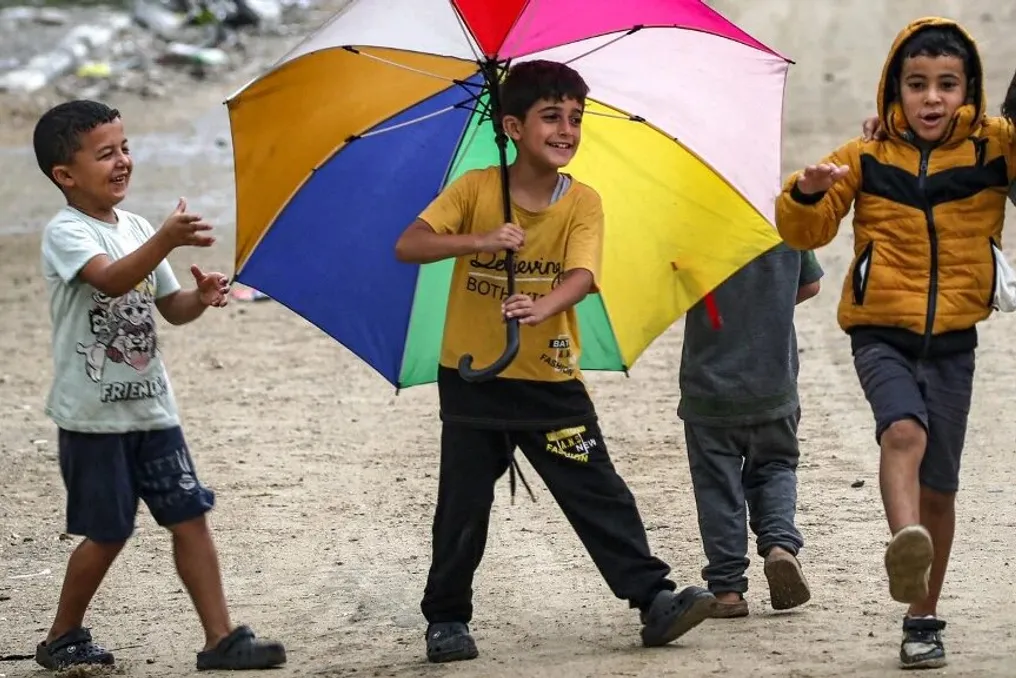
Despite attempts, Israel, according to the author, cannot completely destroy Palestinian culture and joy in Gaza. In 2012, the United Nations warned that the Gaza Strip might not become a 'viable place' by 2020. However, scholar Norman Finkelstein noted that the UN meant physical unsuitability, not the impossibility of living in a 'poetic sense.'
But the genocide initiated by Israel in 2023 differs from this. This campaign of extermination is aimed not only at destroying the Gaza Strip and mass killing Palestinians but can also be seen as a war against joy and love, designed to make Gaza unviable in a poetic sense.
Genocide is partially defined as 'the intentional infliction of conditions of life calculated to bring about the physical destruction, in whole or in part, of a national, ethnical, racial or religious group.' It has been repeatedly demonstrated that Israel is imposing this biological destruction on Palestinians in Gaza. However, it is also inflicting 'conditions of life' clearly calculated for the cultural destruction of Palestinians—to render the enclave spiritually dead and soulless. The apparent goal is to create such an unproductive and atomized life in Gaza that residents will leave, submit, or perish.
Attacks on Aesthetics
In July, Israel killed Mohammed Al-Wahidi, a Palestinian humanitarian aid worker who organized screenings of the World Cup. According to his family, he was heading to watch the Egypt versus Argentina match at a screening he helped make accessible to many people in Gaza City. The Israeli airstrike also resulted in the deaths of at least three other people, including brothers Fari and Hamza Al-Deri, aged eight and ten respectively, who were walking home after playing football.
In February, the Palestinian Olympic Committee reported that since the start of the Israeli offensive in October 2023, over 1000 Palestinian athletes have been killed, and 265 sports facilities have been damaged or destroyed. At best, sport is connected with rest, physical fitness, community, as well as individual and collective enthusiasm—precisely the joie de vivre that the genocide seeks to destroy.
Concurrently, Israel has killed Palestinian artists such as Mohammed Sami Karika, Heba Zagout, and Amna Al-Salmi, as well as film director Ismail Abu Hatab. Israeli forces also took the lives of oil painter Dorgam Kurayki and Dina Khaled Zaarab, whose portraits immortalized the martyrs of Gaza. Poets and writers such as Rifaat Alarer, Hiba Abu Nada, and Nour Hadjji, as well as writers and actors including Inas As-Saka and Rashid Abu Sahil, have been killed. Israeli snipers also shot down Elham Farah, an 84-year-old musician and teacher.
Among the tens of thousands of Palestinians killed were guitarists Shaban Ad-Dalu and Yusuf Dawas, percussionist Akram Al-Ajl, rapper Sari Ibrahim, 14-year-old violinist Lubna Alyan, and popular teenage singer Hassan Ayyad. These actions represent attacks on places of beauty, collective enrichment and charm, contemplation and tranquility—attacks on the Palestinian people as a nation.
Attacks on aesthetics can create living conditions that threaten the population's destruction not only physically but also culturally and spiritually. The State of Israel has also killed dozens of scientists, including the world-renowned physicist Sufyan Tayeh, historian Nasser Ismail Al-Yafawi, visual arts instructor Nesmu Abu Shair from Al-Aqsa University, and gynecologist Sirin Al-Attar, professor at the Islamic University of Gaza.
Israel has destroyed every university in the Gaza Strip and damaged or destroyed over 97 percent of schools. According to UNICEF, the vast majority of all educational institutions will require either complete reconstruction or major renovation to resume operation.
Furthermore, Israel's attack on Gaza has led to the death of hundreds of educators, including Ghad Radhab, an English teacher at Holy Family School high school. Education and knowledge production are necessary not only for cultural reproduction; they, along with the labor that generates them, are among the greatest sources of reward, pride, and satisfaction available to humankind.
Targeted Impact on Cultural Heritage
The favored client state of Washington has also destroyed magnificent mosques and churches. It has destroyed the Central Archives of Gaza, a repository of 150 years of historical records; the Municipal Public Library of Gaza; and the Al-Omari Mosque Library, which is over 700 years old, among other libraries in the enclave.
The Israeli offensive destroyed the Al-Karar Museum, which housed about 3000 artifacts dating back to the Canaanites, and left almost nothing of the Pasha Palace, an 800-year-old museum with golden limestone walls. US-backed attacks further destroyed modern artistic spaces in Gaza and demolished the Rashid Ash-Shawwa Cultural Center, a brutalist structure known for its theater.
Al-Baka Cafe, described in +972 magazine as a 'cherished coastal refuge in western Gaza,' and Thai Restaurant, which was the last open restaurant in Gaza City, were destroyed, turning from a 'vibrant meeting place into a panorama of death,' according to Drop Site News. Israeli strikes devastated the palm and cactus garden of the Al-Mataf Hotel, bombed the Old City Antique Shop, and destroyed the Samaritans' Hammam, an ancient bathhouse. They turned beaches from places of recreation into places of despair and massacre.
These are attacks on places of beauty, collective enrichment and charm, contemplation and tranquility—attacks on the Palestinian people as a nation.
Poetically Viable State
Moreover, Israel has turned the historic Grain Market in Khan Yunis into dust and silence. It collapsed the Al-Qaisariya Market, a trading center existing since ancient times and serving as the economic heart of Gaza City, a place where brides often bought engagement rings and jewelry.
Occupying forces attacked bakeries, greenhouses, and gardens. Food, naturally, provides not only sustenance but also pleasure and unity. Israeli soldiers also touched female mannequins, as well as women's lingerie and underwear. They looted bicycles, stole and broke toys, burned candies, and attacked playgrounds.
On one level, these crimes represent symbolic assertions of control over Palestinian female bodies and sexuality. These are attacks on childhood, functioning as a demonstration of dominance over Gaza's youth; over its future. On another level, such barbarity shows that this genocide is a war against love, desire, and youthful entertainment.
Despite Israel's fierce assault on all aspects of Palestinian life, Gazans continue to find ways to create art, engage in music, stage plays, and play football. While Palestinians undergo mass funerals, they also hold mass weddings: in Deir al-Balah last April, 300 couples married in a joint celebration.
Amidst the chaos, Palestinians preserve books and historical monuments, restore cultural sites, and find ways to learn and teach. Children are born to them. They write literature, shoot films, perform Dabke and breakdance, refusing to surrender in the fight to create their own living conditions—to make their world poetically viable.
[