While the Federal Government implements tests to raise the ethanol content in gasoline from 32% to 35%, the National Congress continues to debate proposals to allow the commercialization of E10 and even pure gasoline for vehicles not designed to operate with the current E25 and E32 blends.
This discussion follows the Chamber's approval, by a large majority (429 votes in favor, 19 against, and three abstentions), of Law 14.993/2024, known as the 'Fuel of the Future.' This law established the legal basis to increase the blend of anhydrous ethanol in gasoline up to 35% and expand the use of other biofuels.
E32 was introduced at pumps in August, initially for 180 days and without opposition from Congress. Before assessing the long-term impacts of the blend on the vehicle fleet, the Ministry of Mines and Energy has already moved towards E35, which is the limit stipulated by the Fuel of the Future Law.
Debate in Congress on the sale of pure gasoline
Currently, Congress is analyzing three projects that seek to offer alternatives for those who do not wish or cannot use concentrations higher than E20, which is the standard for imported cars. The first is PL 4783/2026, proposed by Congressman Dr. Fernando Máximo (PL-RO), which aims to modify the original law to guarantee the availability of gasoline with 0% ethanol at stations. This project was presented in July and awaits a report in the Chamber.
The second initiative is Legislative Idea 227319, transformed into Legislative Suggestion 30/2026, which received over 20,000 endorsements on the Senate's e-Citizenship portal. It proposes ensuring the optional and additional sale of E10 and E0 nationwide, without altering the mandatory blended gasoline. The justification for this includes imported vehicles, classics, motorcycles, generators, agricultural machinery, and racing cars. Currently, the suggestion is being processed in the Senate's Commission on Human Rights and Participatory Legislation, under the rapporteurship of Senator Laércio Oliveira.
Finally, PLP 249/2026, authored by Congressman Messias Donato (União-ES), follows a different path. It does not establish a national E0 nor mandate its supply, but allows each state and the Federal District to decide whether to authorize the sale of E0 and E10 in their territory. Even when authorized, the decision to offer these fuels would be up to each station. Gasoline C with the mandatory national blend would continue to be sold normally, and ANP would maintain responsibility for specifications and quality standards.
The solution seems simple: those with flex cars refuel with E32 or, in the future, E35, and those with old, imported, or incompatible engines use E10 or E0. However, implementation is complex. The base gasoline used to produce E32 cannot simply have less ethanol to become E10, since alcohol directly influences octane rating; a Brazilian E10 would require a distinct base gasoline with a higher content of high-octane components. It would also be necessary to produce, distribute, store, and sell this fuel separately, implying low demand and likely high cost.
E0 aggravates the situation, as it would have to meet the entire octane specification without the anti-knock aid of ethanol. Additionally, the Brazilian homologation system uses reference gasoline with 22% ethanol. Recent reports of scarcity of Podium gasoline in various regions of the country suggest logistical difficulties. In Mato Grosso do Sul, the retailers' union pointed to a sharp increase in demand for premium gasoline, without supply keeping pace. Similarly, in ABC Paulista, there are records of delays and reductions in deliveries. Since Podium is already a special, lower-volume fuel with its own production and distribution, its difficulty in meeting a sudden increase in demand highlights the unfeasibility of diversifying blends given the current legislative scenario.
Italian manufacturer applies retro design to BMW M2
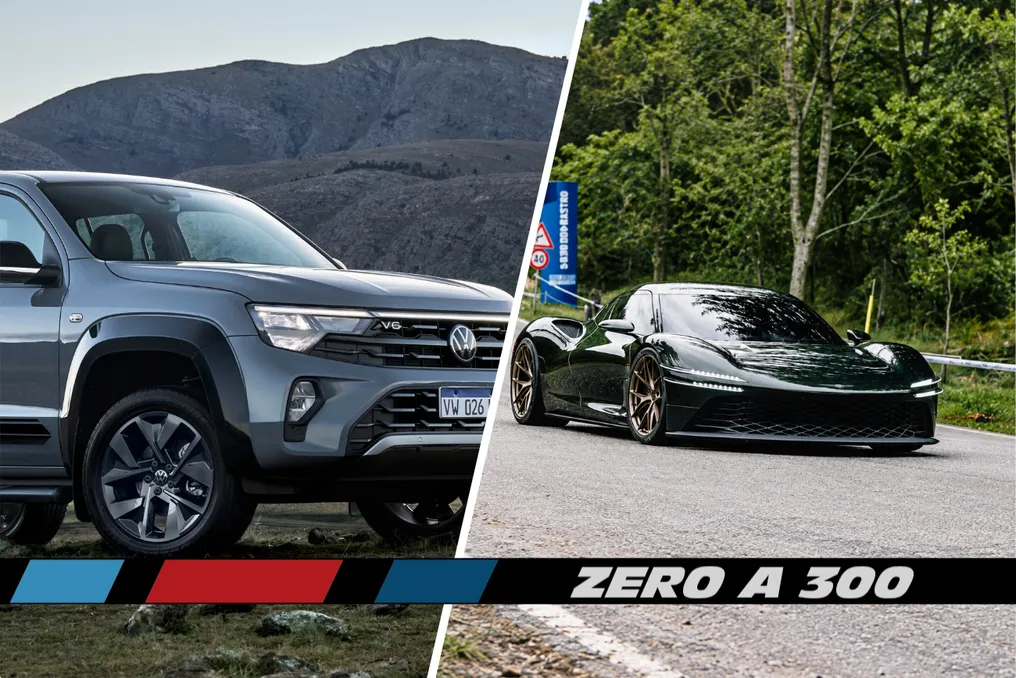
The fusion of a classic car and modern elements can yield varied results, ranging from interesting to excessively flashy. The reverse—modernizing a vehicle with classic traits—is a safer approach, common practice among manufacturers for almost three decades. An Italian firm, Riverti Automobili, is attempting this approach by applying a retro treatment to the BMW M2.
The project was first shown in Italy, during the Tutto Bene Hillclimb event. Images of the prototype camouflaged in action on the mountain climb are promising, as the Riverti M2 seems to harmonize the lines of old BMWs, such as the front end reminiscent of the BMW M3 E30 and the Series 6 of the same era, characterized by four circular headlights and a small centralized double-ring grille, in addition to a silhouette inspired by the 3.0 CSL. The body received widening, air intakes near the doors and on the rear fenders, and a wing that is notable but not exaggerated. The wheels appear to be a reinterpretation of classic spoked BBS wheels.
Although Riverti has not confirmed engine changes, it would be a waste to invest in a new body while keeping the original 3.0 biturbo six-cylinder engine, which generates 480 hp and 61.2 kgfm of torque. However, for those who have already modified the vehicle, adjustments to reach about 530 hp of the BMW M2 CS should be accessible.
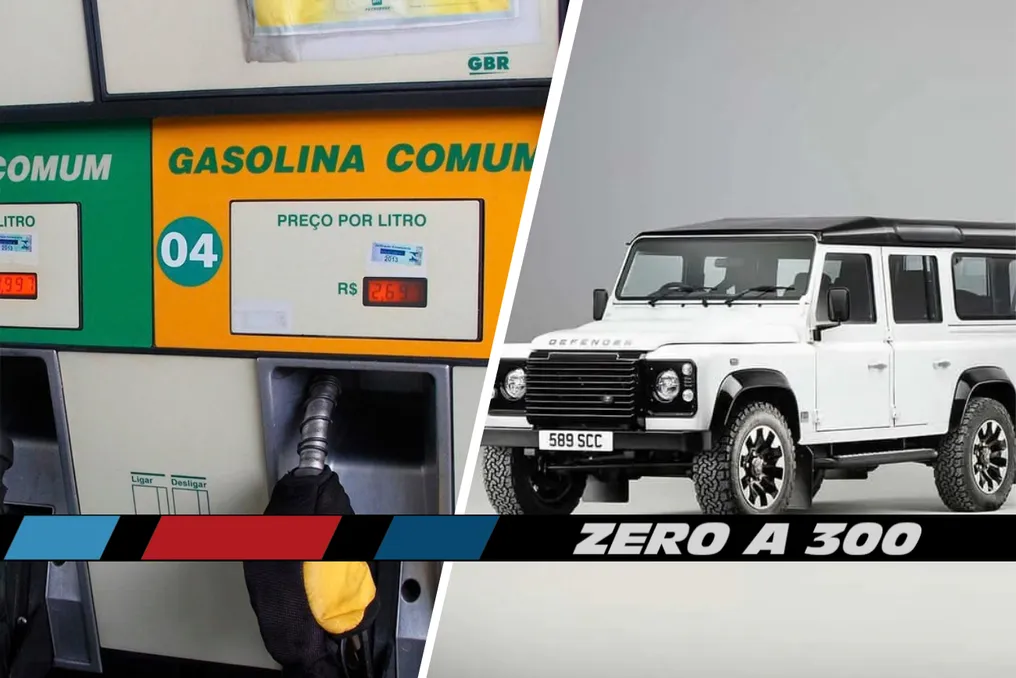
Land Rover offers V8 engine upgrade for classic Defender
Owners of the classic Land Rover Defender (model discontinued in 2016) can now upgrade their vehicles. Land Rover announced that the Classic Works division will accept the conversion of the Defender, including the fitting of a V8 engine and other improvements.
The V8 engine in question is the well-known 5.0, which produces 410 hp and 52.5 kgfm of torque, without being turbocharged or hybrid. Although more modern and efficient V8 engines exist, this option maintains tradition. Choosing the robust eight-speed automatic ZF gearbox instead of a manual transmission is considered a prudent decision, given the gearbox's capacity to support more powerful and high-torque engines.
The transformation also includes Bilstein shock absorbers with Eibach springs and disc brakes on all four wheels supplied by Alcon. Paint and interior customizations are available at an additional cost. However, not all classic Defenders are eligible for this new powertrain. According to Land Rover, only the 90 and 110 models manufactured between 2012 and 2016, equipped with the Puma engine (2.2-liter Ford Duratorq), can receive the V8. Originally, this engine produced 122 hp and 36.7 kgfm of torque, meaning the replacement with the V8 more than triples the power and nearly doubles the torque.
For vehicles manufactured between 2007 and 2011, Land Rover only offers chassis upgrades, not engine replacement. The company did not disclose the cost, but details the options: the customer can order the components and perform the installation themselves, or send the vehicle to Classic Works centers in Germany and England, depending on the process feasibility and the vehicle's location.
Honda Bros 2027 receives new equipment
Honda launched the 2027 line of the NXR 160 Bros, its entry-level motorcycle in the trail segment. The model received new color options and a set of beneficial accessories, although not revolutionary.
The Bros CBS 2027 version, the most economical with combined braking, is now available in black. The ABS version gained the 'Explorer Green' tone, in addition to remaining available in 'Fighting Red'. Both variants were equipped with LED turn signals, hazard lights, front position lights, and headlight flashers. Only the ABS version includes an emergency braking indicator, which automatically activates the turn signals to warn drivers behind.
The mechanics remained unchanged: the 162.7cc flex single-cylinder, air-cooled engine maintains the same specifications. It generates 14.3 hp with ethanol and 14.2 hp with gasoline, and the maximum torque of 1.47 kgfm is constant regardless of the fuel. The package includes suspension with 180 mm travel in the front and 150 mm in the rear, Pirelli MT60 tires (90/90-19 in the front and 110/90-17 in the rear), and disc brakes on both wheels. Prices are R$ 22,830 for the CBS version and R$ 23,970 for the ABS variant.
Expired driver's licenses until December get extra renewal period
Contran automatically extended the validity of National Driver's Licenses (CNHs) that expired or will expire between June 5 and December 8 of this year, extending the deadline until December 9, 2026. Nothing needs to be requested from Detran or a new document issued during this period, as the expired document will be considered valid.
This rule also applies to the Motor Scooter Driving Authorization (ACC). After December 9, drivers will have the normal 30 days provided by legislation to renew. The measure was adopted due to the transition of the CNH renewal system, after the creation of the simplified process for drivers registered in the National Positive Driver Registry (RNPC), who are drivers who authorized their participation and had no points-worthy infractions in the last 12 months.
It is important to note that the extension does not imply automatic renewal for everyone. Simplified renewal is intended only for those registered in the RNPC and who meet the other requirements. The physical and mental fitness exam remains mandatory, and drivers in categories C, D, and E remain subject to the toxicology exam. Furthermore, the extension does not apply to those whose right to drive is suspended or revoked.