Ather Energy plans active expansion into foreign markets, but will initially focus on domestic demand
Read more
Business Standard
business-standard.com

Ather Energy plans active expansion into foreign markets, but will initially focus on domestic demand

Ather Energy intends to actively enter international markets, as exports are projected to contribute 'significantly' to the company's revenue over the next five to seven years, a senior company official reported on Friday.

Nevertheless, despite export plans, the company has decided to prioritize meeting the needs of the domestic market, given the current supply and demand situation. This was stated by Ravneet S. Fokela, Chief Business Officer (CBO).

In an interview with PTI, Ravneet S. Fokela, CBO of Ather Energy, also discussed the expansion of production capacities. A new facility to be built in Maharashtra will allow for an increase in annual capacity by 10 lakh units in two phases.

Fokela emphasized: 'We are currently looking very aggressively at exports; however, considering the current supply and demand situation, we obviously must prioritize the domestic market and consolidate our business here. We believe that in five to seven years, exports will make a significant contribution to our revenue, but until then, we will continue to open new markets.'

Further increases in production capacity will come from the new plant in Maharashtra. This factory has a total capacity of 10 lakh additional units, divided into two phases: 5 lakh each. The first phase is expected to start around December of this year, although achieving full capacity usually takes four to six months.

On Friday, Ather Energy unveiled its new electric scooter, the Konarc, in New Delhi, aiming to make electric scooters mainstream in the country. Delhi and NCR remain an important market for Ather, as the adoption of electric vehicles grew from 6.27 percent in the first quarter of FY26 to 9.23 percent in the first quarter of FY27, representing a 38 percent year-on-year growth, according to data from Vahan cited by the company.

To meet growing demand, Ather has 11 Customer Service Centers and seven Service Centers in Delhi, along with 273 LECCS charging stations in the Delhi NCR region. Fokela noted that the new scooter was designed with the needs of buyers in this segment in mind.

He added that 'Delhi-NCR is an important market on our path to making electric transport more accessible to a wider range of drivers. These strong foundations are ideal for Konarc to become mainstream among electric scooters in India. Moreover, the launch at a price of ₹79,999 makes this offering even more attractive to Delhi and should help initiate this transition. We see that Konarc plays an important role in strengthening our presence here and accelerating the shift to electric transport in the country.'

Similar stories

Motorola receives determination from Conar to revise cell phone specification disclosure in Brazil
Read more
tecnoblog.net

Motorola receives determination from Conar to revise cell phone specification disclosure in Brazil

Motorola will be required to change the way it promotes its mobile phones in Brazilian territory. Tecnoblog learned that the manufacturer faced a significant setback at Conar, the body responsible for advertising self-regulation in the country. This reversal is related to how virtual RAM is presented on the phones.

Since last year, Motorola began including both RAM and virtual RAM when describing the specifications of some of its smartphones. However, the usual market practice is to highlight conventional RAM and, if present, mention virtual RAM in a secondary section of the technical sheet.

For example, in the case of the Edge 70 Pro, the official page displays 'up to 24 GB RAM' prominently. Below, in smaller font, there is an explanation that, in reality, the device has 12 GB of physical RAM, supplemented by 12 GB of 'Intelligent RAM Boost.' Similarly, the Moto G86 page also indicates 24 GB of RAM, of which only one-third corresponds to physical RAM.

The decision was made this week at Conar. Its Ethics Council met on September 24th and unanimously voted for Motorola to modify its conduct. This change is based on the Self-Regulation Code and was defined during a joint session of chambers number 5 and 8 of the entity.

In practice, a source informed to Tecnoblog clarified that Motorola will need to adjust all its product advertising, both on digital platforms and in physical points of sale. It is possible that Motorola will appeal this deliberation to Conar (National Advertising Self-Regulation Council).

Conar operates as a private association, which implies that its resolutions do not have the same legal power as a judicial action. Nevertheless, the issued guidelines are strictly followed by the market, being observed by agencies, brands, and media outlets. The Brazilian Code of Advertising Self-Regulation, in its article 27, requires that advertising materials present a faithful description of the product, prohibiting any information or visual representation that could mislead the consumer.

Survey shows camera motivates phone replacement, but price defines the choice of the new device
Read more
olhardigital.com.br

Survey shows camera motivates phone replacement, but price defines the choice of the new device

A survey conducted by the fintech meutudo, involving 6,439 participants, revealed a discrepancy between the reason consumers desire a new cell phone and the criterion that prevails at the time of purchase.

Although camera quality is the main factor prompting consumers to consider replacing their device, when selecting the next device, price emerges as the most cited criterion by respondents.

Specifically, 24% of respondents cited camera quality as a reason to consider the exchange. Next, lack of storage and issues with slowness or freezing were mentioned by 17% each. However, at the time of acquisition, this same 24% factor places price at the top of purchasing priorities.

It is observed that the factor generating interest in a new cell phone is not always the same one influencing the final purchase decision. While the camera leads the reasons for replacement, cost is the determinant in selecting the subsequent device. Other evaluated attributes include brand and battery, but the budget explains this divergence between initial desire and effective decision.

The investigation's figures indicate that, among those who bought or replaced a cell phone in the last twelve months, 65% spent an amount up to R$ 2 thousand. However, the spending intention for the next twelve months presents a different scenario, as 51% of those planning to acquire or replace the device during this period intend to invest more than R$ 2 thousand.

This data suggests that buying a cell phone transcends the mere choice of a product, requiring careful financial analysis. Márcio Feitoza, CEO of meutudo, commented in a note that when there is a conflict between desire and budget, it becomes essential to weigh priorities, what is financially viable, and which payment methods are appropriate for the moment.

The willingness to replace the device also varies according to age group. Of the participants between 18 and 29 years old, 35% declared the intention to buy or replace a cell phone in the next twelve months. In contrast, this percentage drops to 14% among individuals aged 65 or older. Thus, the survey demonstrates that the camera may be the trigger for seeking a new model, but price assumes greater weight in the final selection.

Tashkent Metro to Receive 56 New Cars in 2026 to Update Fleet
Read more
uzdaily.uz

Tashkent Metro to Receive 56 New Cars in 2026 to Update Fleet

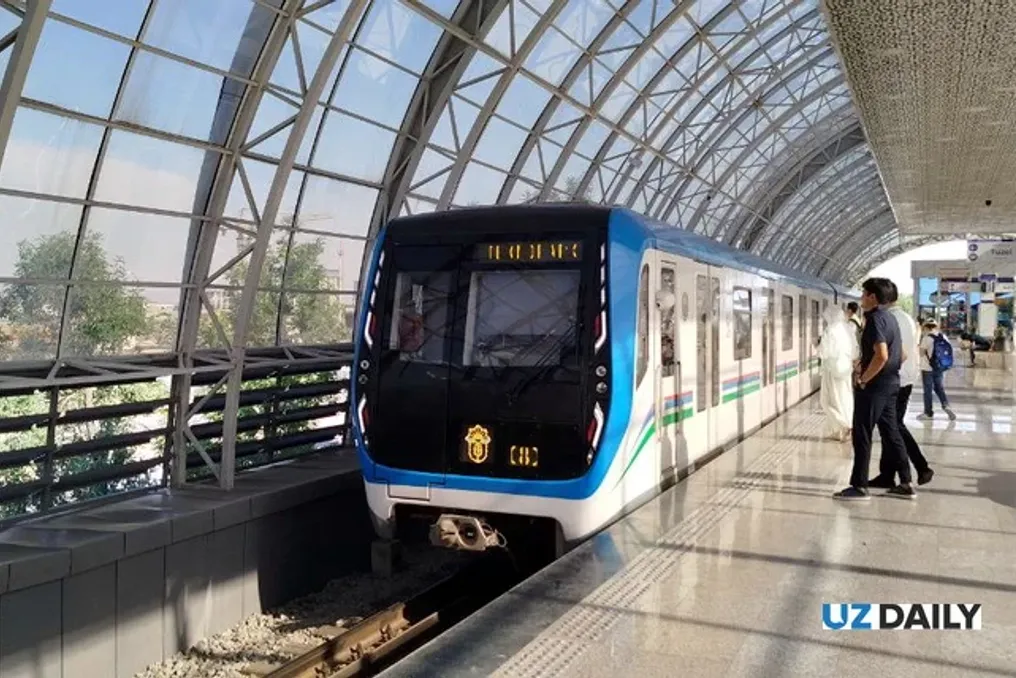
The Ministry of Transport of Uzbekistan announced that in 2026, the Tashkent metro will be supplemented with fourteen modern trains, which include 56 new cars. It is planned that all supplied trains will be put into operation before the start of the new academic year.

This delivery is part of a program to update the metro rolling stock and improve the quality of passenger service. Thanks to these acquisitions, almost seventy percent of the capital's metro fleet has been modernized.

The new trains operate on four lines of the Tashkent Metro. Their introduction has allowed for a reduction in travel intervals, including during peak hours. On the Chilanzar line, the interval during peak hours is from 1.5 to 2 minutes. On the Uzbekistan line, the interval is about three minutes, and on the Yunusabad line, trains run every four minutes. On the Elevated Ring Line, metro movement operates at an interval of seven to eight minutes.

The acquisition of new sets is aimed at creating more comfortable conditions for passengers and further increasing the efficiency of the capital's metro system.

Popular