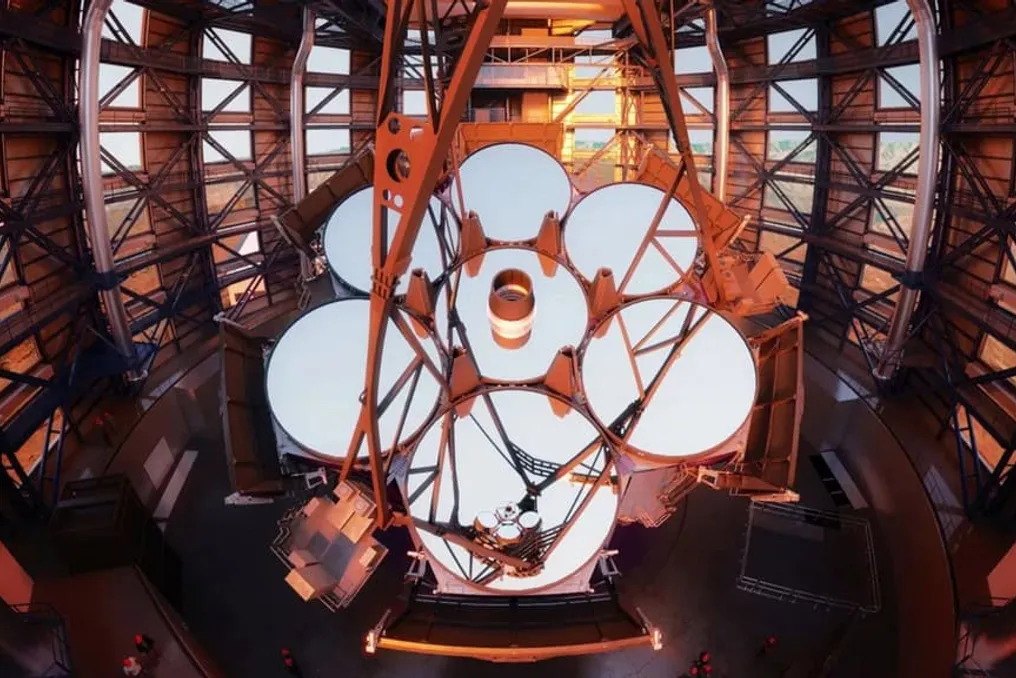
Brazil participates in the construction of a giant telescope in Chile that could change the observation of the Universe
Read more
Olhar Digital
olhardigital.com.br

Brazil participates in the construction of a giant telescope in Chile that could change the observation of the Universe

Since Galileo Galilei pointed his telescope to the sky, astronomy has undergone significant changes, opening a window to the Universe for humanity. Since then, telescopes have become increasingly sophisticated and precise, allowing the discovery of ever more distant worlds. Now, humanity is facing the emergence of a new generation of giants.

As part of the Olhar Espacial program, which airs on Friday (the 25th), the Giant Magellan Telescope (GMT) is presented, which is under construction in the Atacama Desert, Chile. This telescope will consist of seven primary mirrors, each with a diameter of 8.4 meters, providing a collecting area equivalent to a single mirror with a diameter of 25.4 meters.

Thanks to these large sizes, the GMT will significantly expand the capabilities for observing space and allow the investigation of fundamental questions in astronomy. It is expected to be 200 times more powerful than the best existing telescopes, providing an unprecedented level of detail when studying the Universe.

The international consortium for the project includes Brazilian participation, led by the São Paulo State Research Foundation (FAPESP). Through the GMT Brasil initiative, Brazilian researchers and institutions are working on developing systems and instruments for the telescope, covering areas such as engineering, optics, mechanics, electronics, and software, while also creating opportunities for national industry in high-complexity projects.

To discuss the GMT, its goals, the difficulties of building such a massive telescope, and its significance for science, Eduardo Cipriano, coordinator for scientific popularization of GMT Brasil, is invited to the program.

Eduardo Cipriano is a researcher and associate professor in the Department of Astronomy at the Institute of Astronomy, Geophysics, and Atmospheric Sciences of the University of São Paulo (IAG-USP). He holds a bachelor's degree in physics from the USP Institute of Physics (IF-USP), as well as master's and doctoral degrees in astronomy from IAG-USP. He completed a postdoctoral fellowship at University College London (UCL) and worked as a resident astronomer at the Southern Astrophysical Research Telescope (SOAR). His extensive experience in galactic astrophysics focuses on galaxy clusters, gravitational lensing, and observational cosmology.

The program, presented by Marcelo Zurita, president of the Paraíba Astronomy Association – APA, a member of the Brazilian Astronomical Society (SAB), technical director of the Brazilian Meteor Observation Network (Bramon), and national coordinator of Asteroid Day Brasil, airs live every Friday at 9:00 PM (Brasília time) on the official channels of the publication on YouTube, Facebook, Instagram, X (formerly Twitter), LinkedIn, and TikTok.
Similar stories

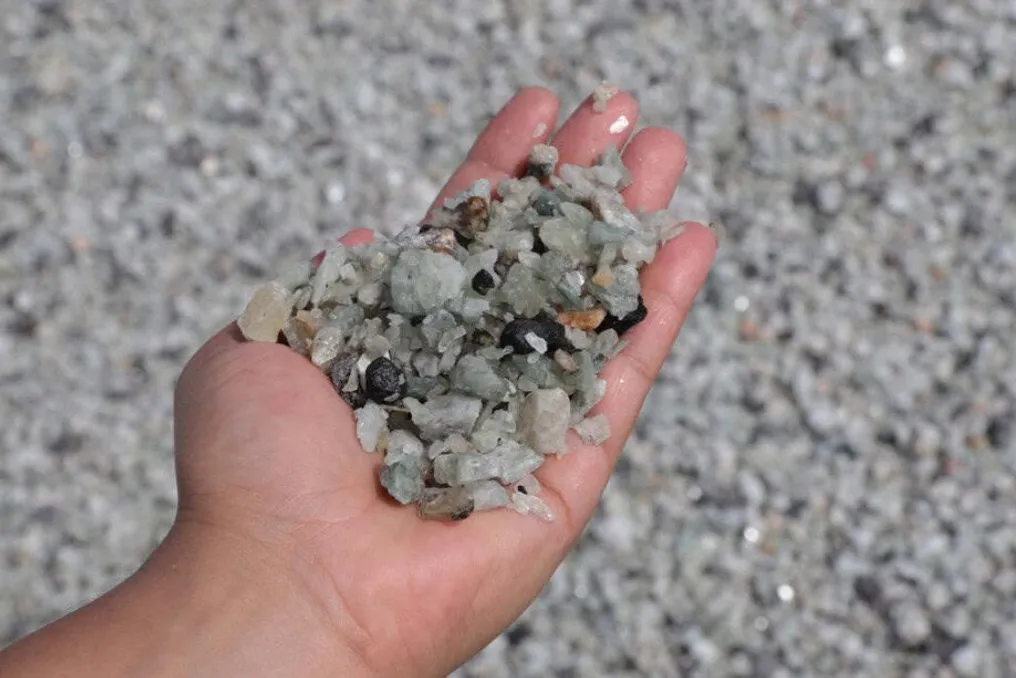
Brazil institutes national policy to promote the exploration of critical minerals for technology and electric vehicles
Read more
olhardigital.com.br

Brazil institutes national policy to promote the exploration of critical minerals for technology and electric vehicles

Brazil has implemented a national policy dedicated to boosting the research, extraction, processing, and transformation of minerals considered critical and strategic. This initiative was formalized this Wednesday, the 16th, and includes up to R$ 7 billion in incentives for businesses linked to this sector.

The new legislation aims to create structures that allow the country to expand its capacity to identify its reserves and process these materials domestically, in addition to establishing tools for financing, innovation, and research.

Increase in Resources for the Brazilian Geological Survey

An immediate impact of this measure will be the increase in funds allocated to the Brazilian Geological Survey (SGB). As stated by the Minister of Mines and Energy, Alexandre Silveira, the budget dedicated to soil research will rise from R$ 8 million to R$ 300 million. The objective is to intensify the survey of mineral wealth present in Brazilian territory.

This action is relevant because a considerable portion of the national territory still lacks mapping. Data from Agência Brasil indicates that only about 25% of Brazilian territory has been mapped for this type of survey. The country holds approximately 21 million tons of rare earth reserves, representing the second largest amount mapped globally, behind China, which has about 44 million tons.

Creation of the Mineral Activity Guarantee Fund (FGAM)

The policy establishes the creation of the Mineral Activity Guarantee Fund (FGAM). The Federal Government will initially contribute R$ 2 billion, with the fund's total assets potentially reaching R$ 5 billion. These resources will be used to provide guarantees for priority projects focused on the production of strategic and critical minerals.

Additionally, there is a provision for a federal program for the processing and transformation of these minerals, offering R$ 5 billion in tax credits between 2030 and 2034. This benefit can cover up to 20% of the costs of selected projects.

Thus, the total R$ 7 billion associated with the new policy is composed of the R$ 5 billion in tax credits and up to R$ 2 billion in contribution from the Federal Government to the guarantee fund, although each amount has distinct purposes within the policy.

The legislation also mandates that companies involved in the research, mining, processing, and transformation of critical and strategic minerals must allocate part of their revenue to both the fund and to research, development, and innovation activities.

In the first six years, 0.2% of gross operating revenue must be allocated to the guarantee fund, and 0.3% to R&D projects. After this initial period, the percentage allocated to research projects may rise to 0.5%.

Mineral research and prospecting have also been included among the eligible projects for issuing incentive debentures, which expands opportunities for private capital raising for the sector's activities.

Governance Structure and Support Mechanisms

The new law also institutes the National Council for the Industrialization of Critical and Strategic Minerals, an body responsible for coordinating, planning, and monitoring the national policy. Among its responsibilities is suggesting governmental policies and actions to develop the productive chains related to critical and strategic minerals. The first meeting of this collegiate body should take place approximately ten days after its constitution, according to the Minister of the Civil House, Miriam Belchior.

Another foreseen instrument is the creation of a national project registry. According to the text approved by Congress, the benefits of the policy can only be accessed by projects duly registered and authorized by the council. This system should consolidate data from federal, state, municipal, and district spheres involved in mineral activity.

The legislation also introduces the Low Carbon Mineral Certificate, which is optional, and requires that areas with potential for critical and strategic minerals receive priority in auctions conducted by the National Mining Agency (ANM).

In addition to aiding in the discovery of new reserves, geological surveying is crucial for determining which resources are available and where they can be exploited. Silveira emphasized that increased funding for the SGB will enable deeper knowledge of the Brazilian subsurface, given that the unmapped area suggests the possibility of discovering unknown resources.

The policy also aims for Brazil to evolve beyond mere extraction. The legislation offers incentives for the processing and transformation of minerals to occur within the national territory, stages that allow for the incorporation of technology and the addition of greater value to the productive chain.

With this new policy, the government acquires specific means to finance mineral research, support production and processing projects, and stimulate technology investments related to minerals vital for sectors such as electronics, automotive, energy, and defense.

Popular