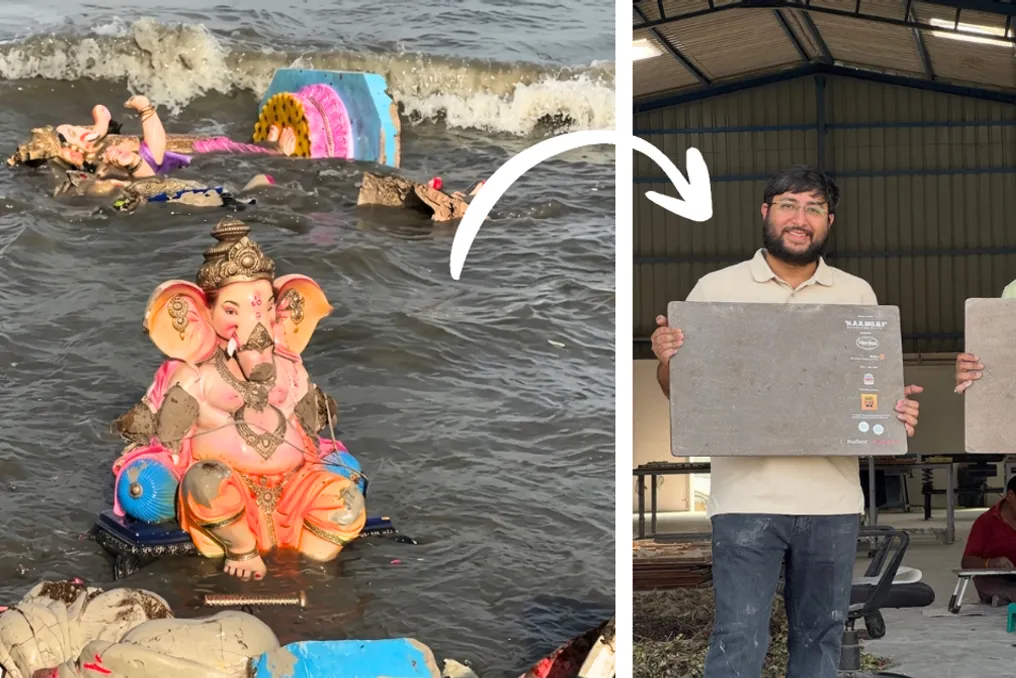
After the Visarjan ceremony, which marks the end of festivals filled with music, colors, and prayers, idol fragments remain along the coastline. In Mumbai alone, about 150 thousand plaster of Paris (POP) idols are immersed annually, generating nearly 675 tons of waste. Since plaster does not dissolve easily in water, most of the material remains after the festivities conclude.
Malhar Kaalambe questioned whether the leftover material could be used for something useful. He collaborated with an engineer from Gujarat, Dr. Binish Desai, to explore the possibilities of recycling these broken idols.
This pair developed a method for processing the plaster from the idols using Binish's patented 'Murticycle' technology. Instead of viewing the material as trash, they began transforming it into useful products. The process involves collecting the broken idols and separating the plaster; after processing, the material can serve as the basis for creating twelve different products.
From Bappa's Idol to a Child's School Desk
Over the past two years, this team has used more than 3200 kg of recycled plaster to make 760 school desks for children across Maharashtra. For children who might lack a suitable place to study, what was once part of a Ganesha idol has taken on a completely different function.
The desk provides them with a dedicated space for reading books, doing homework, and learning. Thus, the material left over from the festival finds application in classrooms and homes, supporting the child's education. Furthermore, this initiative benefits the environment: each desk helps save approximately 5457 grams of CO₂.
The idea is that Ganesha's journey should not end with Visarjan. Through such concepts, even remnants can become part of a new story. A broken idol can turn into a desk, and a desk into a learning space for a child, turning an environmental problem into an opportunity to create a community-benefiting product.