Microsoft is quietly phasing out the use of the Copilot+ PC badge. Although computers that fit this classification continue to be manufactured, the name, which signals that the product has capabilities to run artificial intelligence tasks locally, is being progressively abandoned.
The Copilot+ PC category was introduced in May 2024, initially focusing only on devices equipped with Qualcomm's Snapdragon X series chips. Later, almost a year later, Microsoft expanded this proposal to include options with Intel and AMD processors.
To belong to this category, laptops must meet certain technical criteria, requiring, in particular, a processor accompanied by a Neural Processing Unit (NPU) with a capacity of 40 TOPS or higher, since the central purpose is to support AI operations on the device itself.
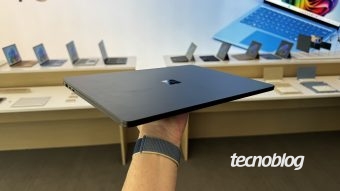
In 2026, some laptops previously classified as Copilot+ PCs began to be launched without this nomenclature. The most notable examples are the Surface PCs, manufactured by Microsoft itself, launched this year, which do not bear the badge, unlike the models presented in 2025.
The exact reason remains uncertain, as the Copilot+ PC category officially still exists. However, Zac Bowden, a contributor to Windows Central and an executive at Microsoft, confirmed that the designation is being removed from the Surface line. He stated: 'They are no longer called Copilot+ PCs. They meet all the requirements of our previous definition for Copilot+ equipment. We are still betting on the narrative around edge AI and the possibility of having a hybrid solution available.'
The discontinuation of the name is expected to extend to other brands, as suggested by a Qualcomm executive during a conversation with Bowden. This executive commented: 'The idea was to define a specific category of devices with a certain standard and metric, such as an NPU of 45 TOPS... So, from that perspective, it is about offering the same experiences, probably without using the [Copilot+ PC] terminology now.'
Despite the lack of an official explanation for this silent abandonment, it is presumed that the reason for this move is the unsatisfactory commercial performance of the project. Copilot+ PCs have not been a sales success, firstly because interest in AI in personal computers has never been very strong. Furthermore, these devices usually come with high prices; in Brazil, for example, Copilot+ models from manufacturers like Dell and Asus only reach values below R$ 7,000 on promotions, while others exceed R$ 20,000.