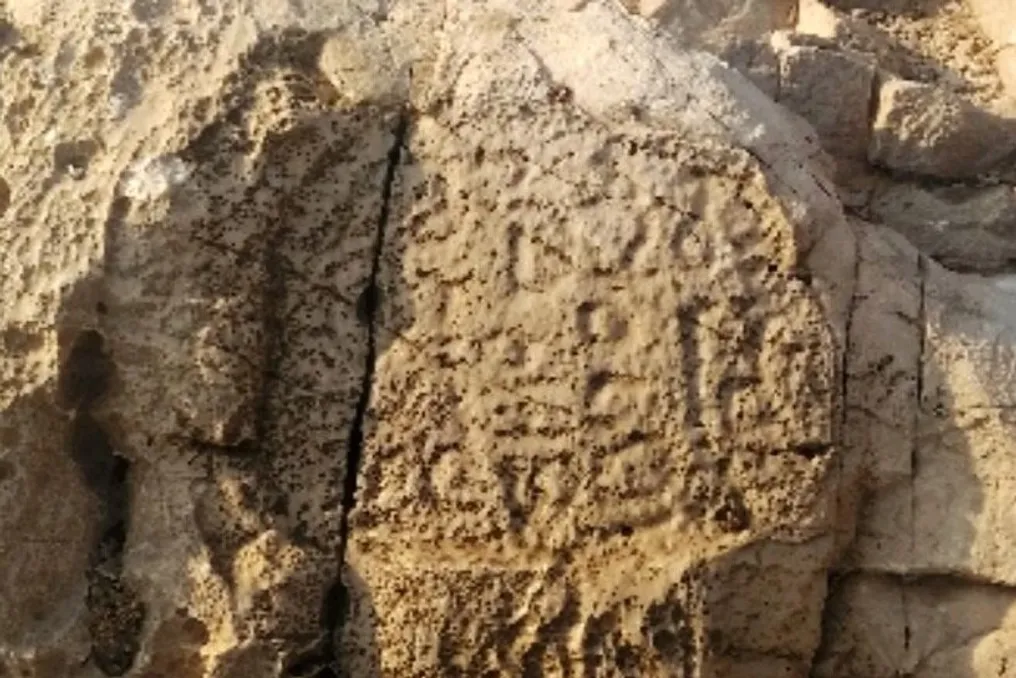
A new burial inscription dating to the late Sasanian period and related to Zoroastrian burial was found in southern Iran, on the Marvdasht plain, in Fars province, near the ancient city of Estakhr.
The inscription is written in Pahlavi and, according to researchers, is connected to one of the burials of followers of Zoroastrianism during the late Sasanian Empire. Archaeologist Abolhassan Atabaki reported this on Thursday, citing Jamaran.ir.
The archaeologist explained that with the expansion of Zoroastrianism after the Achaemenid period and later during the Sasanian era, burial customs underwent significant changes. Many above-ground burials were abandoned, and burial practices shifted to elevated and mountainous areas. Atabaki attributes this shift mainly to Zoroastrian beliefs about bodily resurrection and life after death.
According to Atabaki, Zoroastrians considered the underworld dark, stagnant, and associated with evil, so they avoided direct burials in the soil. Furthermore, it was believed that the corpse could contaminate sacred elements such as earth, vegetation, and water. At the same time, Zoroastrians believed that the soul of the deceased should ascend towards the rays of the sun.
For this reason, the body was first placed in elevated structures known as 'sun towers' before the final stage of burial. Rituals, including 'Khorshid-Negahereshni', were performed there, and the bones were purified. After scavenger birds and other carrion feeders removed the flesh, the purified bones were moved to places among rocks and cliffs, as noted by Atabaki.
Historian Najmeh Ebrahimi noted that during the Sasanian period, there were many types of burial practices depending on people's social status and financial means. These included rock tombs, stone mounds, burial towers, trough-shaped graves, urn burials, small 'dahmakis', and urns. Such burial structures are referred to as 'dahmak' in many Sasanian inscriptions.
Ebrahimi emphasized the archaeological significance of the Marvdasht plain, pointing out that this area contains the largest known concentration of Sasanian inscriptions, with over 50 inscriptions having been discovered and read to date. She added that the plain also ranks first in terms of the number of Sasanian burial inscriptions.
It is believed that this inscription will provide additional evidence of the burial practices and religious beliefs of Zoroastrian communities in the Marvdasht region during the last centuries of the Sasanian period.