Student Suicide Follows Another at Marwari University; ABVP Protests Erupt
Read more
Aaj Tak
www.aajtak.in

Student Suicide Follows Another at Marwari University; ABVP Protests Erupt

Another student suicide has occurred at Marwari University in Rajkot, Gujarat. Following the death of the second student, questions regarding campus safety and student welfare have been raised over the past six days.

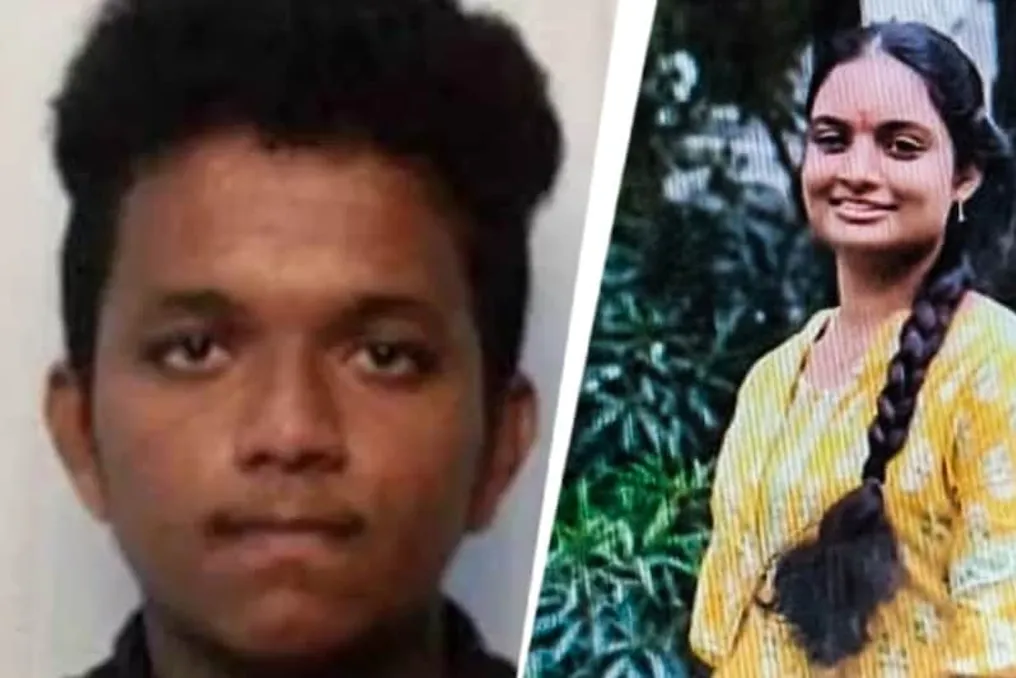
The deceased student has been identified as Hemant Gandaman, who hails from Andhra Pradesh and was a third-year Computer Science student. According to available information, Hemant jumped from the university building this morning. It is reported that he attended two lectures prior to the incident. Upon receiving notification of the event, police arrived on campus and began investigating the case. The police are currently determining the reasons behind the student's decision.

This incident took place six days after Shobharika, another Computer Science student, died by jumping from the university building. The reasons for the previous incident remain unknown. Due to two students dying within six days, the ABVP and NSUI organizations have protested concerning student safety at the university.

Nidish Vargis, Deputy Registrar of Marwari University, expressed regret over the suicide of the second student in one week. He noted that Hemant was academically proficient. The university administration has pledged full cooperation with the police in this matter and will provide all necessary information for the investigation.

The deceased student's friend, Rishikesh, has leveled accusations against the university registrar, Pinto Mennan. Rishikesh claims that Pinto Mennan allegedly reprimanded Hemant the day before and treated him rudely. Furthermore, he stated that students were told not to come to study from other states but to stay closer to home. However, there is no independent confirmation of these allegations. It will only become clear whether these accusations played any role in the student's death after the police investigation is complete.

Given the seriousness of the situation, several groups of Rajkot city police have arrived on campus. Over 100 personnel, including an ACP officer, SOG, and local police, have been deployed. Police are interviewing the student's family, friends, professors, and individuals associated with the university. During the investigation, it is also being determined whether the student was subjected to bullying. The police are gathering information about the student's studies, his connections at the university, and the circumstances leading up to the incident.

The Marwari University administration has also formed a committee to examine the case. The university side stated that it will fully assist the police in the investigation. Amidst the two deaths in six days, an atmosphere of anxiety prevails among students on campus. The police and university administration are conducting investigations at different levels. After Hemant's death, the ABVP held a protest action on the premises of Marwari University. Tension arose between the police and ABVP activists during the demonstration. Videos emerging from the protest show clashes and confrontations between the police and activists. There are claims that the police slapped some activists and used batons against some students.

It is reported that some ABVP activists sustained injuries during the police action. The injured were taken to a private hospital for treatment. Following the protest on the university grounds, police control was increased. The police detained some ABVP activists who participated in the demonstration. The true cause of the student's death will become clear after the investigation concludes. The police are working to ascertain the real reasons for the student's demise by questioning the family, friends, teachers, and staff of the university. Various aspects are being checked, including potential harassment or bullying. The committee formed by the university administration will also conduct an inquiry into the matter. It is expected that the police investigation and internal university review will clarify the circumstances that led to Hemant's death within six days.

Similar stories

The Story of Four Girls from PG on the Impact of City Life: From Trauma to Changes in Worldview
Read more
www.aajtak.in

The Story of Four Girls from PG on the Impact of City Life: From Trauma to Changes in Worldview

Every year, thousands of girls from small towns in Bihar, Jharkhand, and Madhya Pradesh travel to Delhi or Noida to realize their dreams. They arrive with hopes of becoming office workers, designers, or models, and their place of residence often becomes a Paying Guest (PG) accommodation in Delhi or Noida. Recent incidents, such as the one in Satyaniketan, have exposed the deplorable condition of many buildings that provide such housing.

The residents of these rooms often do not understand the difficulties faced by people living in the urban hustle, nor why they leave comfortable conditions at home for life here. To understand this gap in understanding, the authors studied the experiences of four girls living in different PGs in Delhi-NCR and found that their stories reflect the struggle of each girl trying to survive in the megacities.

On the surface, it may seem that these girls are simply studying or gaining freedom in the big city. However, the truth is that the city demands more from them than just labor; it transforms their mindset, changes their lifestyle, from clothing to views, and this transformation comes at a high price, where loneliness, accidents, and feelings of insecurity are the biggest losses.

Shreya from Bihar, the only daughter of her parents, came to Delhi at the age of just 17, aspiring to become a support for her family. She did not expect how terrible the first shock of the big city would be. She lived in an apartment in Noida with a roommate, with whom she had to constantly interact. One day, her roommate committed suicide. The horror of what she saw—her friend's body and the tense silence—was so deeply ingrained in the 17-year-old girl's mind that for weeks she saw her dead friend in every corner.

After she managed to cope with this psychological shock and moved to another PG, her belongings were stolen. The landlord refused to help her. Then, returning from college late at night, she was subjected to harsh remarks and mockery about her Bihari accent by hooligans. This terrible period became a turning point in Shreya's life. The girl, who had never known loneliness, learned to become mentally strong by fighting these events. She realized that in a big city, to survive, tears must be turned into a shield, not weakness.

Divya from Indore is a fearless girl. In her hometown, she freely worked as a model even at night. However, after coming to Delhi-NCR to combine studies and career, she had to give up her passion for modeling. Divya notes that the atmosphere in Noida feels more anxious to her than the safety she felt in Indore. The mentality of people who judge her by her clothes and work, and the constant stares have taught her to be vigilant at all times.

Divya's story demonstrates how a small town gives a girl wings to fly, but a big metropolis grounds her in reality, teaching her to adapt to circumstances. Divya has now transformed her appearance and mannerisms into a protective layer that is difficult to penetrate.

Stakshi from Indore is the only daughter of her family. Her parents wanted her to become a doctor or engineer, but she insisted on becoming a fashion designer. When she first went out alone, convincing her family, the big city completely changed her personality. Stakshi, who was previously very modest and quiet, learned to present herself after arriving in Noida, mastered makeup and style sense, and increased her self-confidence. However, the dark side of this 'glamorous freedom' appeared when she fell seriously ill in the PG.

When she woke up with a high fever and could not find the strength to take medicine because no one was there to ask, Stakshi realized that what her parents called 'restrictions' at home was actually their protection. This loneliness made her mature and taught her that when no one supports you, you must stand on your own feet.

For Ananya, who grew up in a large multi-generational family in Jamshedpur, the first day in Noida was a culture shock. Fast cars, tall buildings, and the absence of close people. She recounts how, while living in Jamshedpur, she unconsciously started judging girls who smoked or drank alcohol. However, the culture of PGs and colleges in Delhi-NCR opened new horizons of thought for her. Today, she has completely stopped judging others. She has learned that everyone has their own choice and lifestyle, although she has set boundaries, staying away from such things in accordance with her health and family values.

Ananya's story proves that big cities do not just leave you alone; they expand your thinking. She remains connected to Jamshedpur.

Scopa Committee Intensifies Oversight of Msunduzi and Masilonyana Municipalities Due to Serious Issues
Read more
iol.co.za

Scopa Committee Intensifies Oversight of Msunduzi and Masilonyana Municipalities Due to Serious Issues

The Parliamentary Standing Committee on Public Accounts (Scopa) intends to strengthen control over local municipalities to enhance financial accountability and improve the quality of service delivery. Scopa expressed concern over the lack of consequences for improper actions and also plans to examine the role of provincial governments and municipal financial reports, which are also responsible for holding councils accountable.

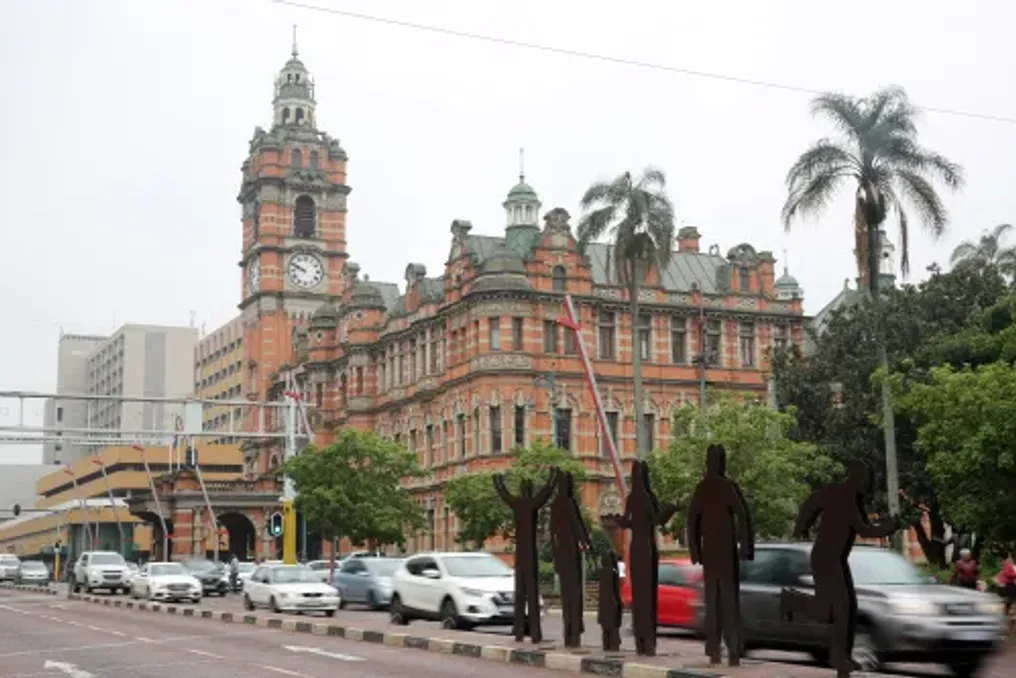
On Tuesday, the oversight body for public accounts focused on two such problematic municipalities: Msunduzi in KwaZulu-Natal and Masilonyana in Free State. Both local municipalities face operational, managerial, and financial crises that seriously undermine their ability to provide essential services.

The Committee found that financially, both municipalities struggle with revenue collection, growing debt burdens, and widespread non-compliance with supply chain management rules, leading to increased amounts of unauthorized, irregular, fruitless, and wasteful expenditure.

According to the committee's report, prepared after monitoring visits, 'Operational activities are severely paralyzed by dilapidated, poorly maintained infrastructure, causing losses in the distribution of utilities such as water and electricity.'

Structurally, both municipalities show significant vulnerabilities in human resources, noted by prolonged leadership vacancies and widespread non-compliance by staff with minimum qualification requirements, as well as a failure in internal consequence management, where oversight bodies do not ensure timely application of disciplinary measures.

Although the audit results for Msunduzi for the 2024/25 financial year improved compared to previous years' qualified opinions, deputies noted that substantial issues remain regarding performance reporting, compliance, financial management, and infrastructure provision.

The Auditor-General of South Africa (AGSA) had previously informed Scopa earlier this year that despite the municipality spending 88% of its budget for the 2024/25 financial year, it achieved only 57.9% of its targets for basic service delivery.

The municipality failed to meet key service delivery goals, including the percentage of repaired main breaks, which was only 7% against a target of 60%. Similarly, the goal for the percentage of blocked sewer systems cleared was not met: only 10.9% achieved against a target of 60%.

Furthermore, the municipality aimed to construct one reservoir during the fiscal year under review but failed to do so because the contractor was only provided with the site in June 2025. Lawn mowing services were provided in only 17 out of 30 planned districts, and waste removal services were provided to only 4,765 out of 5,100 households.

The report indicates that the municipality stated these targets were not met due to operational constraints, including mass breakdowns of vehicles and equipment combined with staff shortages and vacant positions.

In the 2024/25 financial year, the municipality incurred fruitless and wasteful expenditure of R114.06 million, higher than the R25 million in the previous financial year. The main sources of this expenditure were interest accrued on overdue payments (R87.017 million), mainly related to Eskom and Umngeni Water. Other contributions included overpayments to senior officials (R6.026 million) and other employees (R1.187 million), as well as payments to the Royal AM Premier Soccer League team (R10.350 million).

During the fiscal year under review, the municipal council wrote off R126.088 million as irrecoverable. Scopa expressed concern that the municipality does not conclude disciplinary cases in a timely manner. Deputies highlighted problems related to staff remaining on paid leave pending dismissal for extended periods, leaving or retiring before disciplinary hearings are concluded, ultimately preventing action against misconduct.

The municipality informed deputies that to prevent fruitless and wasteful expenditure caused by prolonged paid leave (more than six months), the municipality sometimes reinstates suspended employees into other departments while their disciplinary investigations are ongoing.

The Committee also learned that disciplinary and forensic audits faced serious delays due to death threats and intimidation directed at investigators, evidence managers, and presiding officers. Since internal staff received threats, the municipality referred to external panels and investigators from the South African Local Government Association (SALGA) to conduct disciplinary proceedings.

Regarding Masilonyana, Scopa concluded that the municipality 'is characterized by severe administrative dysfunction, poor record-keeping, and financial instability.' The Committee noted that the issues identified in May coincide with those discovered by its predecessor in August 2022 during a monitoring visit to the municipality.

The Committee stated that it found serious deficiencies in governance, financial management, service delivery, record-keeping, project management, revenue collection, supply chain management, and consequence management.

The municipality was taken over in February due to governance failures, financial distress, and inability to meet statutory obligations for service delivery.

Popular